

Two systems with different jobs
A lock is a physical barrier. It makes entry slower, harder, and noisier, but it does not report anything. An alarm is a detection and notification system. It senses a door opening, motion in a room, or broken glass, and it sends a signal to a siren, a monitoring center, or a phone.
Neither does the whole job alone. A lock without an alarm can be defeated quietly over time, and nobody may know until the next morning. An alarm without a good lock may alert someone to an intrusion that has already succeeded. The two work best as layers, each covering the other's weakness.
The relationship also runs the other way. Alarm systems depend on doors that close and latch reliably. A door that bounces open in the wind, or a latch that does not engage, can trigger false alarms or leave a sensor reporting normal conditions while the door is not truly secure.
For business owners, the practical point is that changes to one system can affect the other. Replacing a lock, adjusting a door, or changing a frame may disturb a sensor. Planning ahead avoids both false alarms and gaps in protection.
Door sensors and how they depend on the door
The most common alarm device on a door is a magnetic contact. It has two parts: a magnet on the door and a switch on the frame. When the door opens, the magnet moves away and the switch signals an open door. The sensor only works well if the two parts stay aligned.
Door alignment is exactly what locksmiths adjust. If a door sags or swells, the gap between the magnet and switch changes, and the sensor may report an open door that is actually closed. Salt air and humidity make these small shifts common on Gulf Coast buildings, so alignment problems show up often.
Recessed contacts are installed inside the door and frame, hidden from view. Surface mounted ones are screwed on the outside. Either type can be damaged when a lock is replaced or a door is repaired. A technician who knows where the sensor is can work around it.
When a door is replaced or a new lock is installed, the sensor may need to be repositioned or tested. Tell the alarm company if the door changes, and test the system afterward. A sensor that quietly stopped working is worse than none, because it creates false confidence.
Electric strikes, magnetic locks, and access control
Some businesses use electric strikes or magnetic locks tied into an access control or alarm panel. A button, keypad, or card reader releases the door, and the system records who entered. These locks are powered, which makes them part of the electrical and alarm planning for the building.
The key design question is what happens when power fails. A fail secure lock stays locked, and a fail safe lock releases. Each choice has consequences. Doors that serve as emergency exits generally need to allow people out, so the lock design must keep a safe exit path, whatever the alarm status.
Fire alarm integration is another factor. Many buildings tie access control to the fire alarm so that certain doors release when the alarm sounds. This is regulated and usually involves qualified professionals in the proper trades, so it is outside the work of a simple lock change. Ask the building official or the alarm company before altering such doors.
If you have an access control system, a locksmith can often help with the hardware side, such as strikes, handles, and cylinders, while the alarm or access company handles the controller and software. Coordinating the two avoids finger pointing when something does not work.
- Magnetic contacts need the door to stay aligned
- Fail secure and fail safe locks behave differently in a power loss
- Exit paths must stay safe under every condition
- Hardware and controller work may involve different providers
Opening and closing routines
The most common source of false alarms is a routine that does not match the equipment. Staff arrive, unlock the door, and have a limited time to enter a code before the siren sounds. If the lock sticks or the door is hard to open, the delay can be long enough to cause an alert.
A reliable lock is therefore part of a reliable alarm. Fixing a stiff lock, replacing a worn key, or lubricating a cylinder can reduce false alarms as much as changing a setting on the panel. Locksmiths often hear that an alarm problem was really a lock problem.
Closing routines matter as much. The last person out should lock the door and then arm the alarm, in an order that works. Arming first and then trying to lock a stubborn door invites a false alarm. Practice the sequence until it becomes second nature.
Write the routine down and post it near the exit. Include who knows the alarm code, who locks the door, and what to do if the lock fails. A clear routine is the simplest false alarm prevention there is.
Before any lock work, tell the alarm provider
If you plan to rekey, replace a lock, or repair a door, tell your alarm provider in advance. They may suggest putting the system into a test mode so the monitoring center does not dispatch anyone when a door is opened and closed repeatedly during the work.
Some jurisdictions have rules about false alarms, and repeated ones can cause trouble for the property owner. A quick call before the work reduces the chance of an unwanted response. It also gives the alarm company a chance to mention any issues they know about with the door sensors.
On the day, make sure the person who knows the alarm code is present. A technician may need to open and close the door many times, and an unexpected alarm during the work is disruptive. If the system is silent but monitored, inform the monitoring center that testing is in progress.
After the work, test the system. Open and close the door, confirm the sensor reports properly, and verify that the monitoring center receives the signals. If something is off, call the alarm company right away so it can be corrected before the building is left unattended.
Rekeying and alarm codes are separate
Rekeying a lock changes which physical keys work. It does not change alarm codes, and changing alarm codes does not change keys. Owners sometimes assume one covers the other. After an employee leaves, both may need attention, and they are handled by different providers.
Make a short checklist for departures: collect keys, change or remove the alarm user code, remove access cards, and update the key log. Treat codes like keys. A former employee who still has a working code can disarm the system even if their key has been returned.
Consider individual codes where the alarm system allows it. Individual codes let you see who disarmed the system and remove one person's access without changing everyone's code. Shared codes are convenient but hard to control, much like a key copied many times.
A locksmith can handle the lock side of the checklist, once ownership or authority is confirmed, and the alarm company can handle codes. Keeping both on one list prevents gaps.
Emergency exits and life safety
Anything that affects how people leave a building has safety consequences. Exit doors should open from the inside without a key, a special tool, or unusual knowledge. Adding locks or alarm devices to an exit door must preserve that ability.
Delayed egress systems and similar devices are allowed in some settings under strict rules, and they involve specific signs and timing. They are not a do it yourself project. If you are considering anything like this, consult the proper authority and qualified professionals.
Panic hardware on exit doors can have an alarm built in that sounds when the bar is pushed. These are sometimes used to discourage misuse of a rear exit. They need regular testing and battery checks, as with any alarm device.
A locksmith can describe what appears safe or concerning in the hardware, but cannot approve a door for code compliance. The local fire marshal or building official makes those decisions. When in doubt, ask them before making changes.
Storm season and power issues
Hurricane season tests the link between locks and alarms. Power outages can leave electric locks in an unexpected state and run down alarm batteries. Before storm season, check backup batteries on alarm panels and on any battery powered locks.
Wind can move doors and frames, throwing sensors out of alignment. After a storm, test every sensor and every lock. A sensor that now reads open all the time may be ignored by staff, and an ignored alarm is no protection at all.
Water damage can affect both systems. Moisture in keypads, readers, and sensor wiring can cause faults. If equipment was exposed to flooding or heavy rain, have it checked before relying on it again, and have locks inspected for water in the cylinders.
Plan who will secure the building if the alarm is offline. A guard, a trusted employee, or a temporary plan with extra locks may be needed. Decide in advance so that you are not improvising when a storm leaves things uncertain.
Smart locks and connected systems
Modern businesses increasingly use smart locks that connect to phones or networks and sometimes to alarm panels. These offer convenience, such as remote code changes and entry logs, and they add dependence on batteries, networks, and software updates.
Keep a mechanical backup. Whatever the system, a physical key or other manual means of entry should exist, stored securely. Electronics can fail, and a locked door with a dead lock and no key is a lockout waiting to happen.
Think about who controls the account. A smart lock tied to one person's phone or email creates a problem if that person leaves. Use accounts the business owns, and record who has administrator access. Change passwords when staff change.
Ask how the lock and alarm exchange information. If they are meant to work together, confirm that they do, and test it. Compatibility claims on packaging do not always match reality, and a technician can verify that the pieces behave as intended.
Troubleshooting false alarms tied to doors
If your alarm keeps reporting a door open or tripping without cause, look at the door first. Is it closing fully? Does the latch engage cleanly? Is there a gap where wind or traffic can push it? Many such problems are solved by an adjustment or a new strike.
Check the sensor. Are the magnet and switch aligned, and are the screws tight? Has either part been painted over, damaged, or moved? Often the sensor is fine and the door simply drifted. An alarm company can test the sensor if you are unsure.
Look at the wiring and the environment. Moisture and corrosion can disrupt wired sensors, and temperature changes can move metal frames slightly. A door that is fine in the morning and trips in the afternoon heat is a clue that expansion is involved.
Keep notes of when false alarms happen and which zone reports them. A pattern helps the alarm company and the locksmith find the cause. Without notes, both end up guessing, which takes longer and may not fix the problem.
Planning and working with professionals
For a new business or a renovation, plan locks and alarms together. Decide where doors will be, what hardware they will use, and where sensors will go. Telling the alarm company and the locksmith about each other early prevents rework.
When you call us, mention that you have an alarm system and what type, if known. Describe the door, the lock, and what you want to do. Quotes are given by phone. If the job is complicated, a technician visits first and the service call charge is explained before dispatch.
The technician checks ownership or authority before opening, rekeying, or programming. If the building has a monitored alarm, have the code ready and tell the monitoring company that work is being done. This keeps the visit smooth.
Call to confirm availability, and contact us if you would like to talk through your setup. We handle the lock side; for sensors, controllers, and monitoring, your alarm provider is the right partner. Good coordination between the two protects your business best.
Door movement, humidity and sensors that suddenly misbehave
In Gulf Coast buildings, doors swell and shrink with the seasons. Wood doors absorb moisture and rub the frame; metal doors expand in the heat. This movement changes how a door sits against its sensor. A magnet that was aligned in winter may sit a few millimeters off by August, and a contact sensor that depends on a tight gap may report the door as open even when it is closed. The result is a puzzling false alarm that seems random.
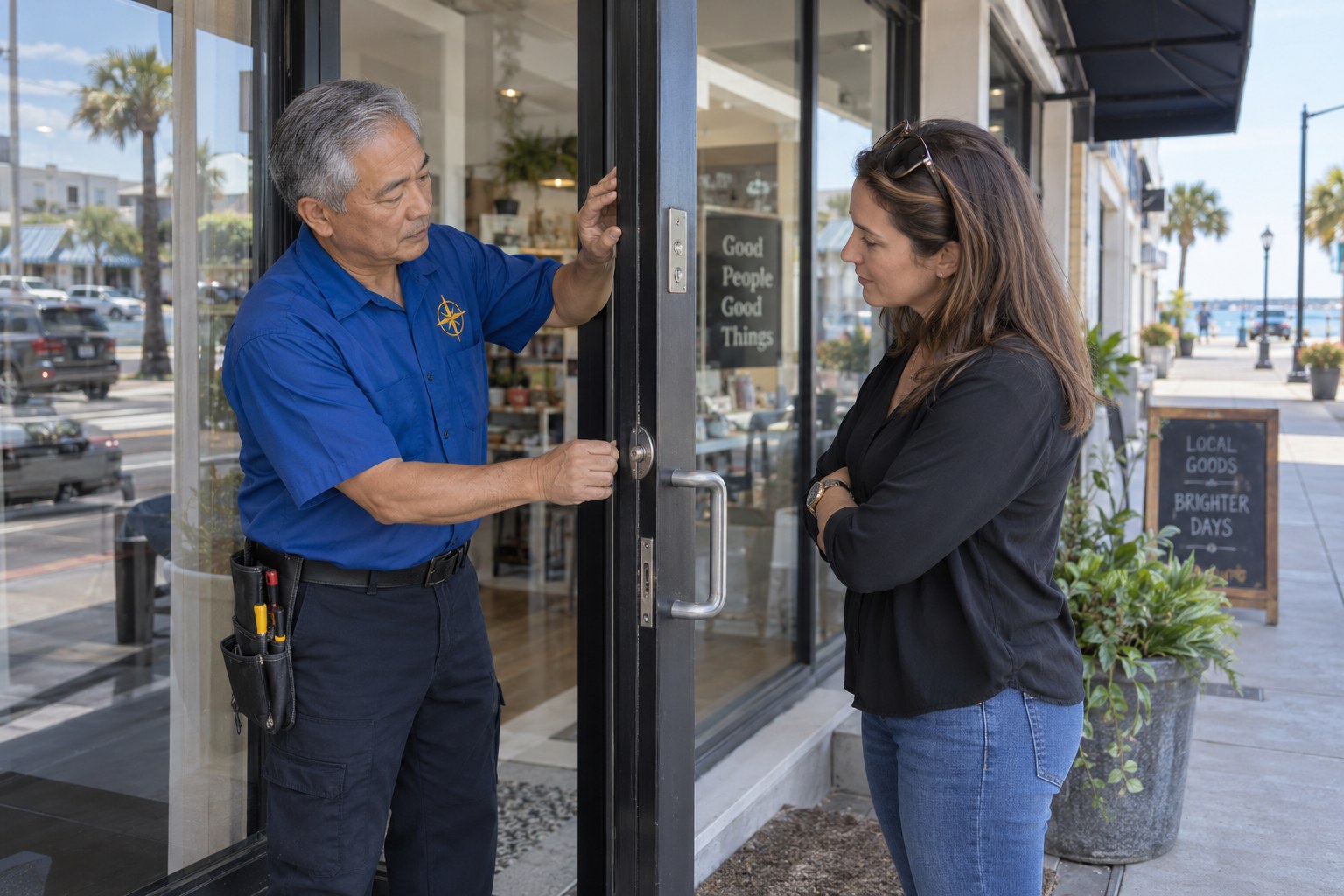
Before blaming the alarm, check the door. Does it close easily and latch every time? Is there a visible gap along the edge? Does the strike plate line up with the latch? A technician can adjust hinges, reposition the strike and trim a sticking edge so the door settles into its frame correctly. Often the alarm sensor then works without any change. Where the sensor mounting itself is loose, the alarm provider can reposition it.
Keep roles clear. The locksmith handles locks, strikes and hardware; the alarm provider handles sensors, wiring and panels. When a repair involves both, tell each of them what the other is doing. Before any lock work, notify the alarm provider if the door is monitored, so an unexpected signal is not mistaken for a break-in. Confirm that you are authorized to change the building's hardware. After the repair, test the door several times, both opened and closed, to be sure the alarm and lock agree with each other.
Keep a short contact list for both the locksmith and the alarm provider near the control panel. When a door acts up after hours, you will know who to call and what to say. Include the door names used in the alarm zones, so you can describe the problem precisely. Clear labels and a calm description often let each provider diagnose faster, and keep you from paying for the wrong visit.
A short coordination checklist
Before work: tell the alarm company, arrange test mode if appropriate, make sure someone has the code, and identify sensors on the door. This takes only a few minutes and prevents most problems on the day of the work.
During work: keep the door area clear, let the technician know where sensors and wiring are, and avoid leaving the door unattended and unlocked. If the work will leave the door temporarily insecure, plan for someone to stay.
After work: test the lock and the sensor, rearm the system, confirm the monitoring center receives signals, and update your key log and code list. If anything seems off, call right away so it can be corrected before the building is empty.
Over time: review the system once or twice a year, including seasonal checks before storms. Replace worn locks, adjust sagging doors, and test sensors. A little regular attention keeps locks and alarms working as a team.
Quick answers
Do I need to tell my alarm company before a lock is changed?
It is a good idea. They may suggest a test mode so the monitoring center does not respond to repeated door openings, and they can check sensors afterward. A short call in advance reduces false alarms and confirms the system still works after the door work.
Will rekeying a lock change my alarm code?
No. Rekeying changes which physical keys work, while alarm codes are managed by the alarm system. When someone leaves, handle both: collect keys or rekey, and remove or change their alarm code and access cards.
Why does my alarm say a door is open when it is closed?
Often the door has shifted so the magnet and sensor no longer line up, especially in humid conditions. A door adjustment, new strike, or sensor repositioning usually solves it. Keep notes on when it happens and tell both the locksmith and the alarm provider.
Can a locksmith change exit door hardware?
A locksmith can service many types of hardware, but exit doors must stay safe for people leaving and may be subject to building and fire rules. Questions about compliance belong with the local fire marshal or building official. Describe the door when you call.
Who handles smart locks tied to an alarm?
Often both a locksmith and the alarm or access provider have a role. The locksmith deals with the physical hardware, while the provider handles software and monitoring. Ask how the systems connect, and keep a mechanical backup key for emergencies.