
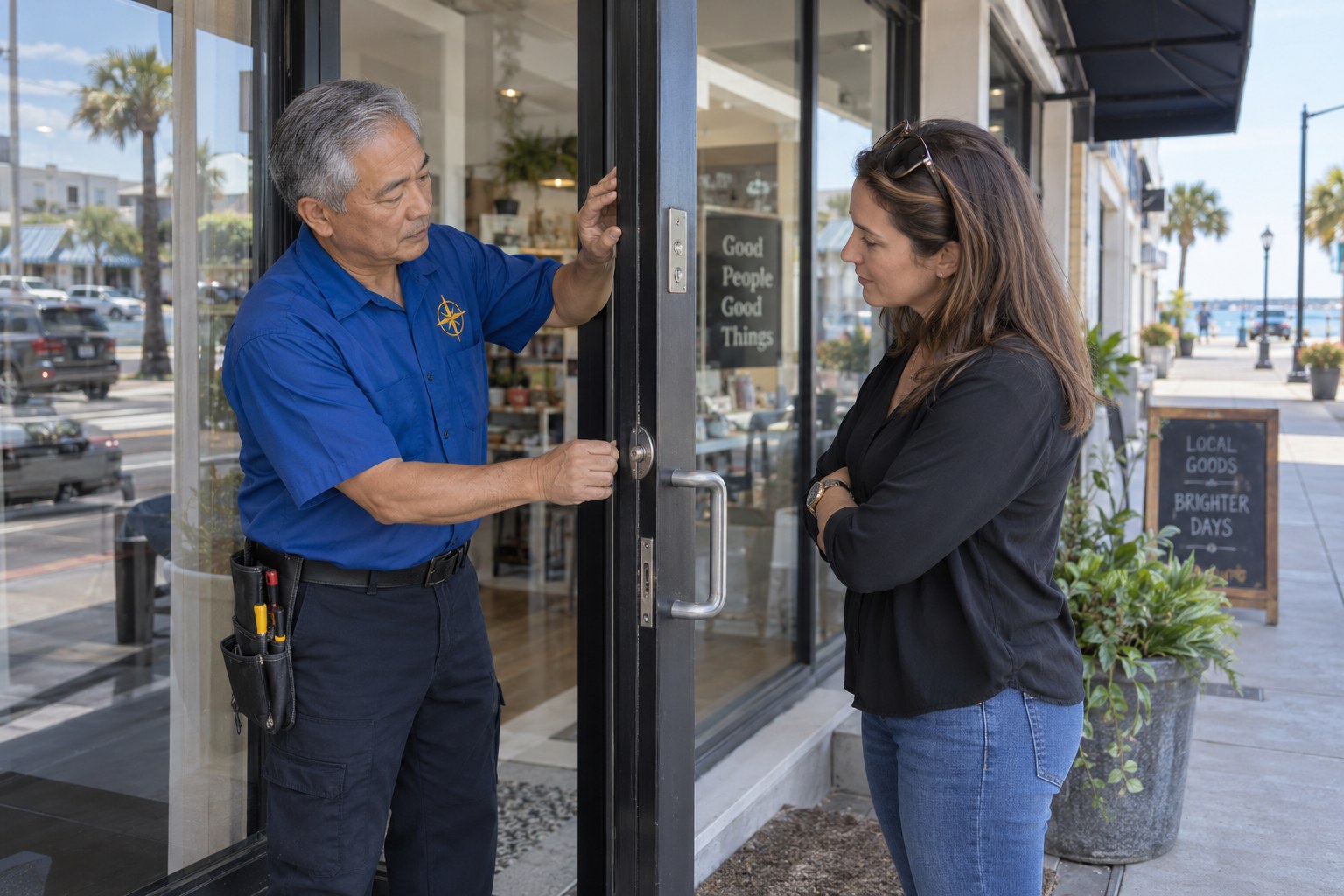
Why a process beats one-off fixes
When a manager handles each lock problem as a separate event, the day fills with small decisions: who to call, what to ask for, which keys to cut. A written process takes most of those decisions away. It tells everyone what happens at move out, who authorizes the work, and what proof is left behind afterward. The savings in time are real, and so is the reduction in mistakes.
A process also makes it easier to work with a locksmith. Instead of describing each job from scratch, you give a unit list, the lock types and the standard you want applied. The technician arrives knowing what to expect, brings the right pins and keys, and finishes in less time. Consistency helps both sides stay organized.
The process does not need to be elaborate. A one page checklist, a shared spreadsheet and a clear rule about who may approve changes are enough for most portfolios. What matters is that the same steps run every time, whether the unit is a studio apartment or a house with a detached garage.
Changing the cylinders each time a tenant leaves
The cleanest policy is simple: rekey the entry lock whenever a tenant moves out. A key does not know the lease has ended. Past tenants may have made copies, handed keys to friends or relatives, or simply forgotten to return them. Rekeying makes all of those keys useless in a single step, without anyone having to guess.
The job is quick on standard pin tumbler locks. The technician removes the cylinder, changes the pins, cuts new keys and tests them. Done between tenants, it takes little coordination, because the unit is empty. Many managers schedule the rekey on the same day as cleaning or painting, so the door is secure before the next person receives keys.
Some managers hesitate because they worry about the effort or the idea of repeating it often. In practice, the routine becomes part of the normal turnover and tenants appreciate knowing the lock was changed before they moved in. Before any rekeying, the locksmith confirms that the requester is the owner or an authorized manager.
Building a master key system
A master key system lets one key open many locks, while each tenant key opens only its own door. For a property manager, it reduces the key ring a maintenance worker must carry and speeds up access for inspections and repairs. It also creates a clear hierarchy of who can open what.
Designing such a system takes planning. Decide how many levels you need: a grand master for the whole property, sub masters for each building or floor, and individual keys for units. Each level adds complexity, so choose only what you need. A technician can help draw the plan and set up cylinders accordingly.
Master keys must be controlled tightly. A lost master exposes many units at once, and rekeying a full system is a bigger project than rekeying one door. Store masters in a locked cabinet, record every issue and limit them to those who truly need them. Some managers keep a single master in a safe and issue unit keys for daily work.
- Define levels: grand master, sub master, unit key
- Limit masters to essential staff
- Record every key issued and returned
- Store spares in a locked, logged cabinet
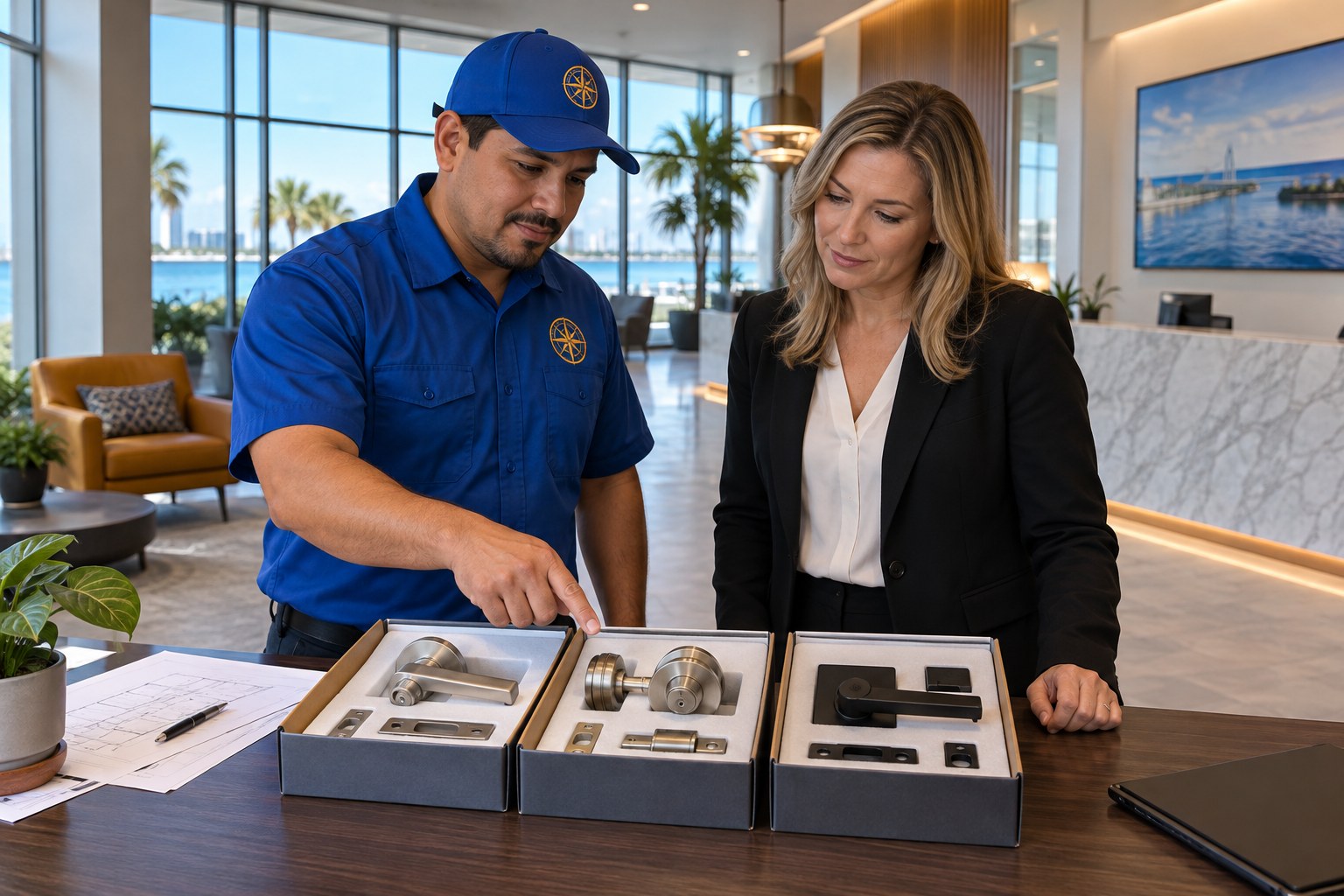
Key records and sign out
Every key a manager owns should be listed. The record should say which unit or door it opens, who holds it and when it was issued. A spreadsheet with filters is fine, and so is a paper log kept in a locked drawer. The important point is that someone updates it every time a key changes hands.
Keys that go to contractors need special care. Plumbers, electricians, painters and cleaners need access, but their keys should be returned when the job ends. A sign out sheet at the office makes this routine. If a contractor must keep a key for ongoing work, note it and set a date to review.
Tag keys with codes instead of unit numbers or addresses. A lost key with an address on it is an invitation. Use a coding system that only your office can decipher. Keep the code list separate from the keys, in a locked place, and update it when locks change.
Moving between lock brands and key types
Portfolios built over years often contain a mix of lock brands and key types. One building may have locks of one brand, another has different ones, and a third has whatever the previous owner installed. Managing that variety is difficult. Standardizing on a single brand and keyway reduces the number of key blanks, the need for specialty parts and the learning curve for staff.
Standardizing does not need to happen overnight. As locks wear out or are rekeyed, replace them with the chosen standard. Over time, the portfolio becomes uniform. A technician can help choose a durable brand that suits your climate and your budget and can supply parts easily.
If you take over a new building, treat the locks as unknown until verified. Ask the previous owner for key records, but do not rely on them. A rekey of all entry doors on takeover resets the situation and gives you control from day one. It is a small investment compared with the uncertainty of unknown keys.
Emergency access and lockouts
Tenants lock themselves out, sometimes at inconvenient hours. A manager needs a plan: who can authorize an opening, who verifies identity, and who is called. The locksmith checks ownership or authority before opening any unit. Typically the manager confirms the tenant's identity and authorizes the work, and the technician follows that instruction.
Do not give out tenant keys casually. A phone request from someone claiming to be a tenant is not enough. Use a method that confirms the identity, such as a photo ID shown at the office or a callback to the number on file. This prevents unauthorized entry and protects the tenant.
When you call, describe the unit type, the lock and the situation. Quotes are given by phone. If the job is complicated, a technician visits and the service call charge is explained before dispatch. Call us to confirm availability. Having a standard authorization form speeds the process on busy days.
Tenant requests and responsibilities
Tenants may ask to change their own locks, add a deadbolt or install a smart lock. The lease usually defines what is allowed. If you permit changes, require that the tenant provides a copy of the key or code, so you can enter in emergencies as the law allows. Check local rules about landlord access and notice.
If a tenant changes the lock without permission, handle the matter according to your lease and local law. Do not assume. Consult your attorney or the relevant authority for how to proceed. The locksmith is not a legal advisor and will not choose sides in a dispute. The technician confirms authority and follows the owner or manager's instructions.
Educate tenants. A short welcome sheet that explains how to report lock problems, what to do if a key is lost and how to reach the office prevents confusion. Make it easy to report issues, so small problems do not turn into big ones. Tenants who feel heard are more likely to take care of the property.
Mailboxes, common doors and shared areas
Beyond unit doors, a property has common entrances, laundry rooms, mail areas, trash enclosures, pool gates and storage rooms. These locks often receive less attention than unit locks, yet they affect every tenant. A broken lock on a shared door becomes a source of complaints and a security concern.
Mailbox locks, in particular, are tied to postal rules. The postal service controls the locks on many cluster boxes, and tenants may need to deal with them for lost keys. A locksmith can help in some situations but cannot override the postal authority. Know who is responsible before calling.
Common doors see heavy use and benefit from commercial grade hardware. Closers, exit devices and strike plates need adjustment over time. Build a schedule for walking the property and testing every shared door. A quarterly check catches loose hinges and stiff latches before they become emergencies.
Coastal wear on portfolio hardware
Salt air and humidity wear down hardware across the Pensacola area, particularly in buildings close to the water. Deadbolts stiffen, hinges corrode and screws rust. A portfolio may have units at different distances from the coast, so wear varies. Track which buildings show more corrosion and plan upgrades accordingly.
Consider hardware finishes rated for marine environments for exterior doors near the shore. They cost more at first but last longer. Pay attention to the screws as well; stainless steel screws resist corrosion better than plain steel. Small details like these reduce callbacks.
After storms, inspect every exterior door. Water, wind and debris can damage frames and jam latches. A door that no longer locks properly is a security risk and a liability. Maintain a list of units to check, and work through it systematically. Call us to confirm availability if you need help with a batch of repairs.
Scheduling work across many units
Batching saves time. When a technician visits a property, have a list of every unit that needs attention: rekeys, repairs, replacements. Group them by building and floor. A single visit that covers twenty doors is much more efficient than twenty separate calls.
Give clear access instructions. Tell the technician which units are vacant, which are occupied and how to reach tenants. For occupied units, give tenants notice as required by your lease and local rules. A smooth schedule respects tenants' time and keeps the work moving.
After the work, collect the keys, update your records and test a sample of doors. Keep a copy of the work order. If any issue appears later, you have documentation. A good rhythm of regular visits, with a reliable technician who knows your properties, makes the job easier over time.
Handling lost keys and damaged locks
Tenants lose keys. Leases usually say who pays for replacement. When a key is lost, the practical answer is usually to rekey the lock so the missing key is useless. Doing so promptly protects the tenant and the property. Document the incident in your records.
Damaged locks occur from forced entry attempts, wear, misuse or accidents. A technician can assess whether the lock can be repaired, rekeyed or must be replaced. If a break in is suspected, the police report and the repair should be coordinated. Securing the unit comes first.
Do not delay repairs on exterior doors. A unit that cannot be locked is a risk to the tenant and to neighbors. If a tenant cannot be reached, document the situation and secure the door as your lease and local law allow. Keep photos of the damage for your records.
Older buildings and historic doors
Pensacola has many older buildings, including converted houses split into apartments and historic structures with original wooden doors. These doors often carry old mortise locks, glass knobs or hardware that has been painted over many times. Replacing everything is rarely the best approach, since the hardware may be part of the character of the building and a good mortise lock can outlast modern replacements if it is maintained properly.
A technician who understands older hardware can often rekey a mortise cylinder, repair a worn latch or adapt a modern deadbolt without damaging the door. Some work requires care, such as chiseling for a new strike in old wood or working around lead based paint concerns that call for proper precautions. Ask the technician how they approach historic doors and what they recommend before agreeing to any work.
Frames in older buildings may have settled, so doors no longer sit square. A lock that binds is often blamed, but the cause is the frame. Adjusting the strike plate or planing a door edge may solve the problem more cleanly than a new lock. Be open to honest advice about whether a repair, a rekey or a replacement is the better path.
Preparing the unit list before a rekey day
The more information a technician has before arriving, the smoother the day goes. Build a simple table that lists every unit, the type of lock on the entry door, whether there is a second lock such as a deadbolt, and any known problems. Include photos if you can. Photos of a lock face often tell the technician what parts to bring more reliably than a verbal description.
Decide in advance how many keys each unit needs. Standard practice is two or three for the tenant, plus one for the office. Fewer keys mean fewer copies in circulation. Decide also whether the deadbolt and the knob should share a key, since a single key is convenient but a mismatch is a common source of confusion when tenants move in.
On the day, assign one person to coordinate with the technician. That person confirms authority, opens vacant units, tracks completed doors and collects the new keys in labeled envelopes. A clear end of day check, in which a sample of doors is tested with the new keys, closes the job properly and gives you confidence that the records match the doors.
Setting up a service relationship
Property managers benefit from a consistent contact for lock work. A technician who learns your buildings, your hardware and your preferences becomes faster and more useful over time. Share your unit list, lock details and key system plan so the technician has a reference.
Agree on how authorizations will be given. Decide who may approve work and how that is communicated. Before rekeying, opening or programming anything, the locksmith confirms ownership or authority, and clear communication prevents delays. A short written authorization list helps on busy days.
Ask questions about pricing structure and the service call charge. Quotes are given by phone, and if a job is complicated, a technician visits and the service call charge is explained before dispatch. Clear expectations on both sides keep the relationship smooth and the portfolio secure.
Quick answers
Should I rekey every unit at every move out?
Many managers do, because it removes any uncertainty about copied or unreturned keys. It is a quick job on standard locks. Some choose to rekey only when keys are unaccounted for. A technician can discuss what suits your portfolio.
Who can authorize a lockout opening for a tenant?
The owner or an authorized manager. The locksmith checks ownership or authority before opening any unit, and the manager typically confirms the tenant's identity first.
What is the benefit of a master key system?
It lets staff open many doors with one key while tenants open only their own. It reduces key rings and speeds up access. The tradeoff is that a lost master affects many units, so control and records are essential.
Can tenants change their own locks?
That depends on the lease and local law. If you allow it, require a copy of the key or code so you can enter when permitted. A locksmith follows the owner or manager's instructions after confirming authority.
How do I get a quote for several units?
Call us with the number of units, lock types if known and what you want done. Quotes are given by phone. If the job is complicated, a technician visits and the service call charge is explained before dispatch. Call to confirm availability.