

Think about locks at the start of the plan
Most move plans list the truck, the movers, the internet provider, and the new furniture. Locks are often missing, then show up as an emergency on moving day when the movers are standing at a door that nobody can open. Adding keys and locks to the plan from the beginning costs nothing and removes one of the most common surprises.
Ask three early questions. Who controls the keys at the new space, and when will you receive them? Who controls the keys at the old space, and when does your responsibility end? And who on your team will manage the transition? Naming one person keeps the work from falling between the cracks.
Check your lease at both ends. The new lease may say whether you can rekey or add locks, and whether the landlord must keep a copy of every key. The old lease may require that you return all keys, remove any locks you installed, or restore the space to its original condition. Knowing these terms in advance prevents disputes.
Write a short move lock timeline: when the new keys arrive, when the locks are changed, when movers get access, when staff receive keys, when old keys are collected, and when the old space is handed back. A simple timeline with dates is enough.
Securing the new space before you arrive
The new office has a key history you do not know. The previous tenant, the landlord, cleaners, and contractors may all hold keys. Before valuable equipment and records arrive, consider rekeying the exterior doors and any interior doors that matter. That way the only keys that work are the ones you issue.
Schedule the rekey before moving day if possible. A technician needs a quiet time to work, and doing it before boxes crowd the hallways makes it quicker and cleaner. The locksmith will confirm that you are the tenant with authority, so have the lease or a letter from the landlord ready.
Ask the landlord whether the building uses a master key system. If the building has one, the landlord may need to approve or perform the rekey, and your doors may be part of a larger arrangement. Understanding this early avoids a surprise when a rekey turns out to need permission from several people.
Test every lock and door at the new location during a walkthrough. Look at deadbolts, handles, latches, closers, and window locks. Tell the landlord about anything that needs repair before you move in, in writing, so that responsibility is clear from the start.
Be realistic about timing. Landlords and technicians both have schedules, and a rekey requested the day before the move may not fit. Ask early, confirm the date in writing, and keep a backup plan, such as a temporary lock on the door, if the work has to slip.
- Ask who holds existing keys at the new space
- Rekey exterior doors before valuables arrive
- Check the lease for rekey and key copy rules
- Test all locks during a walkthrough and report problems in writing
Moving day access and control
Moving day is high risk for lost keys and open doors. Movers prop doors, carry boxes in and out, and may leave the building unattended for minutes at a time. Decide who will be at the door, who has the keys, and when the building will be locked again. A person assigned to watch the entrance is worth the time.
Give movers temporary access, not permanent. If possible, issue a single temporary key or code for the move, and retrieve it at the end of the day. If the new locks have already been rekeyed, do not hand a copy of your permanent key to a moving crew.
Protect sensitive items. Computers, files, and cash handling equipment should travel with your own staff or in a locked container. Do not let sensitive records sit in an unlocked truck or an unlocked room overnight. Plan where they will be placed so they can be locked in as soon as they arrive.
Keep a short list of key people available throughout the day: someone with authority at the new site, someone at the old site, and your locksmith contact. A problem with a door during a move spreads quickly if the people who can solve it cannot be reached.
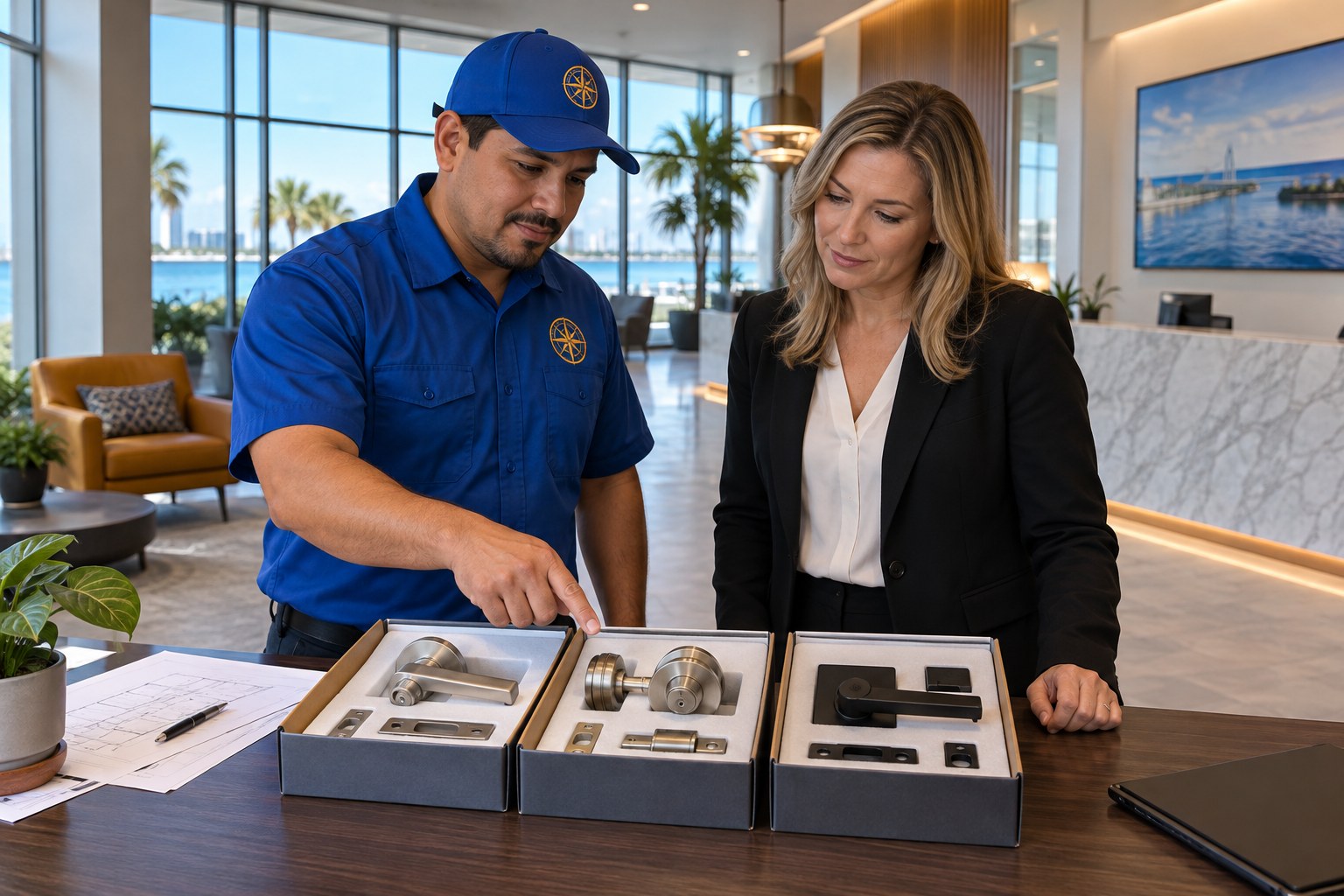
Issuing new keys to your team
Once the new locks are in place, create the key log first, then hand out keys. Record each key, who received it, and the date. Ask every person to sign. It is a small step that sets the tone for care with keys in the new location.
Reconsider who needs which key. A move is a natural time to simplify. Perhaps in the old space everyone had a key to everything, but in the new space only two people need access to the storage room. Use the move as an opportunity to tighten the list without making it feel like a punishment.
Explain the rules briefly. Keys are not to be copied. Lost keys are reported the same day. Visitors and vendors are admitted through a set process. Short, clear expectations are much easier to follow than a long policy document that nobody reads.
If your new space uses electronic access, set up user codes or cards individually rather than sharing one code. Individual credentials let you remove a person's access later without changing everything. Change any default codes the system came with.
Closing out the old space
Your old space is where most of the leftover risk lives. Employees still carry keys, former staff may have copies, and the landlord may hold spares. Before you hand the space back, make a list of every key you know exists and plan to collect them.
Collect keys in a final walkthrough. Ask each key holder to return their keys and record the return in the log. Note any keys that cannot be found. A missing key at the old space matters less once you leave, but you should still tell the landlord so that they can decide whether to rekey for the next tenant.
Remove anything you added. If you installed locks, a keypad, a safe, or other hardware, read your lease to learn whether you must take it out or leave it. A locksmith can remove and restore standard hardware so that the door is returned in good condition, which can protect your deposit.
Do not leave the old space unsecured. Until the lease ends, you are responsible for the premises. Make sure the doors lock properly, and keep one trusted person with a key until the handover is complete. Be careful with the last day, because empty spaces attract unwanted attention.
Handling alarms, gates, and access cards
Locks are only part of the picture. Many offices also have alarm codes, parking gate remotes, building access cards, and keypad entries. Make a list of all of these for the old and new locations, and decide who handles each one. Missing items from this list are common after a move.
Cancel or transfer the old alarm account on the right date. An alarm left active in an empty space can send false alerts to people who no longer work there, and one that is turned off too early leaves the space exposed. Coordinate with your provider so the switch is smooth.
Collect access cards and remotes from staff who are no longer using the old building. Ask the property manager to disable cards that are not returned. Cards are easy to forget about, and a card that still works is a key you did not collect.
At the new location, set up the alarm and access system before the move, if possible. Practice opening and closing with the system so that your staff know the routine on their first day. This reduces the false alarms that often occur when a team is learning new equipment.
Dealing with safes, file cabinets, and special locks
Safes and heavy file cabinets are the hardest items to move, and the lock details are easy to overlook. Make sure you know the combination or have the key before the move. If you do not, a locksmith can help, once ownership or authority is confirmed. Do not wait until the day the safe arrives.
File cabinet keys are small and easily lost. Tape a spare to the inside of a locked drawer in some other secure location or keep spares in your key log. During the move, put the keys in an envelope with the cabinet's label so they stay together and can be found.
Consider changing combinations or rekeying special locks after the move. If a number of people knew the old combination, moving is a good time to reset it. This is also true for safes that held cash or records. A technician can reset a lock without replacing it in many cases.
If a cabinet or safe lock is damaged during the move, avoid forcing it. Call and describe the problem. Forcing a damaged lock can make a repair more difficult, while a careful approach may save the lock. Mention the make if you know it, which helps with the phone quote.
Common mistakes in office moves
One frequent mistake is assuming the landlord has changed the locks. Many landlords do this between tenants, but not all, and you cannot be sure unless you ask. Even if they say yes, a rekey of your own gives you peace of mind about who holds a key.
Another is handing out too many keys on moving day. In the rush, people ask for access and the person managing the move says yes. The result is a pile of keys that were not logged. Decide beforehand who needs access and stick to it, even when the day is busy.
A third mistake is forgetting the old space until the lease ends. Keys left behind, doors left unlocked, and alarm codes forgotten all create trouble. Put the old space handover on the calendar as a real task with a named person responsible.
A last mistake is skipping a record. After the move, the building has a new key history that starts with your log. If you do not write it down, you will be doing an audit sooner than necessary. A simple log kept from day one is the best habit a business can build.
Local points for Pensacola businesses
Businesses in the Pensacola area often move between older downtown buildings, shopping plazas, and newer office parks. Older buildings may have doors and frames that are worn or not standard, and newer ones may have electronic access that the landlord manages. Ask what kind of system you are inheriting.
Coastal conditions matter. Locks near the water corrode faster, and moving equipment through humid air and rain can damage electronic hardware. Plan the move on a day with good weather where possible, and protect keypads and readers from moisture while they are being installed.
During hurricane season, an unfinished move can become urgent. If a storm threatens, your priority is securing both locations. Keep a few key people with copies of keys, and have a plan for closing up the old and the new space on short notice.
Many offices in the area serve visitors, students, and military families who come and go. If your business has public hours, consider how the new space will be opened and closed, and who is responsible. Clear routines at a new site reduce the early stumbles that every move brings.
Getting help from a locksmith
A locksmith is useful at several points in a move: rekeying the new space, setting up a master key system, removing hardware from the old space, opening a locked safe or cabinet, and repairing a door damaged in transit. Planning these tasks together on a single visit is usually more efficient than scattered calls.
When you call, tell us how many doors are involved, what type of locks they have, whether a landlord controls the system, and your moving date. Quotes are given by phone. If the work is complicated, a technician visits first and the service call charge is explained before dispatch.
The technician checks ownership or authority before rekeying or programming. For a lease, that may mean the lease itself, or a letter from the landlord. Having the document on hand speeds the visit and keeps everything proper.
Call to confirm availability for your moving window. Contact us early, since move dates are often fixed and rekeying is best done before the boxes arrive. A little planning on the lock side lets everyone else on the team focus on getting back to work.
A simple week-by-week move schedule
Four weeks before the move, gather the lease terms for both locations and decide who owns the lock tasks. Request the new keys, ask whether the landlord holds a master key, and ask about any limits on rekeying. Write down the dates when you will receive keys so that nothing waits until the last minute.
Two weeks before, book the rekey for the new space and tell the technician your target date. Start a key log for the new location and decide which people will receive keys. Order any extra hardware, such as a better deadbolt or a keypad, so that it arrives before the work visit.
In the final week, confirm access for the movers, notify the alarm company, and brief staff on the new opening and closing routine. Walk the new space once more and check that every lock works. Prepare an envelope for old keys so that returns are easy to handle on the last day.
After the move, spend a short time on cleanup. Update the log, collect old keys, return the old space, and schedule a quick follow up at the new location in a month to check that doors, closers, and locks are working as expected after heavy use.
Quick answers
Should I rekey the new office before moving in?
Usually yes. You do not know who holds keys from the previous tenant, the landlord, or contractors. Rekeying before valuable equipment arrives means only the keys you issue will work. Check your lease first, since some require landlord approval, and have your lease ready for the locksmith.
What should I do with keys from the old office?
Collect them from every holder, record the return in your log, and tell the landlord about any that are missing. Return keys as the lease requires, and remove any hardware you added if the lease says so. Keep one trusted person with a key until the handover is complete.
Can movers have a copy of my key?
It is better to give movers temporary access that you collect at the end of the day, or to have someone at the door. Avoid handing a permanent key to a moving crew. If the new locks are rekeyed, only give out keys you have logged.
What about alarms and access cards during a move?
List every alarm code, gate remote, and access card for both locations, assign someone to handle each, and cancel or transfer them on the right date. Collect cards from staff who no longer need them, and ask the property manager to disable any that are not returned.
How do I get a quote for rekeying several doors?
Call and describe how many doors, the lock types, and your moving date. The quote is given by phone. For complicated jobs, a technician visits first and the service call charge is explained before dispatch. Be ready to show your lease or landlord permission.