
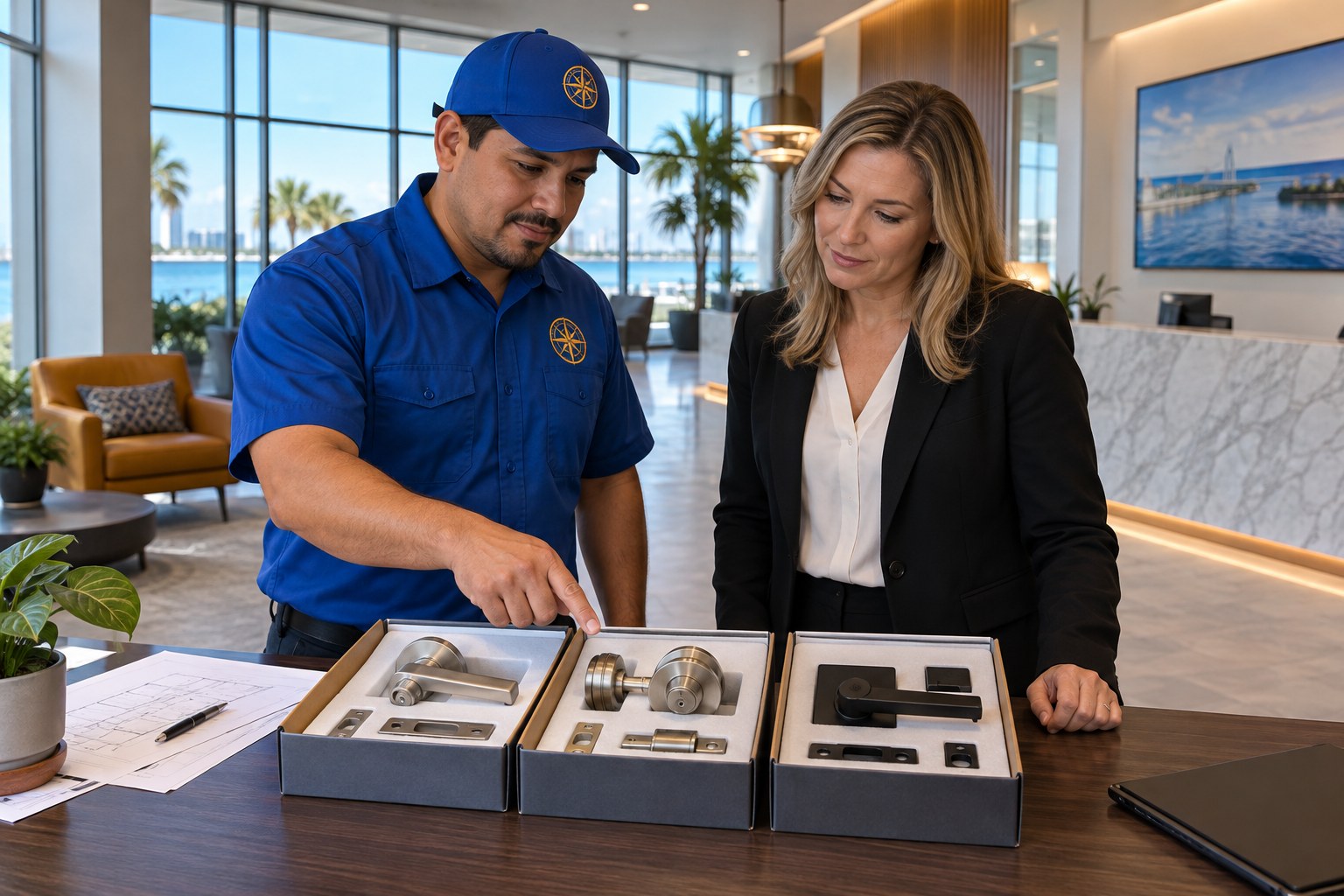
The guest room door as a system
A guest room door is more than a lock. It includes the door slab, the frame, the hinges, the closer, the latch, the deadbolt, the secondary guard, the peephole and often a sensor or indicator. When a guest says the door does not lock properly, the cause may be any of these parts. Good service starts by looking at the whole assembly instead of blaming the lock.
Guests judge the property partly by how the door feels. A smooth latch and a firm click give an impression of care. A sticky lock, a door that must be shoved or a handle that wobbles suggests neglect. Since guests have no loyalty to your hardware, they will complain or leave a note whenever something feels wrong.
Management must also think about safety. A guest must be able to secure the room from inside and leave quickly in an emergency. The rules that govern those functions come from fire and building authorities, not locksmiths. A technician can service and repair hardware that meets your requirements, and can describe what a given device does, but your authority decides what is acceptable.
Traditional keys and key cards
Older motels often use mechanical keys with a tag, sometimes with a deadbolt operated by thumb turn from inside. These systems are simple and do not depend on power or software. They are also easy to lose, copy and carry away. Guests leave with keys more often than you might expect, and each missing key slowly erodes the security of the property.
Key card systems solve many of these problems. A card is coded for the length of the stay and stops working afterward. Lost cards are simply replaced, and the lock is reprogrammed in seconds. The tradeoff is dependence on batteries, software and often a vendor. When a lock reader stops working, the cause may be a dead battery, a bent card, or a failing reader.
Many properties run a mix, with card locks on guest rooms and mechanical keys for service doors. Whatever system you have, keep a clear record of what opens what, and keep emergency access methods available to staff. A technician can help with mechanical parts and many electronic lock issues, and can tell you when a problem belongs to the system vendor.
Lost keys, unreturned cards and rekeying
With a mechanical key system, a lost key means the room is no longer fully controlled. The usual practice is to rekey the cylinder so the missing key no longer works. Rekeying takes a short time per door and gives you a new key, while keeping the hardware in place. Doing this promptly protects the next guest and your property.
If you have a master key system, a lost master is a larger problem. Many doors are affected, and rekeying may involve a whole wing or the entire property. This is a good reason to restrict masters tightly, track them carefully and consider keeping them in a safe rather than on staff rings that travel home.
For card systems, the answer is reprogramming. When a card is not returned, it is usually invalidated by the next one issued. A staff card that is lost can be deactivated centrally. Before any rekeying or reprogramming, the locksmith confirms ownership or authority, usually through the owner or general manager. That check protects you from unauthorized changes.

Common failures in guest room hardware
The most frequent complaint is a door that does not latch properly. Causes include a closer that is too weak or too strong, a strike plate that has shifted, a door that has swelled in humid weather, or a latch bolt that has worn. Each has a different fix, and a technician can usually identify the cause in minutes by watching the door close.
Handles and levers loosen with thousands of operations. Screws back out, spindles wear and internal springs weaken. A loose handle is annoying, but it can also be an early sign of a failing latch. Tightening, replacing a worn lever or renewing the latch can restore the feel. Waiting until a handle falls off creates a more urgent repair.
Deadbolts and secondary guards such as swing bars and chains also need attention. They are used heavily and often abused by guests. A bent bar, loose chain or broken thumb turn leaves the guest feeling unsafe. Regular inspections as part of housekeeping routines catch these early. Staff should be encouraged to report anything that feels wrong.
- Door does not latch because of closer or strike alignment
- Loose or worn levers and handles
- Worn deadbolts or thumb turns
- Damaged swing bars, chains and peepholes
Housekeeping as an early warning system
Housekeepers see every door in the building, often several times a week. They notice hinges that squeak, latches that stick and handles that rattle. A simple way to catch problems early is to give them a quick way to report them. A form, a note on the cart or a message to maintenance works well, as long as someone follows up.
Create a short checklist for each room turnover: door closes, latch engages, deadbolt turns, secondary lock works, peephole is clear. It takes seconds and gives a baseline. When a room fails the check, it can be marked for repair before the next guest arrives. This prevents the kind of complaint that arrives at the front desk at midnight.
Keep a log of repeated problems. If the same room keeps having door trouble, there may be a frame or hinge issue underneath. A technician can look at the pattern and recommend a lasting fix rather than a series of temporary ones. This approach saves time and money compared with fixing the same symptom again and again.
Humidity, salt air and storm season
Properties along the Gulf Coast live with moisture. Exterior walkway doors at motels face weather directly, and salt air corrodes latches, hinges and strike plates faster than inland conditions. Wooden doors swell in summer and shrink in cooler months, which makes latching inconsistent. Hardware made for coastal use and regular maintenance help.
Lubricating hinges and checking for rust staining are simple habits. Cylinders can be cleaned and treated with a lock suited lubricant. Avoid heavy oils that attract grit. A technician can show your maintenance staff what works, and can replace parts that are corroded beyond use. Preventive care is simpler than emergency replacement during peak season.
Hurricane season requires planning for evacuations, closures and reopenings. After a storm, doors may be warped, frames shifted and electronic locks affected by water or power loss. Test each door before returning rooms to service. If a door fails, call us to confirm availability and describe the damage, so the right parts and tools can be brought.
Connecting doors, balcony doors and patio sliders
Many rooms include a connecting door between two units, which can be locked from both sides. Both locks must work and both must be set correctly for privacy. A connecting door with a loose latch or a missing bolt is a common source of guest complaints, and a quick repair usually resolves it.
Balcony and patio doors, often sliding glass, carry their own locks. Sliders use latches that can wear, bounce open or be lifted from the track. A secondary bar or pin lock in the track adds security. Tracks fill with sand and debris at the beach, so cleaning them regularly keeps the door gliding and the lock engaging properly.
Exterior balcony doors on upper floors are a safety matter as well. They should be easy to operate from inside for guests and staff but hard to open from outside. Check with your authority on any rules about egress. A technician can repair or replace latches, bolts and locks on these doors.
Lockouts at the desk and after hours
Guests lock themselves out all the time, usually leaving a key or card inside. The front desk typically has a way to let them in, either through a master card or a staff key. Make sure staff verify identity before opening a room. Simple checks protect guests from unauthorized entry, and your staff need clear instructions about what to ask.
If a staff key fails, or if the lock itself is jammed, a mobile technician may be needed. Before opening any guest room, the locksmith confirms authority with management. The technician will not open a room on the word of a stranger. This is a basic protection for the guest and for the property.
When you call, give the room number only if appropriate, describe the type of lock and say what has happened. Quotes are given by phone. If the job is complicated, a technician visits and the service call charge is explained before dispatch. Call us to confirm availability. Having a spare plan, such as an alternate room, keeps guests comfortable while repairs are made.
Staff areas, storage and back of house
Beyond guest rooms, a property has laundry rooms, storage closets, offices, ice and vending areas, pool equipment rooms and mechanical spaces. Each needs a lock suited to its use. Back of house doors are used heavily by staff and tend to be neglected until they fail. Regular checks help catch loose handles and sticky latches.
Cash handling areas deserve special care. The front desk office, safe and any drop box should have robust locks, limited keys and clear procedures. If a safe key or combination is lost, a technician can open it after confirming ownership and authority. Never leave a spare key in an obvious place near the safe.
Pool and spa gates are safety features and often governed by rules about self closing and latching. Locks and latches on these gates need attention in the harsh outdoor environment. Replace corroded parts, and check that the gate closes and latches by itself every time. Your authority decides the requirements, and the locksmith services the hardware.
Guest privacy and the feel of a safe room
Guests check a door within seconds of entering a room. They turn the deadbolt, slide the guard, glance at the peephole and test the handle. If anything feels flimsy, trust drops immediately. This is why small hardware details matter so much to hospitality businesses: they are among the first things a traveler uses to judge whether a stranger's building is safe.
Privacy features should be clear and easy to understand. A do not disturb indicator, a visible deadbolt and a guard that fits snugly into its keeper all communicate security. A thumb turn that is stiff or a bar that no longer reaches its slot sends the opposite message. These are inexpensive parts to replace and worth keeping on hand.
Remember that guests include families, solo travelers and people who may feel nervous in an unfamiliar place. A room that closes firmly and locks with a satisfying click helps them relax. Technicians who understand this focus on reliability and smooth operation, rather than treating each repair as an isolated chore. That mindset keeps complaints low and reputation steady.
Key control for property staff
Staff keys deserve the same attention as guest keys. Housekeepers, maintenance workers, front desk agents and managers all carry keys, and the risk grows with the number. Use a sign out sheet or a key cabinet, and make sure keys stay on the property. A key that goes home in a pocket is a key that can be lost.
Master keys should be limited to those who truly need them. Consider using card based staff access so that cards can be deactivated when employees leave. If you use mechanical masters, record who holds each and rekey if any is lost. Turnover is high in hospitality, so a standard checkout process helps.
A periodic review of the key list prevents drift. Ask each holder whether they still need the key, and retrieve those that are no longer necessary. Where doubt exists, rekey the affected area. It is a routine task, and a locksmith can do it quickly while minimizing disruption to guests.
Seasonal demand and planning repairs
Coastal properties see strong seasonal swings. Summer, holidays and event weekends can fill every room, and a door out of order means lost use. Schedule hardware work during slower periods where possible, and keep a priority list of rooms that need attention before the busy season starts. A prepared list lets a technician move through rooms efficiently.
Stock a few common spare parts, such as levers, strike plates and latches for your lock type. If you know the brand and model of your guest locks, record it. When a problem occurs, being able to tell the technician exactly what you have shortens the visit. Photos of the hardware sent before the visit help as well.
Consider replacing aging hardware in a planned way. Room by room replacement during slow months avoids the stress of failure at peak times. Your technician can help set priorities based on wear. A planned approach keeps rooms in service and gives guests the sense that the property is cared for.
Details to gather before phoning about a hotel or motel lock
Good information speeds service. Have ready the type of lock (key, card or both), the brand if you know it, the number of rooms affected and a description of the problem. Note whether the door is on an interior corridor or an exterior walkway, because weather exposure affects the diagnosis.
Have someone with authority available to approve the work. For guest rooms, the locksmith confirms that the person requesting service represents the owner or management. Keep a master list of rooms, so that the technician can be directed quickly. If a room is occupied, coordinate with the guest or reassign them first.
Ask about the process for larger jobs. If many doors need work, a visit to assess the property may be best before quoting. Quotes are given by phone for simple jobs, and when a job is complicated a technician visits and the service call charge is explained before dispatch. Call us to confirm availability.
Quick answers
Is a key card lock better than a traditional key?
Card locks make lost keys easier to handle, since cards can be deactivated and replaced quickly. They depend on batteries and software, though. Mechanical keys are simple but easy to lose. Many properties use a mix. A technician can explain how each behaves and what maintenance they need.
What should we do when a guest key is not returned?
For mechanical keys, rekey the cylinder so the missing key no longer works. For cards, reprogram or invalidate the old one. Before any rekeying, the locksmith confirms authority with the owner or manager.
Why does a room door sometimes not latch in humid weather?
Swelling can change how a door fits its frame, so the latch no longer lines up with the strike. A closer that needs adjustment or a shifted strike plate can also be the cause. A technician can usually find the cause by watching the door close.
Can you open a guest room for a person claiming to be the guest?
Not without authority from management. The locksmith checks ownership or authority before opening any room. Front desk staff should verify guest identity according to property procedure before requesting service.
How do I schedule work on several rooms?
Call us, describe the rooms and problems, and we will confirm availability. Quotes are given by phone. If the job is complicated, a technician visits and the service call charge is explained before dispatch.