
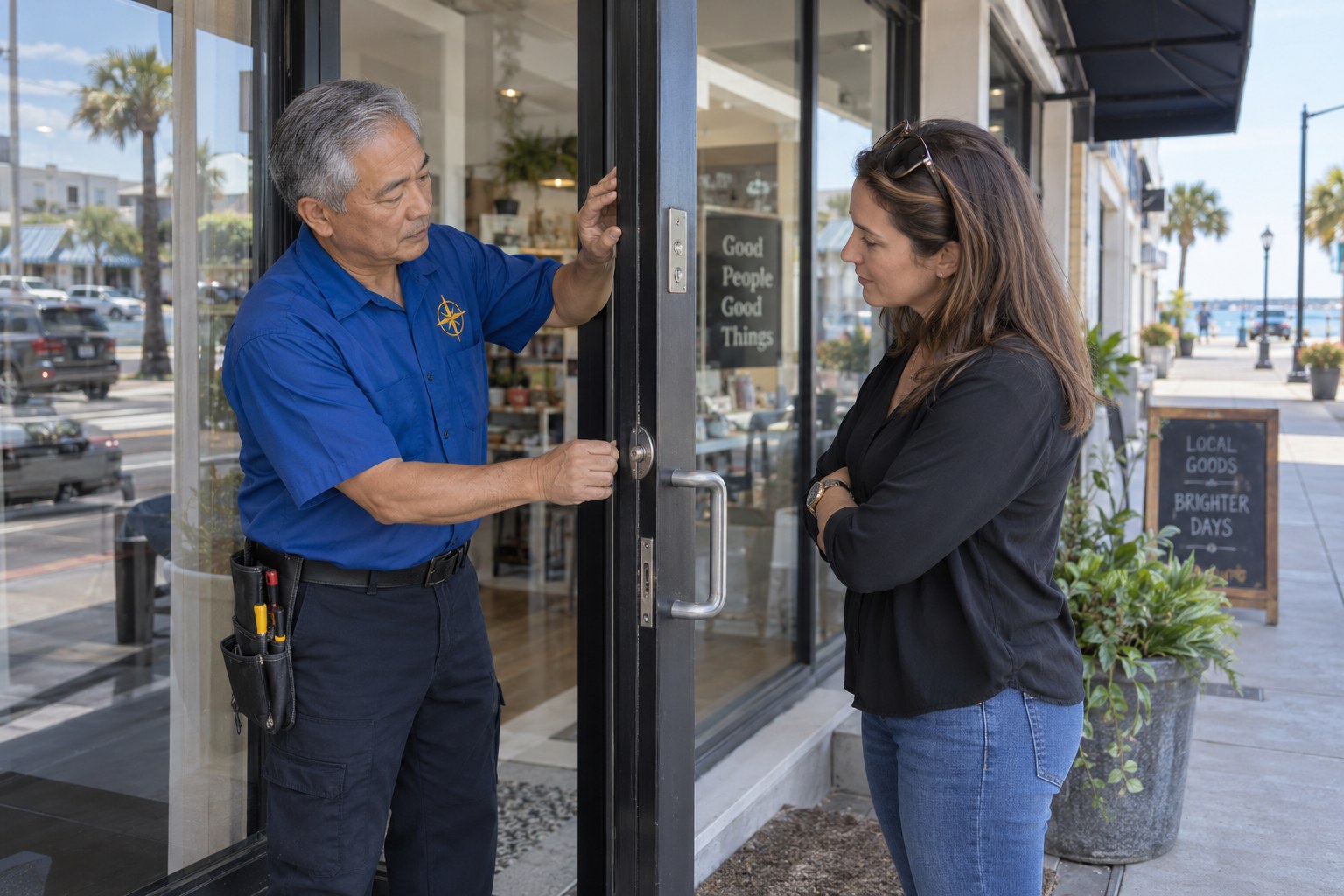
Why storefront doors wear out faster
A house front door might open a few dozen times a day. A restaurant or retail entrance can cycle several hundred times between opening and closing, and each cycle puts small stresses on the latch, the hinges and the cylinder. Over months, that adds up to loose screws, sagging doors and a key that begins to feel rough. These are not signs of a bad lock so much as a lock doing a very hard job.
Coastal weather adds to the load. Salt air, humidity and sand carried in on shoes all find their way into mechanisms, and a cylinder that sees daily use collects grit faster than one in a quiet hallway. A lock that starts sticking is giving a warning. Ignoring it usually ends with a key snapping or a door that will not lock at the worst possible time, often right at closing.
The practical lesson is to match the hardware to the traffic. Heavy duty commercial grade locks are designed for constant cycling, with thicker internal parts and sturdier fasteners. A technician can look at your front entrance and tell you whether the current set is up to the task or whether you are asking a light duty lock to do heavy duty work.
Choosing the right entrance hardware
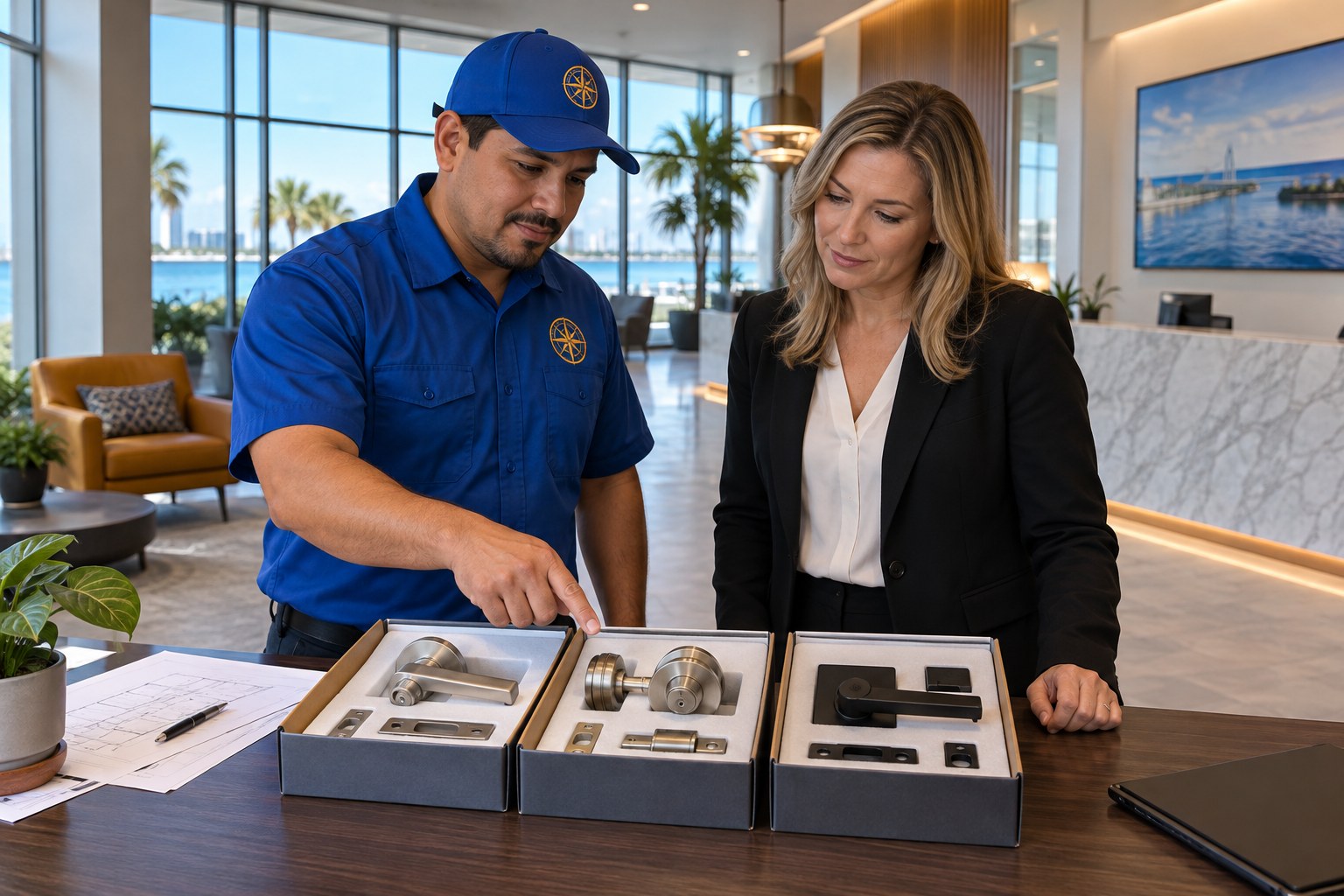
Entrance doors on shops commonly use one of a few styles: a mortise lock set into the edge of a heavy door, a cylindrical lock on a lighter door, or a deadbolt paired with a push bar or pull handle on a glass storefront door. Each has trade-offs. Mortise locks are strong and long lived but cost more to replace. Cylindrical sets are simple but can loosen with heavy use.
Think about how your customers actually enter. A restaurant that wants a welcoming, open feel may prefer a pull handle with a separate deadbolt that staff lock at night. A boutique with a narrow doorway may prefer a lever handle that is easy to operate with full hands. Whatever you choose, the lock should be easy for staff to operate quickly in the morning and the evening.
Ask about keyed alike options if you have multiple entrances. One key for the front, back and storage entries can reduce the number of keys staff carry, though it also means a single lost key exposes everything. A restricted keyway adds control. The technician will explain how each choice affects your daily routine and your risk, so you can decide in plain terms.
Back doors, kitchens and delivery access
The back of a restaurant is where much of the real work happens, and it is often where security is weakest. Deliveries arrive, staff take out trash, cooks step outside for air, and the door is frequently propped open with a bucket or a brick. A door that is regularly propped is a door that is not protecting anything. Better hardware can make proper use easier than the shortcut.
A sturdy deadbolt with a strong strike plate and a solid frame matters here, because a back door is far more likely to face forced entry than the front. Exit hardware, such as a push bar, can allow quick escape from the inside while keeping the outside secure. Local fire and safety codes affect what is allowed on exit doors, and your inspector or a code resource decides the details. A locksmith can describe the hardware, not replace your code authority.
Consider a door position alert or a self closing hinge if staff tend to leave the back open. These small additions reduce the temptation to prop the door. Also think about lighting and visibility behind the building, since a well lit rear lot discourages casual trouble. Hardware helps, but habits and environment complete the picture and keep the back of the building from becoming the soft spot.
- Heavy duty deadbolt with a reinforced strike plate
- Self closing hinges or a closer so the door does not stay ajar
- Exit hardware suited to your local code requirements
- Clear lighting and sightlines at the rear
Late closings and tired locking up
Closing is when mistakes happen. The last employee is tired, the register is counted, the floor is mopped, and the door is pulled shut with a hope that it latched. Many lockouts and unlocked nights come from doors that feel locked but are not. A lock that gives clear feedback, with a firm turn and an obvious bolt position, helps a tired person do the job correctly.
Consider simple habits that back up the hardware. A closing checklist near the back door, with a line for checking both deadbolts, takes seconds and prevents the sort of oversight that costs a night's inventory. Assign one responsible person for the final lock check, and rotate who closes so that no single person always carries the burden alone.
If staff often close late, make sure exterior lighting works and that the door is easy to lock from outside without fumbling. A stiff or worn key slows everything and invites cutting corners. If your keys have started to stick, it is a sign to have the cylinder serviced. Call us to confirm availability if a lock fails during closing and you cannot secure the building.
Key control for shifting staff
Restaurants and shops often have high turnover and many part time workers. Handing out a key to every new hire is easy; getting it back is harder. A small business that has been open for a few years may have a surprising number of keys floating around that nobody tracks. Each one is a potential entry point that no longer corresponds to a current employee.
A simple approach is to limit keys to people who truly need them, such as managers and opening staff, and to use a keypad or lockbox for others when that makes sense. For those who carry keys, write down who has what and when it was issued. When someone leaves, collect the key at the same time as the final paycheck conversation, treating it as a standard step.
If keys go missing and you cannot account for them, rekeying is the clean answer. It is not a punishment, it is housekeeping. Before rekeying, the locksmith confirms ownership or authority, so a manager who is not the owner may need the owner's approval. A technician can also suggest restricted key blanks that cannot be duplicated at a typical hardware store.
Glass doors and display windows
Many shops have glass entrance doors with aluminum frames, and these require specific hardware. The narrow stiles on aluminum frames limit what locks can fit, so you often see small deadbolts, hook bolts or rim locks mounted on the door or the frame. These are rated for the purpose, but they need the right strike and correct alignment to work smoothly.
If you have large glass, the lock is only part of the security picture. A thief can bypass a lock by breaking glass, so think about window film, interior visibility and lighting. Those are outside the locksmith's usual scope, but a technician can point out where hardware is the weak link and where other measures may help, and may suggest you speak to a glazier for glass upgrades.
Frameless glass doors use patch fittings and floor mounted locks with special cylinders. They are elegant but have their own maintenance needs. If the cylinder is stiff, the door does not drop to the right height or the lock face is loose, have it checked before it fails. Replacement parts for specialty hardware may take time to source, so early attention is wise.
Cash rooms, stock rooms and offices
Beyond the front and back doors, a business has inner doors that protect cash, inventory and paperwork. An office door with a basic privacy knob offers almost no real security, and stock rooms are often left with whatever hardware was installed when the space was built. Upgrading these inner doors is one of the easiest ways to reduce loss from inside theft or opportunists.
Consider a deadbolt or commercial grade lock on the office, and make sure the door itself is solid rather than hollow. A strong lock in a weak door is a mismatch. Strike plates with long screws that reach the wall stud add strength. For cash handling, a small safe or locking drawer is typically more important than the door lock, and a technician can help install or service these.
Think about key separation as well. If your stock room and your office share a key, anyone who can get into the stock room can also get into the office. Different keys for different spaces take a bit more planning but reduce risk. A master key system can give managers access to everything while keeping staff limited to what they need.
Seasonal crowds and tourist traffic
Pensacola's tourism seasons bring more visitors and often more temporary staff to restaurants and shops near the beaches and downtown. A business that runs lean in winter may be staffing up quickly in summer, and new hires receive keys quickly. Those weeks are when key control tends to slip, so it is wise to review who holds what before the busy period begins.
Higher traffic also means more wear. A door that has been fine all winter may start dragging once the heat swells the frame, and a lock that was borderline in March may fail in July. Having your hardware checked ahead of the season helps you avoid the awkward scenario of a lock failing during peak business hours when you can least afford downtime.
Hurricane season adds its own demands. Storm preparation may require securing doors, adding temporary hardware or ensuring that you can lock up quickly and reopen afterward. Humidity and salt after a storm can stiffen cylinders. After any significant weather event, test every lock and note any that feel stiff, so they can be serviced before they leave you stuck.
Lockouts and broken keys during business hours
A lockout at a business is more disruptive than at a home. Staff are waiting outside, deliveries are arriving, and customers see a closed door. Mobile locksmith service can help open the door without damaging it in most standard cases. Before opening, the technician checks that the person asking has authority over the property, since opening a business door for the wrong person is a real risk.
Broken keys in a commercial lock are common, especially when keys are worn or cut from poor copies. A technician can extract the broken piece and, if needed, cut a new key from the lock itself. Avoid trying to pull a stuck key out with pliers, because it often pushes the fragment deeper and complicates the repair.
When you call, describe what happened, the type of door, and whether the building is occupied or alarmed. Quotes are given by phone. If the job is complicated, a technician visits and the service call charge is explained before dispatch. Having the owner or manager available to confirm authority speeds things up considerably and avoids awkward delays at the door.
Walk in coolers, freezers and storage cages
Restaurants have a set of locks that retail shops never think about: walk in coolers, freezer doors and dry storage cages. These latches live in cold, damp conditions and are handled constantly by people carrying heavy items. A cooler latch that sticks or a lock that corrodes shut is both an inconvenience and a food safety worry, because product cannot wait while a door is repaired.
Many cooler doors use a latch with an inside release so that nobody can be trapped inside, and that safety feature must never be disabled to add a lock. If you want to restrict access to a cooler, the hardware has to preserve the inner release. A locksmith can discuss options, though cooler manufacturers and your code authority decide what is acceptable for refrigerated equipment.
Dry storage cages and liquor rooms are simpler. A sturdy padlock or a cylinder lock with a restricted key keeps stock in its place, and a record of who holds the key adds accountability. Because these are inside doors, they often get the most basic hardware in the building. Raising them to a firmer standard is usually a modest job with a noticeable effect on shrinkage.
Opening and closing routines that protect locks and staff
The way a business opens and closes affects both security and hardware. A written opening routine should say who unlocks, which doors come first, and what to check before staff and customers enter: that doors latch cleanly, that back doors were secured overnight, and that nothing looks tampered with. If something seems wrong, the opener should know to stay outside and call for help rather than walk in alone. A calm routine reduces risk and also reduces rushed key handling.
Closing is trickier because people are tired. A closing checklist keeps things consistent: walk the space, check restrooms and storage areas, bring in anything that should not stay outside, lock back doors, then lock the front last. Assign two people if possible so nobody leaves alone after dark, especially in busy areas near downtown or the beach. Record who closed, and if any lock sticks or any door fails to secure, note it for repair the next day rather than hoping it will be fine.
Review the routine with the whole team every few months. Ask what slows them down and what feels unsafe. Replace worn keys, loose handles and dragging doors before they cause a lockout in the middle of a rush. Ownership or authority is confirmed before lock work, so the owner or manager should be reachable. Quotes are given by phone, and complicated jobs involve a visit with the service call charge explained before dispatch, so there are no surprises when the invoice arrives.
Planning an upgrade without closing the doors
Many owners put off lock upgrades because they fear closing for a day. In practice, most hardware work can be done in short stretches, door by door, around your service hours. A technician can change a back door set before opening, rekey a cylinder during a slow afternoon and schedule the front entrance for a quiet moment. Planning the order keeps the business running.
Start by listing every door, its purpose and its condition. Mark the ones that stick, the ones that are never locked properly and the ones where a key has been lost. Share that list when you call so the technician can plan parts and tools. Specialty hardware may need ordering, and knowing that in advance prevents a second visit.
Finally, decide on priorities. If budget or time is limited, protect the entrances that face the most risk first and handle inner doors afterward. A staged plan is perfectly reasonable. What matters is that you know the state of your locks and have a clear path to improve them, rather than waiting for a failure to force a rushed and stressful repair.
Quick answers
How often should a busy storefront lock be serviced?
There is no fixed schedule, since it depends on traffic and conditions. Signs that service is due include a sticky key, a door that needs lifting to latch, loose handles and a bolt that does not extend fully. Coastal humidity and salt air can speed wear, so a periodic inspection is sensible for any high traffic entrance.
Can you open my business if I am locked out during service hours?
A mobile technician can often open standard commercial doors without damage. Before opening, the locksmith checks that you have authority over the property. Call us, describe the door and the situation, and we will confirm availability and explain the next steps by phone.
Is one key for every door a good idea?
It is convenient but concentrates risk, since a single lost key opens everything. Many businesses use separate keys for the front, back and sensitive rooms, with a master key for managers. A technician can explain how a master key arrangement would work for your layout.
What should I do about a back door that staff keep propping open?
Treat it as a habit and a hardware problem. Self closing hinges or a closer can help, and a door position alert can remind staff. Your local code rules affect exit hardware, so rely on your code authority for those details.
How do I get a quote for several doors?
Call us with a simple list of doors, lock types and problems. Quotes are given by phone. If the job is complicated, a technician visits and the service call charge is explained before dispatch. Call to confirm availability.