

How a master key system actually works
In a master key system, each lock has two sets of pins or wafers that can lift to the correct height. One set responds to the individual key for that door, and the other responds to a master key that works across a group of doors. The result is a hierarchy: individual keys open one door, group masters open a floor or department, and a grand master opens everything.
This design is convenient. A manager carries one key instead of twenty, and a cleaner can open every door on a route. The tradeoff is built in. Because many doors share a common cut, any one of them can reveal information about the master, and any lost master opens all of them. The more doors a key opens, the greater the cost of losing it.
Master systems are laid out on paper first, with a chart that records which key opens which lock. A well-kept chart is the most valuable document in a lost-key emergency. If you do not have one, a locksmith can reconstruct the system by inspecting the locks, but it takes longer and costs more effort. Ask your property manager whether a chart exists.
First steps after you realize it is missing
Search calmly but quickly. Retrace the last place the key was used, check pockets, drawers, bags, the car and the office of anyone who borrowed it. A master key is often left in a lock, on a desk or in a borrowed jacket. If you find it within a day, you may avoid any further work.
If it is truly missing, write down what you know: who last held it, when it was last seen, which doors it opened and what is behind those doors. Think about sensitive areas, such as records rooms, server closets, cash rooms and supply stores. Those are the doors that most need quick attention.
Tell the property manager or owner, and ask whether a key chart exists. Then call us. We can explain over the phone what the options are, ask a few questions about the lock brand and the system, and plan a visit. We confirm availability by phone and do not guess at the scope before looking.
Assessing the real risk
Not every lost key is equally dangerous. A key lost inside the building, in a secured area, is a very different case from a key lost on a bus. A key with an identifying tag, such as a company name or an address, is more dangerous than an anonymous key. Think about who could find it and what they would know.
Consider what the master opens. If it covers a handful of low-value rooms, the risk is modest. If it reaches records, drug storage, payroll, a server room or a shared tenant area, the risk is high. The answer decides whether you can rekey on a convenient schedule or need to act at once.
Look at the people involved. A key lost by a long-time manager who is certain it is in the building is different from a key taken by a departing employee. The context shapes the urgency. When in doubt, treat it as compromised, because the cost of rekeying is usually smaller than the cost of a loss.
Options for restoring control
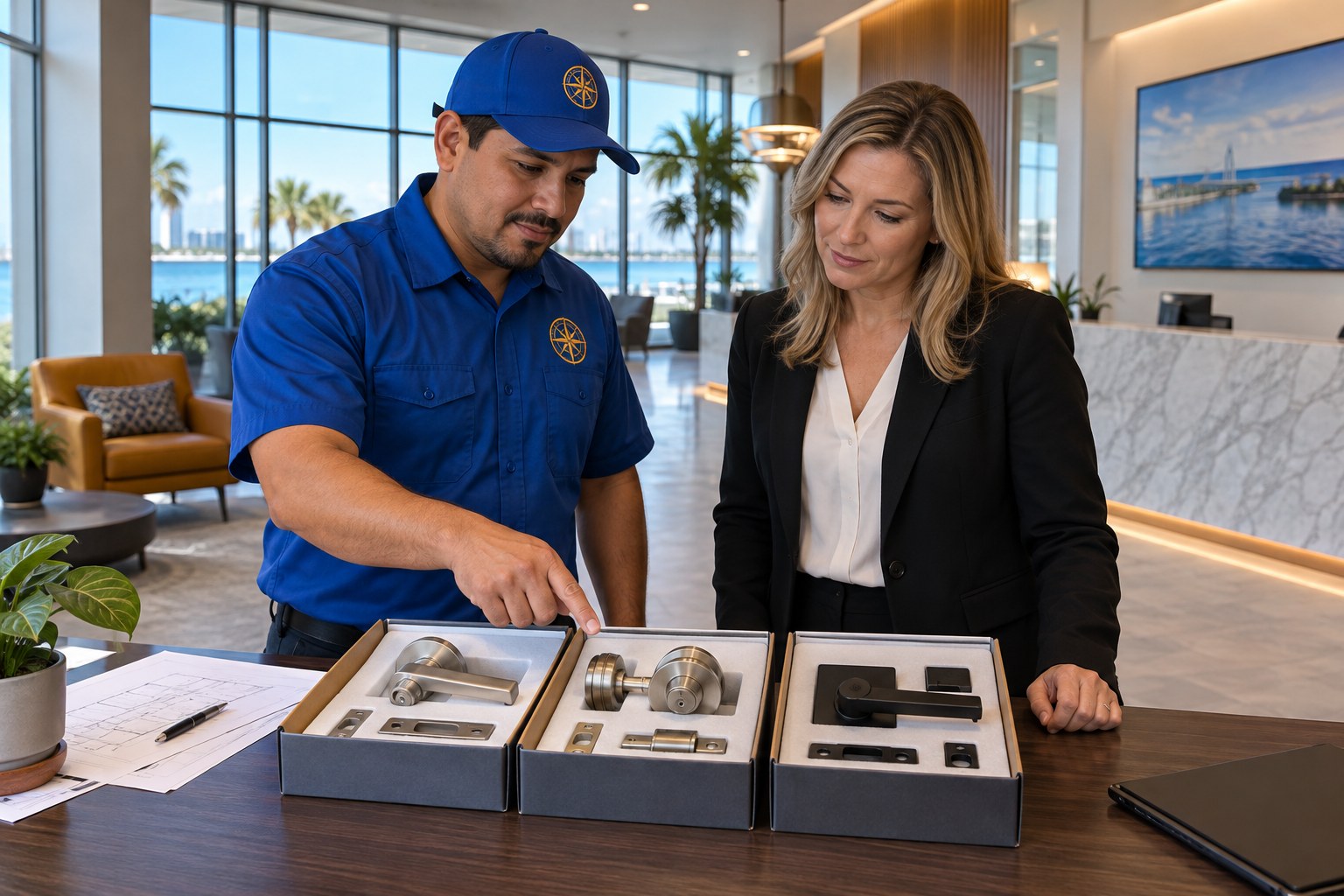
The first option is rekeying the whole system to new cuts. All locks are rebuilt so the old master and the old change keys stop working, and new keys are issued. This is the thorough answer and is the right choice when the risk is high or when the system is old and the chart is incomplete.
The second option is rekeying only the most sensitive doors. A technician identifies critical locks and changes them first, then plans the rest in stages. This approach spreads the work and cost, though it leaves some doors on the old system until they are done. It suits larger buildings or tight budgets in time.
The third option is replacing the master level only. In some systems the master pins can be changed without altering every individual key. That works only when the system was designed for it, and a technician must inspect the locks and the chart. We tell you honestly which approach fits, and we will not recommend more than the situation needs.
Authority and permission for office locks
Office buildings often have layers of authority. The tenant controls the suite, the landlord controls the common areas, and the building owner may control the master key system. Before any work, we need to know who holds the right to approve changes. A tenant may rekey their suite doors but not the building master.
We ask for identification and a connection to the property: a lease, a utility bill, a business license or a call from the property manager. For larger systems, written approval from the building owner or managing agent may be needed, particularly if the lock change affects other tenants.
If you are an employee, ask your manager to confirm. If you are the manager, confirm with the landlord. We understand this can slow things down, but it prevents conflict later. A master key is a shared asset, and changes to it should be communicated to everyone who relies on it.
What the rekeying visit looks like
A technician arrives with pinning kits, key blanks and cutting equipment. They start by reviewing the chart, if there is one, and inspecting a sample of locks to confirm the system. They then take out cylinders in groups, rebuild them to the new layout and put them back, testing each with the new keys.
For large systems, the work is planned in sequence. Critical doors come first. Hallway and common doors follow, and low-risk storage areas come last. At each stage, the technician checks that staff can still get to the rooms they need, so work continues. The goal is a smooth change rather than a building that stops.
At the end, the technician provides the new key chart, a count of keys issued and a clear explanation of who holds what. Keep the chart in a safe place. Old keys should be collected and destroyed or marked as void. A record makes the next change much easier.
Redesigning the system so one loss matters less
A lost master key is a chance to ask whether the system is built the right way. Many offices have grown a master hierarchy by accident, with keys that open far more doors than anyone needs. A technician can review the layout and propose a structure that limits exposure, with smaller masters for each area and a grand master that stays locked in a safe.
Restricted keyways can help. These keys cannot be duplicated by ordinary key shops, which reduces the chance of unauthorized copies. The tradeoff is a slower process when you need a new key, since requests go through a controlled channel. Many offices accept this trade for the added security.
Consider where electronic access fits. Card readers or keypads on key doors reduce the use of physical masters. A lost card can be disabled in seconds. A technician can discuss a mixed approach, with mechanical keys for most doors and electronic access for the most sensitive. It is a choice, not a requirement.
Why rekeying a master system takes planning
Rekeying a single door is a few minutes of work, but a master system is a puzzle. Every lock shares part of its pinning with others, and changing one level changes how the rest relate. A technician cannot simply pin each cylinder at random. The new layout has to be worked out in advance so that the individual keys, the group masters and the grand master all behave as intended, and so that no key opens a door it should not.
This planning step is why a quick phone quote is only an estimate until someone sees the locks. The brand of cylinder, the number of pin positions, the age of the hardware and the condition of the existing chart all influence how long the job takes. Some cylinders have restricted components that must be ordered, and a few older systems cannot be extended to add new keys at all. We tell you what we find before ordering anything.
When the plan is ready, the work itself goes in an orderly sequence. Cylinders are removed in groups, labeled so they return to the right door, rebuilt on a clean bench or a portable pinning station, and refitted. A sample door is tested with every key level before the next group begins. That discipline prevents the nightmare outcome of a building where keys open the wrong doors or fail to open any.
Keys left behind by cleaners, contractors and visitors
A building master does not only live with employees. Cleaning crews, maintenance contractors, security guards and delivery staff often hold keys, and each person is another point where a key can be lost. When a master key goes missing, ask who outside the company has had access. Call each vendor, ask them to check, and request a signed statement of what keys they hold.
Many offices discover during a loss that they have no list of outside keyholders. That is a prompt to build one. A simple table showing the vendor, the individual, the key number and the date issued is enough to restore order. Require vendors to return keys when a contract ends, and keep proof that they did. It is a routine step that protects both sides.
If the missing key was held by a contractor who has left, treat the loss as higher risk. You may not be able to question them, and you cannot be sure where the key went. Rekeying is the clean answer. Share the new keys only with people who currently need them, and record each one. Over time, this habit shrinks the number of keys in circulation.
Rooms with extra protection: safes, records and server closets
Some rooms in an office need more than a master-keyed lock. A records room with personal data, a server closet with network equipment and a cash room with receipts deserve a separate lock that is not part of the master system at all. If the master is lost, those rooms stay protected by their own keys, held by only a few people.
Where a sensitive room is currently on the master, a locksmith can often convert it to a stand-alone high-security cylinder. The change takes a short visit and reduces the risk from any future master loss. Consider adding an alarm contact or a camera as well, since a door that logs its openings tells you something the lock alone cannot.
Safes inside offices follow the same logic. A safe has its own combination or key, and that code should be known to as few people as possible. Do not store a safe key in a desk drawer on the same master-keyed floor. If a safe is involved in the loss, tell us, and we can discuss changing the combination or the lock while we are there.
Communicating with staff and tenants
People deserve to know when a key is lost, but the message needs care. Tell staff that a key is missing, that locks will be changed and that they should keep doors closed and report anything unusual. Avoid naming the person who lost it or speculating about theft. A calm, factual note keeps rumors from growing and helps everyone follow the plan.
If tenants share the building, notify each one in writing and explain when the work will happen. Tell them whether they will need to pick up new keys and where. Give a point of contact so nobody has to guess. Most tenants understand a rekey as a routine security step, especially when it is announced clearly and carried out on a predictable schedule.
After the work is done, send a short follow-up confirming that new keys are in use and old ones are void. Ask staff to return any old keys they find. Collect them in a locked box and destroy them. This closing step is easy to skip, but it is the moment the old system truly ends and the new one begins.
Interim measures while you wait for rekeying
If the rekey cannot happen immediately, put temporary protections in place. Move valuables and sensitive files to secure locations. Ask staff to be alert to unfamiliar people. If you have an alarm, make sure it is armed whenever the office is empty. A written notice to staff is sensible, without causing panic.
Consider adding temporary padlocks or hasps to the most sensitive doors, if the fire code allows. Be careful not to block exits. A technician can advise on safe temporary measures that work in the short term and can be removed when permanent locks are installed.
Keep watch for signs of tampering. Scratches around keyholes, doors found unlocked or a sense that things have moved are warning signs. Report anything unusual to management. If you suspect theft, involve the police and keep notes. We can support the investigation by describing what we find on the locks.
Local context and building types in the area
Pensacola's office landscape includes downtown buildings, medical offices, marine businesses and small professional suites. Many are shared with other tenants, which makes master key control more important. A loss in a shared building affects people who had no part in it, so communication matters.
Humidity and salt air wear on locks, particularly in older buildings. Master systems that rely on tight tolerances can become sticky, and a technician may recommend cleaning or replacing parts during a rekey. This is a good time to address other lock problems.
After storms, building managers often rekey as part of repairs or tenant turnover. Plan this into your maintenance cycle, and keep your key chart updated. A good chart turns a lost key from a crisis into a manageable task.
Quick answers
How serious is a lost master key?
It depends on what it opens and who might find it. A master that reaches records, cash or server rooms is serious. A key lost inside a secured building is lower risk. When in doubt, treat it as compromised and plan to rekey.
Do I have to rekey every lock?
Not always. Options include rekeying everything, rekeying sensitive doors first, or changing only the master level if the system allows it. A technician inspects the locks and chart and recommends what fits the risk.
What if we have no key chart?
A locksmith can reconstruct the system by inspecting locks, but it takes longer. Once the work is done, we provide a new chart. Keep it in a safe place, since it is the most useful document in any later key emergency.
Who can approve the work in a shared building?
The tenant can usually approve changes to suite locks. Building master systems belong to the landlord or managing agent, who must approve changes. We confirm authority with ID, a lease or a call from the property manager before working.
How do I schedule a visit?
Call us with the address, the lock brand if you know it and what was lost. We confirm availability by phone and give a quote. If the job is complicated, a technician visits and the service call charge is explained before dispatch.