
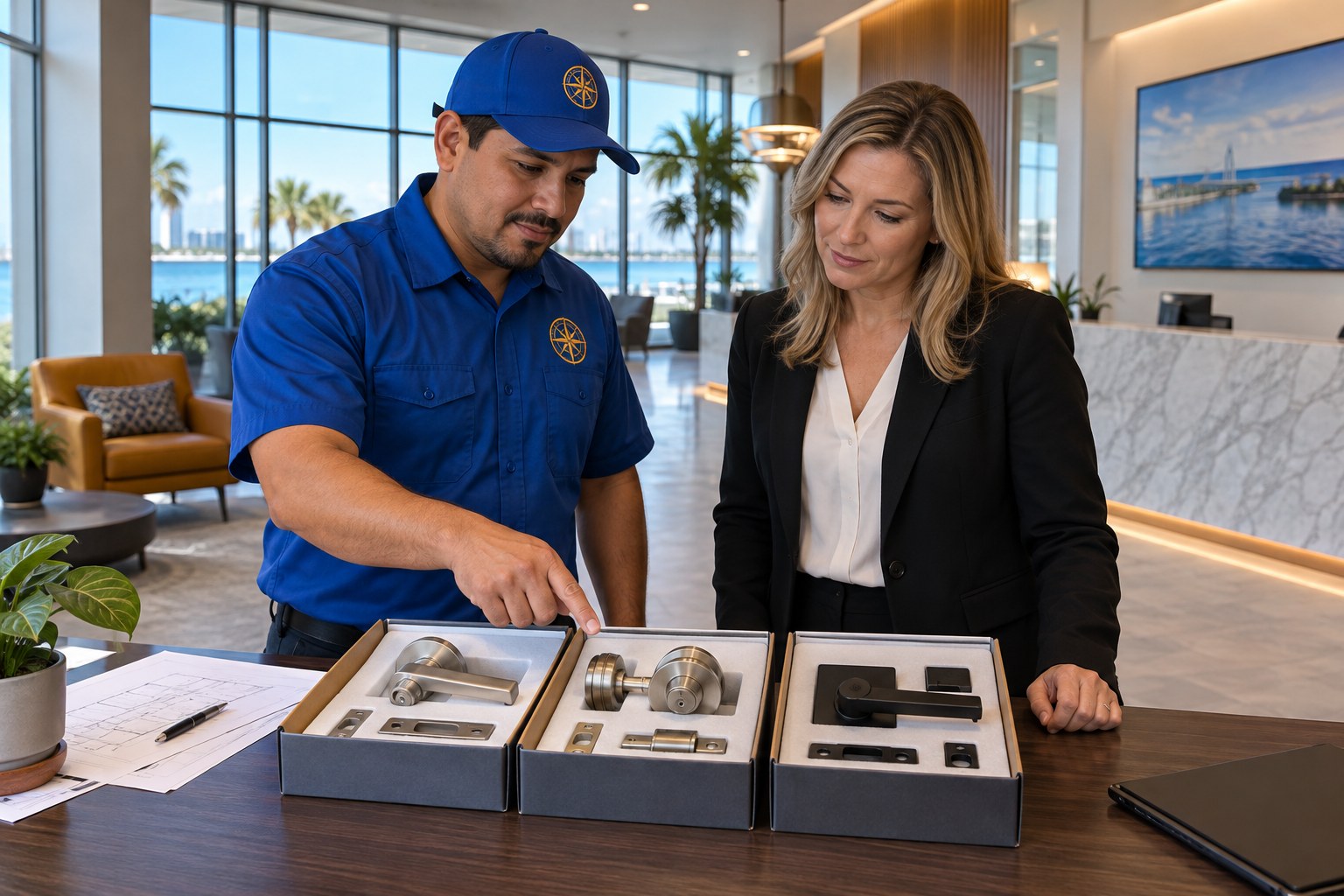
Why glass doors need special hardware
A standard house door is wood or steel thick enough to hold a bored lock. A glass door is something else entirely. A frameless door is a sheet of tempered glass with no frame around it, so there is nothing to cut a hole into. A storefront door is a glass panel inside a narrow aluminum frame, and those frames are too thin for a conventional lock body.
Because of this, glass doors rely on locks made for the job. Some clamp to the glass with patch fittings, some attach to the narrow aluminum stile, some sit on the surface and some drop bolts into the floor or frame above. Each solves the same problem in a different way, and each has its own strengths, limits and maintenance needs.
Tempered glass cannot be drilled or cut after it has been made. Any holes or notches must be specified at the time of manufacture. That is why changes to glass door hardware are not always simple, and why planning matters. A technician will tell you what the existing glass allows before promising a particular lock.
Aluminum storefront doors
The classic storefront door has a glass panel set in aluminum rails, with a wide bottom rail and narrow side stiles. The narrow stile limits the lock. Commonly used hardware includes a small deadbolt that fits in the stile, a hook bolt that swings out from the door edge into the frame, and a rim cylinder lock installed on the surface.
These locks are designed for commercial traffic and last a long time when properly installed. The key to a smooth operation is alignment. The door, the frame and the strike must line up within a small tolerance. If the door sags or the frame has shifted, even a good lock will drag. Adjusting hinges or pivots often fixes more than replacing hardware.
Many storefront doors use a push pull handle on the outside and a thumb turn or key on the inside. Some have panic exit hardware for safety. Rules about exit hardware come from fire and building authorities, and a locksmith services what those rules permit. Ask your authority if you are unsure what your door must have.
Frameless glass doors and patch fittings
Frameless glass doors, often seen in modern offices and boutiques, have patch fittings at the top and bottom corners that clamp to the glass. A lock mounts into one of these fittings, or a floor lock sits at the bottom. The glass itself carries holes drilled before tempering to accept the fittings.
Because the fittings are attached to the glass, any change in lock type may require different patch fittings. A technician will look at the existing fittings and the glass and tell you whether a new lock will fit. If the holes are not in the right place, the glass may need to be replaced or the fittings changed, which involves a glazier.
Frameless doors are elegant but need care. Hinges and pivots must be adjusted so the door hangs straight and the lock aligns. A door that has dropped slightly can scrape the floor or fail to catch. Check the hardware for signs of loosening, and have it adjusted before it creates stress on the glass.
- Patch fittings clamp the glass at the corners
- Floor locks engage a strike set in the floor
- Top and bottom pivots carry the door weight
- Glass cannot be drilled after tempering

Rim locks, hook bolts and double cylinder options
A rim lock mounts on the surface of the door and engages a strike on the frame. It is easy to install on aluminum and some glass doors, and it is simple to repair. The tradeoff is appearance, since the lock is visible. Some businesses prefer this for its straightforward operation and strength.
Hook bolts, sometimes called swinging bolts, extend from the door edge and hook into the frame, resisting prying. They are common on aluminum storefront doors because they fit in narrow stiles. The bolt travels in an arc, so alignment with the strike must be precise to work every time.
Double cylinder locks require a key on both sides. They stop someone from reaching through broken glass to turn a thumb turn, which is their appeal. They also create a hazard in emergencies, since occupants need a key to exit. Rules about their use vary, so check with your fire and building authorities before choosing one.
Planning an installation
Good installations begin with measurements and photographs. Take photos of the door, the frame, the existing lock and the floor. Note the glass thickness if known, the width of the stile and the type of hinges or pivots. Share them with the technician before the visit so the right parts can be brought.
Decide what you want the lock to do. Should staff be able to lock from inside with a thumb turn? Do you need keyed access on both sides? Will a panic bar be required? Are you replacing an existing lock or adding a second? Clear answers shape the choice of hardware and avoid second trips.
Check ownership. If you lease the space, the landlord may control the storefront and its hardware. Before installing or changing a lock, the locksmith confirms you own the building or have authority to approve the change. Ask the landlord for approval in writing if needed. Doing it at the start saves trouble later.
Fitting a lock onto a glass door, start to finish
Installing a lock on an aluminum door begins with positioning. The technician marks where the lock body or cylinder will sit, checks clearances and drills or cuts as needed in the aluminum. Aluminum is soft, but the work needs care to keep edges clean and avoid damage to finishes. Fasteners are chosen to resist corrosion.
Next the strike is fitted on the frame, aligned so the bolt enters smoothly. The technician tests the lock repeatedly, opening and closing the door, and adjusts until it operates without drag. Keys are tested, and a thumb turn or lever on the inside is checked for ease of use. The finished lock should feel solid and quiet.
For frameless doors, the work is often limited to the fittings and the lock body, with care taken not to stress the glass. No tool should touch the glass edge except in specific, approved ways. If glass work is required, a glazier handles it. A locksmith who knows this boundary will say so, rather than risk breaking a costly panel.
Break in resistance and glass limitations
A lock cannot make glass stronger. A thief who wants in can break the glass, and a lock will not stop that. Security for glass doors relies on a combination of measures: laminated or security glazing, window film, alarms, lighting and visibility. These belong to glass and security professionals, and a locksmith can advise on the lock part.
What a lock does is resist prying and make it harder to open a door by force. A good hook bolt or deadbolt on a storefront door resists attempts to spread the frame. A strong strike and well fastened frame help. Weak points are the frame joints and the glass, which is why a full security plan looks at more than the lock.
Think realistically. For a shop with low value goods and good visibility from the street, a solid lock and an alarm may be enough. For a business with valuable stock, additional measures make sense. Discuss with your technician and your insurer what suits your situation and budget.
Salt air, sun and daily wear
Glass doors at the coast face salt in the air, strong sun and frequent cleaning with chemicals. Aluminum frames can pit, hinges can corrode and locks can seize. Choose hardware with finishes rated for marine or coastal use, and wash exposed metal regularly to remove salt deposits.
Cleaning products matter. Harsh chemicals can damage seals, finishes and lock mechanisms. Spray cleaners on a cloth instead of directly on the door, so liquid does not run into the lock. Wipe the lock face gently and avoid soaking it. Small habits keep hardware looking and working better.
Hurricane season requires planning too. Glass doors may need protection from flying debris. Shutters, boards or film are matters for specialists, and a locksmith can advise on how to lock a door that has temporary protection. After a storm, check the door for damage and test the lock before reopening. Call us to confirm availability if something has been damaged.
Lockouts and broken keys on glass doors
Lockouts at a glass storefront can be surprisingly tricky. The door looks easy to open but is built to resist forced entry. Breaking the glass is the worst option, since it is costly, dangerous and leaves the premises open. A mobile technician can often open the lock without damage using tools made for the lock type.
Broken keys in a storefront cylinder are common because keys wear and the lock is used constantly. A technician can extract the broken piece and cut a replacement. Avoid trying to dig it out with a pin or knife, which pushes it deeper. If the cylinder is damaged, it can be replaced and rekeyed in the same visit.
Before opening a business door, the locksmith checks that the person requesting entry has authority. When you call, describe the door, whether it is aluminum or frameless and any alarm. Quotes are given by phone. If the job is complicated, a technician visits and the service call charge is explained before dispatch.
Pairs of doors, side lights and transoms
Many storefronts use a pair of glass doors rather than a single one. A pair brings its own lock challenges. One door usually holds a fixed bolt at the top and bottom, called flush bolts, while the other carries the main lock and latches against the first. If the flush bolts are not set or the active door does not meet the inactive one squarely, the pair can be forced apart with surprising ease.
Side lights and transoms, the glass panels beside and above a door, are generally fixed and do not lock, but they affect how the door is secured. A lock on the door means little if a panel next to the handle can be broken to reach a thumb turn. In such cases, a keyed cylinder on both sides or a different arrangement of hardware deserves thought, balanced against safe exit requirements.
Alignment is everything with pairs. Over time, the doors drift out of square from use, settling and temperature swings. A small shift at the top becomes a large gap at the lock. Periodic adjustment of hinges or pivots keeps the pair meeting properly. A technician can square the doors, adjust the bolts and test the whole set to ensure that it locks cleanly and opens smoothly.
Keys, keyways and who holds them
The lock is only part of the story. Storefront keys are carried by many hands, from owners and managers to opening and closing staff, cleaners and sometimes landlords. A glass door lock that uses a common, easily copied key blank can be duplicated at any hardware counter. Restricted keyways, available for many commercial cylinders, limit copying to authorized sources and add a real layer of control.
Decide how many keys you need and who should have them. A simple log with names, dates and key numbers pays off at every staff change. When someone leaves and a key is unaccounted for, rekeying the cylinder is straightforward and quick. The locksmith confirms ownership or authority before rekeying, so be ready to show that you are entitled to approve the change.
Think too about after hours emergencies. Alarm companies and building managers sometimes hold keys, and those keys deserve the same record keeping as staff keys. A one page list kept in a secure place, reviewed twice a year, prevents confusion and keeps your door control honest. It is a small habit that supports every other piece of hardware on the entrance.
Maintenance that keeps glass doors working
Check hinges or pivots every few months. A door that has dropped slightly will rub, and that stress passes to the lock and the glass. Tightening or adjusting is a small job when caught early. Look at the gap between the door and the frame. It should be even all around, and the door should swing freely.
Lubricate the lock and moving parts with a product suited to locks, not general oil. Dust and sand cling to oil, which turns into grit over time. A dry lubricant is better. Wipe away old residue before applying new. Do this a couple of times a year, more often in sandy or salty conditions.
Keep a record of the hardware: brand, model and when it was installed. When a part fails, this information speeds the repair. Photos of the hardware and a note of the supplier can be a big help. A little record keeping turns future repairs from detective work into routine tasks.
Deciding whether a glass door lock can be saved
On a glass or storefront door, the lock is often blamed for problems that belong to the closer or the pivot. A door that does not latch may simply close too slowly or too forcefully, so the bolt misses the keeper or slams against it. A worn floor pivot can let the door drop slightly, shifting the lock out of alignment. Before touching the lock, a technician watches the door swing, listens to how it closes and checks whether the gap along the latch side is even from top to bottom.
Adjusting a closer is often a matter of turning small valves for sweep speed and latch speed. Too aggressive and the door bangs; too gentle and it hovers an inch short of latching. Wind from the bay side or an air conditioner pressurizing the lobby can change how the door behaves during the day, so it is worth testing under normal conditions. If the closer leaks fluid or the arm is bent, replacement is more honest than repeated adjustment, and the lock can then be tested against a stable door.
Pivots and hinges deserve inspection because glass doors carry real weight. A technician checks for play at the top and bottom, wear in the pivot bearing and signs of stress at the patch fittings. If the door has dropped, lifting it back into position before any lock work saves repeated visits. Where the door is part of a main entrance, ownership and authority are confirmed before changes. Call us to confirm availability and describe how the door closes, and we will explain what an assessment visit involves.
Weighing a repair against a full hardware swap
When a glass door lock acts up, the question is whether to repair or replace. If the lock is a known quality brand and the problem is wear, a repair may be fine. If the lock is a poor fit for the door, frequently fails or lacks parts, replacement makes more sense. A technician can explain the options honestly.
Consider the whole door. If the frame is bent or the door sags, a new lock will not fix the underlying issue. A glazier or door specialist may need to address the structure. The locksmith can then fit the lock once the door is sound. Good coordination between trades gives the best result.
Call us with your description and photos. Quotes are given by phone for simple work, and when a job is complicated, a technician visits and the service call charge is explained before dispatch. Call to confirm availability. Knowing your door type and hardware speeds up everything.
Quick answers
Can any lock be installed on a glass door?
No. Glass doors need hardware designed for the door type, such as patch locks for frameless glass or hook bolts and rim locks for aluminum storefront doors. Tempered glass cannot be drilled after manufacture.
Is a double cylinder lock a good idea?
It prevents someone from reaching through broken glass to turn a thumb turn, but it requires a key to exit, which raises safety concerns. Rules vary, so check with your fire and building authorities.
Can a lock make my glass door break in proof?
No. A lock resists prying but cannot strengthen the glass. Security glazing, film, alarms and lighting address glass strength. A locksmith can advise on the lock side of the plan.
Do you check ownership before changing a storefront lock?
Yes. The locksmith checks ownership or authority before opening, rekeying or installing. If you lease the space, the landlord may need to approve exterior hardware changes.
How do I get a quote?
Call us with a description and photos of the door and lock. Quotes are given by phone. If the job is complicated, a technician visits and the service call charge is explained before dispatch. Call to confirm availability.