
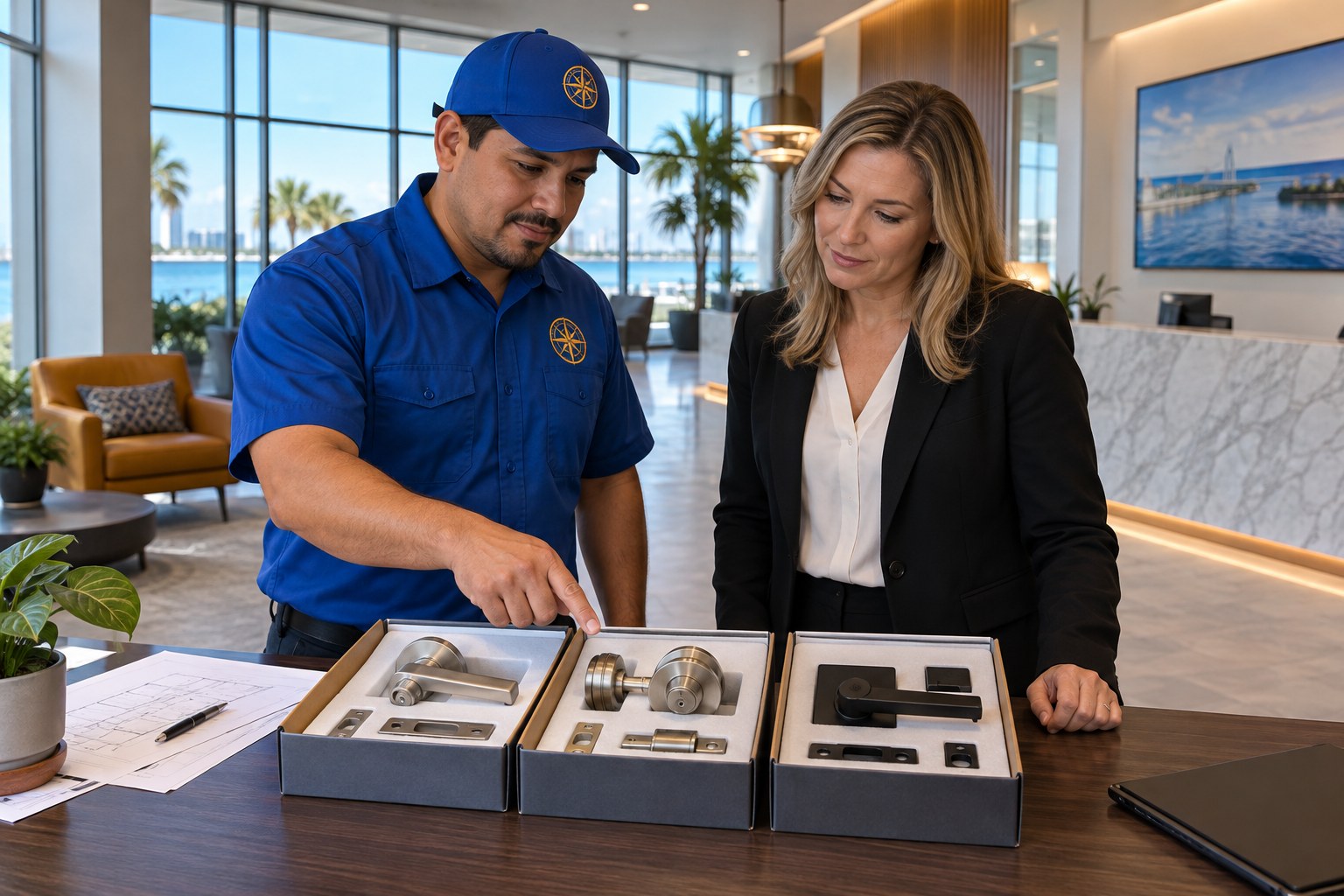
What does a commercial locksmith actually do?
A commercial locksmith works on the locks, doors, and keys of businesses rather than homes. The work includes opening locked doors, rekeying, repairing and replacing locks, setting up key systems, servicing exit devices, and working on storefront doors, cabinets, and safes. Some technicians also handle electronic access hardware on the door side.
The difference from residential work is mostly in the equipment. Commercial doors often use heavier hardware, different lock types such as mortise locks or panic bars, and larger key systems with masters and restricted keys. Parts and procedures are different, and a technician familiar with them works more efficiently.
Commercial work also tends to involve more people. A business may have owners, managers, landlords, and staff who each have some role. The technician needs to know who has authority and how the lock fits into the larger building, including alarms and fire rules.
Not everything falls to a locksmith. Alarm controllers, camera systems, and structural door repairs may need other trades. A good technician will say what they can do and refer you onward when something is outside their work.
How do I get a quote?
Call and describe the situation. Tell us the type of door, the type of lock if you know it, what happened, and what you want done. Quotes are given by phone based on that description. The more detail you give, the closer the quote will be to the final total.
Straightforward jobs can usually be quoted fully over the phone. Opening a standard door, rekeying a known lock, or replacing a common cylinder are examples. You hear the total before anyone is sent.
Some jobs cannot be priced accurately from a distance. Unusual locks, damaged doors, large numbers of doors, or complicated key systems may need a look. In those cases a technician visits first, and the service call charge is explained before dispatch, so you know what you are agreeing to.
Ask questions until you are comfortable. What is included? What could change the total? What happens if the lock is different from what you described? A clear answer to these questions is a sign of an honest process.
Why does the locksmith ask for proof of ownership or authority?
Because a lock protects someone's property, and opening or rekeying it for the wrong person causes real harm. The technician checks that you own the business, run it for the owner, or have written permission from the owner or landlord. It is a standard safeguard.
The proof is usually simple. Identification that matches a lease, a business license, a utility bill, or a letter from the owner often does the job. If you are a manager, a note from the owner helps. If you lease, the landlord may need to approve.
The check also protects you. If someone else tried to open your business door by pretending to be you, the same process would stop them. You would want your own locksmith to be careful if the roles were reversed.
If you cannot provide proof at that moment, the technician may suggest waiting until you can, or may help in other ways such as securing the door temporarily. Planning ahead, with a lockout plan, makes this step smooth.

Can you open a door without damaging it?
In many cases, yes. Skilled technicians use methods such as picking, bypassing the latch, or other non destructive techniques that leave the lock and door intact. The success of these methods depends on the lock, the door, and the condition of the hardware.
Some situations call for drilling or removing a lock. High security locks, damaged locks, and certain types of hardware may not allow non destructive entry. The technician should explain this before starting, along with what replacement parts may be needed.
Doors that are already damaged can be harder to open cleanly. A bent frame, a misaligned bolt, or a lock that has been forced previously may require different methods. Be honest about the history of the door when you call.
Avoid attempting to force the door yourself. Pry bars and hammers often cause more damage than the original problem. Call first, and let the technician decide the best approach.
What is the difference between rekeying and changing locks?
Rekeying changes the inside of a cylinder so old keys stop working and new ones are needed. The lock stays on the door, which keeps the cost and time down. It is the usual choice when a key is lost or an employee leaves and the hardware is in good shape.
Changing or replacing a lock means installing new hardware. This is appropriate when a lock is worn, damaged, or not strong enough for the door. It can also make sense if you want a different style, a different grade, or a new feature like a keypad.
Sometimes both happen. A technician may rekey doors that are sound and replace the ones that are not. A walkthrough helps decide which approach fits each door.
If you are not sure, describe your goal. If it is to make old keys useless, rekeying may be enough. If it is to upgrade security or fix a failing lock, replacement may be better. We explain the options by phone.
How many keys should a business have?
As few as practical. Each extra key is a possible loss or copy. A typical small business starts with the owner, a manager, and perhaps one trusted backup. Add more only when there is a clear need, and record every key.
Think about who needs which key. Not everyone needs access to every door. Separate keys for the office, the stockroom, and the cash area limit the damage if one key is lost. A master key for the owner or manager can still open everything.
Consider restricted keys for sensitive doors. They make unauthorized copies harder and help you know how many keys exist. They are not required for every business, but they are worth discussing where cash, records, or valuable stock are involved.
Keep a log and review it. A simple record of who holds which key, and a check once or twice a year, keeps the system under control. The log should be updated whenever someone joins or leaves.
What if an employee leaves with a key?
First, ask for the key back and record the return. If you cannot be sure you have every key they received, or if the departure was on bad terms, consider rekeying the doors they could open. That makes any remaining keys useless.
Do not forget codes and cards. Alarm codes, keypad codes, and access cards should be removed or changed as well. A person with a working code does not need a key.
Rekeying is quick and does not require replacing hardware. For a small business with a few doors, it can often be done in a single visit. The sooner it is done, the smaller the window of risk.
Prevent the problem next time. A key log, a policy of returning keys at departure, and restricted keys for sensitive doors all help. Treat the process as routine, so it feels like normal business and not an accusation.
What about my landlord and my lease?
Read your lease. Many commercial leases address who controls the locks, whether tenants may rekey, and whether the landlord holds a copy of every key. Some require written approval before any change. Following the lease protects your deposit and your relationship with the landlord.
If the building has a master key system, rekeying a door may affect it. The landlord or the system manager may need to be involved. Tell the locksmith about any such system when you call.
The technician may ask for the landlord's permission before work on a leased space. This is not a delay for its own sake. It ensures the work is authorized and prevents disputes later. A quick message from the landlord is often enough.
If you own the building, you have more freedom, but the same principles apply to tenants in your property. Keep a clear record of keys and rekey between tenants so each starts with a fresh set.
Can you help with exit devices and storefront doors?
Yes, these are common commercial jobs. Panic bars and exit devices can stick, fail to latch, or wear out. Storefront doors have narrow frames and specialized locks. Technicians who work on them regularly know the parts and the adjustments.
Tell us what type of door you have and describe the problem. Whether the bar does not release, the door does not latch, or the cylinder is stiff, the details help us bring the right parts.
Exit doors have safety implications, so repairs should keep them working properly for people leaving. If you are unsure about code requirements, ask the local fire or building authority. A technician can describe what they see but does not replace an inspection.
Salt air and humidity affect these doors heavily along the Gulf Coast. Regular lubrication and adjustment prevent many failures. A scheduled check before storm season is a sensible habit.
Do you work with electronic and keypad locks?
Technicians commonly handle the hardware side of keypads, card readers, and similar locks on doors, including strikes, cylinders, handles, and mounting. Software and controller programming may depend on the system, and some tasks belong to the access control provider.
When you call, tell us the brand and model if you know it, and what is happening. Is the keypad unresponsive? Does the door not release? Is a battery dead? These details help us tell you what can be done and what might need another provider.
Always keep a mechanical backup key for electronic doors, stored securely. Batteries die and electronics fail, and a door that can only be opened electronically becomes a lockout when something goes wrong.
For programming or code changes, the technician confirms ownership or authority first. Keep a record of which codes belong to which people, and remove old ones promptly.
How quickly can someone come?
Availability varies by day, time, and location, so the honest answer is to call and ask. We do not promise a particular arrival time. When you call, tell us the address and the situation, and we will tell you what is possible.
Be cautious with any provider who promises a specific arrival time before knowing where you are. Traffic, other calls, and distance all affect timing. A clear conversation on the phone, including what the charges will be, matters more than a bold claim.
If you need work on a planned schedule, such as a rekey before a move, call ahead and book. Planned work is easier to fit in and often goes more smoothly than an urgent call.
If your situation is an emergency affecting safety, such as a fire or medical issue, contact emergency services first. A locksmith is for locks, and the right responders come first in emergencies.
What should I do to prepare before calling?
Gather the basics: the address, a description of the door and lock, what happened, and who has authority. Take photos if you can. Know whether you have an alarm and whether you lease or own the space.
Think about what you want. Do you need the door opened, the lock rekeyed, the hardware replaced, or all three? Telling us your goal lets us recommend the right approach and give a better quote.
Have your identification and any lease or authorization letter handy. The technician will ask for them. Having them ready saves time and avoids a second visit.
Stay calm and avoid forcing the lock. Describe things as clearly as you can. Contact us when you are ready, and call to confirm availability. We explain the process, the quote, and any service call charge before anyone is dispatched.
What about safes, cabinets, and interior locks?
Locks inside the business matter as much as the doors at the front. File cabinets, desk drawers, cash drawers, medicine or supply cabinets, and safes are all common service requests. Many of them use small cam locks that are simple to replace or rekey, and a technician can often handle several in one visit.
Safes are a special case. If you have lost the key or forgotten the combination, tell us the make and the situation. Opening a safe is more involved than opening a door, and the approach depends on the safe's design. The technician checks that you own it or have authority before starting.
Consider what each interior lock is actually meant to protect. A flimsy cabinet lock is fine for keeping honest people honest, but it will not stop a determined person. If a cabinet holds records you are required to protect, ask about stronger options, including a separate lockable room.
Keep spare keys for interior locks in a controlled place. Small keys get lost easily, and a missing cabinet key can stop daily work. Tag them clearly in your log, and keep a duplicate set where a trusted person can reach it.
Local points for Pensacola businesses
Businesses in the Pensacola area deal with salt air, humidity, and storm season, all of which wear on locks and doors. Hardware near the water ages faster, and a lock that was fine last year can seize this year. Regular checks and corrosion resistant materials make a difference.
The area has a mix of older downtown buildings, newer shopping centers, marinas, and offices near the naval air station and the colleges. Older buildings may have mortise locks and wood doors that need careful handling. Newer ones may have electronic systems managed by a property company.
Seasonal businesses face extra challenges. A shop that hires many temporary staff for the summer needs firm key control, because keys are issued and returned in large numbers. A plan for collecting keys at the end of the season prevents a pile of unknown copies.
Before hurricane season, make sure your doors close and lock properly, your keys are accessible to more than one person, and you know who to call if something fails. A short walkthrough with these points in mind is time well spent. Contact us if you would like help planning one.
Quick answers
Do you give prices over the phone?
Quotes are given by phone based on your description of the door, lock, and situation. If the job is complicated, a technician visits first and the service call charge is explained before dispatch. Ask what is included and what could change the total.
Do you check who owns the business?
Yes. The technician confirms ownership or authority before opening, rekeying, or programming. Identification, a lease, or a letter from the owner or landlord usually satisfies this. It protects owners, tenants, and anyone whose property is behind the door.
Is it better to rekey or replace?
Rekey when the hardware is sound and you want old keys to stop working. Replace when the lock is worn, damaged, or too weak for the door. A technician can look at each door and recommend one or the other.
Can you open a door without damage?
Often yes, using non destructive methods, though it depends on the lock and the door's condition. If drilling or lock removal is needed, the technician explains this first, along with any replacement parts.
How soon can a technician arrive?
Availability varies, and no arrival time is promised. Call, give the address and the situation, and ask what is possible. For planned work like rekeying before a move, book ahead for a smoother schedule.