
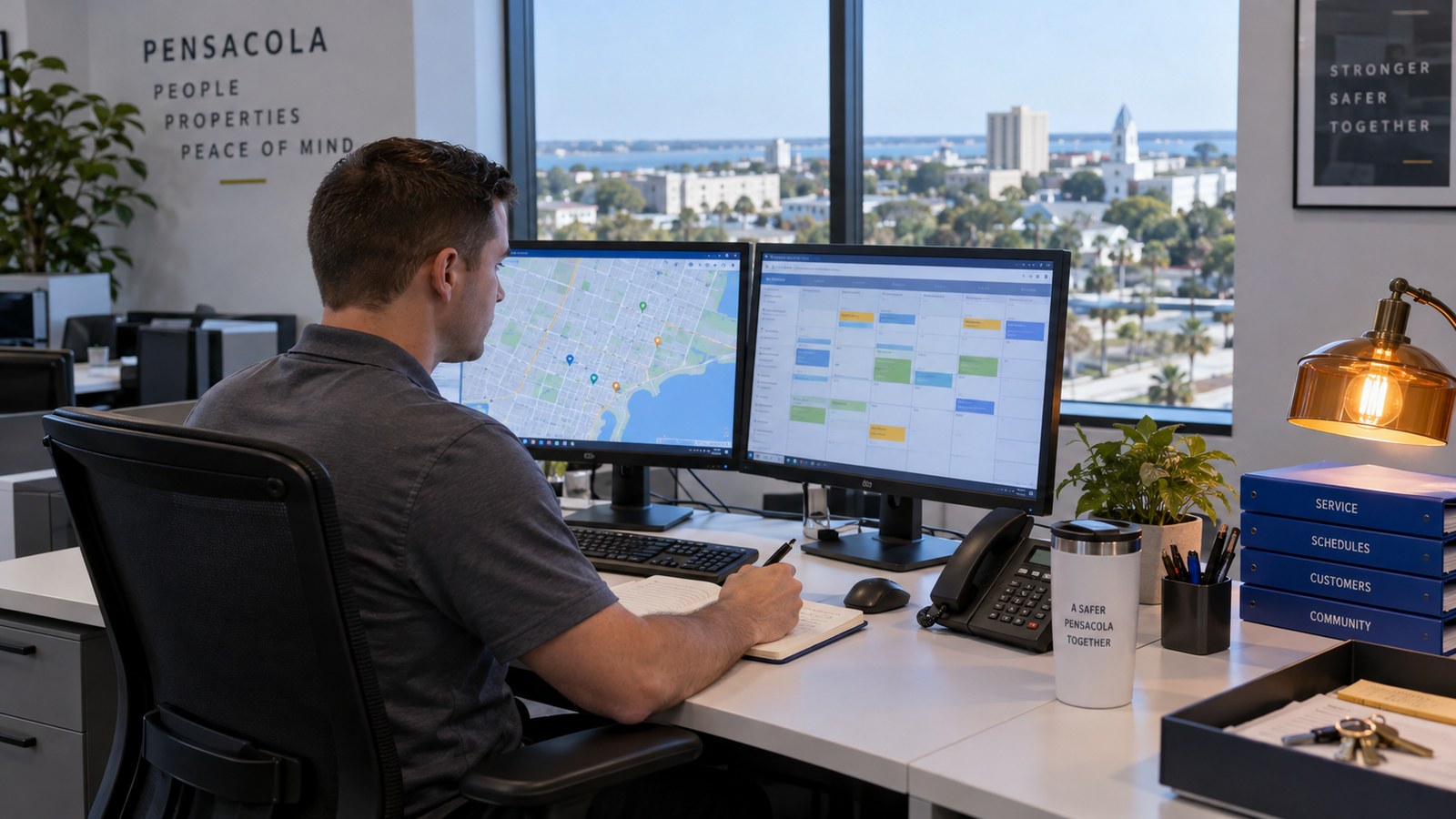
What makes a clinic or suite different
A suite for a dentist, accountant, counselor or small medical practice shares features with any office, but the stakes around privacy are higher. Visitors expect that what they say and what is written about them stays behind closed doors. A lock cannot make a practice trustworthy, but a poorly secured room can undermine the trust that staff work to build.
Traffic patterns matter too. Waiting rooms are open to the public during hours, treatment or consultation rooms are used in turns, and back offices are for staff only. Each zone needs a different level of control. Treating the whole suite as one big room leads to either too much friction for staff or too little protection for sensitive spaces.
Start by drawing a rough floor plan and marking zones: public, shared staff, restricted. Then think about which doors separate them. Those boundary doors are the ones where hardware choice makes the most difference. A technician can walk the space with you and suggest hardware that suits each boundary without making daily work a chore.
The suite entrance
The main entrance is usually a glass or solid door off a shared hallway or directly to a parking area. In a multi tenant building, the landlord may control the hardware or require a certain type. Before any change, the locksmith confirms who has authority over the door, and whether the building manager must approve. Never assume that a tenant can swap any lock they like.
If you control the entrance, choose a commercial grade lockset with a deadbolt function and a cylinder you can rekey easily. Staff turnover is a fact of life in practices of every size, and being able to change keys without replacing the whole lock saves time. A door closer that brings the door back to a firm latch helps too, since a door left slightly ajar is a door that is not secure.
Think about after hours access. Cleaners, maintenance and security staff may need keys, and those keys deserve the same record keeping as staff keys. Some practices move to a keypad or card reader for the entrance so access can be turned off individually without collecting metal keys. Both approaches work, as long as someone is responsible for managing them.
Records rooms and filing areas
Paper records still exist in many practices, and the room that holds them should have a real lock. A privacy latch designed for a bathroom is not enough. A commercial lockset with a deadbolt, or a lever lock with a proper cylinder, ensures that the door cannot be opened with a coin or a flat tool. The door itself should be solid, not hollow.
Limit who has keys. A records room key held by every employee stops being a control. Decide who needs routine access, issue keys to them, and make others ask. The extra step reminds staff that records are sensitive and creates a pause in which someone can ask why they need to go inside.
Consider a separate key for records. If the same key opens the supply closet, the break room and the records room, losing it exposes everything. A keyed alternate approach, with a distinct keyway for the records door, adds a layer of control. A technician can design a small key system that stays easy to run, so staff do not carry a heavy ring.
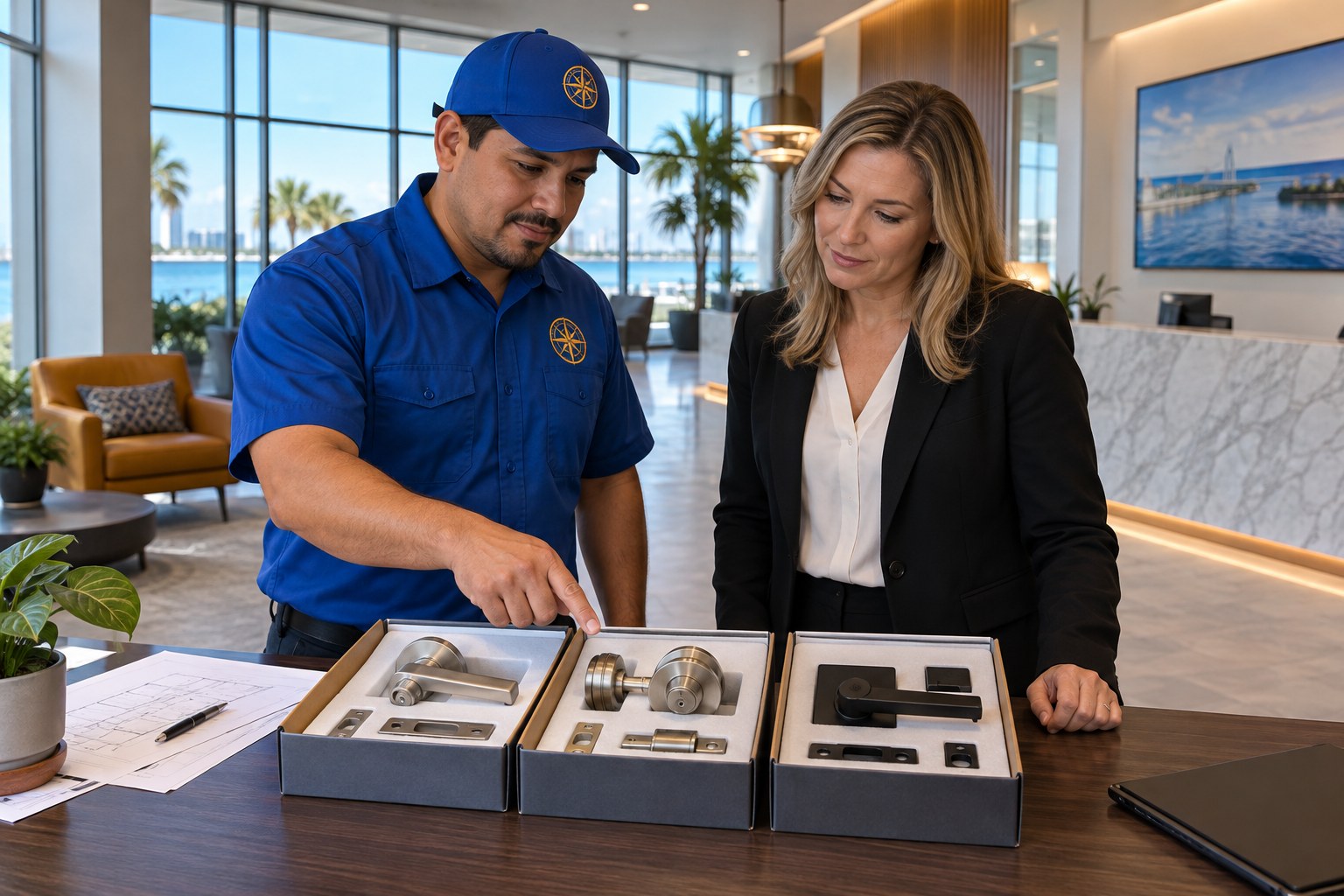
Treatment and consultation rooms
Rooms where clients are seen need a lock that can be secured from inside for privacy but opened by staff in an emergency. Privacy locks with an outside release are common for this purpose. They tell people the room is occupied and keep the door closed, while giving staff a way in if someone needs help.
Avoid hardware that can trap a person. A lock that can only be released with a key from the inside, or one that jams easily, creates a safety risk. Lever handles that can be operated with one hand are usually the best choice because they are easy to use for staff, visitors and anyone with limited hand strength.
Keep in mind how often these doors are used. A consultation room door opens and closes dozens of times a day, and light duty hardware wears quickly. Loose handles, sticking latches and wobbly spindles are early signs. Replacing a worn lockset before it fails keeps the room reliable and avoids a stranded client or a door that no longer stays latched.
Medication, supply and equipment cabinets
Cabinets that store supplies, equipment or sensitive items need a lock that is more than decoration. Many cabinets come with small cam locks that use a common key pattern and are easy to defeat. Replacing these with better cylinders, or adding a hasp and padlock, raises the level of control significantly for a modest cost of time.
Rules about controlled substances and regulated supplies come from regulators and your professional body, not from a locksmith. Follow their requirements for storage. The locksmith's role is to install or service the hardware that your rules call for, and to make sure keys are controlled and the locks work smoothly every day.
Where a cabinet holds expensive equipment, consider a keyed alike system for supply cabinets so one key serves a defined group, with a separate key for anything more sensitive. Document who holds which. If a key is lost, rekeying the cabinet cylinders is straightforward and much less disruptive than discovering later that items have gone missing.
Safes, drawers and small cash handling
Many practices keep some cash or small valuables, even if most payments are electronic. A small safe or locking drawer in the office is better than an unlocked desk. If you already own a safe and have lost the key or forgotten the combination, a technician can often open it, after confirming that you own it and have authority to access it.
Desk and file cabinet locks are often basic wafer types. They deter casual snooping but not a determined attempt. If a drawer holds anything important, replace the lock with a higher quality cylinder or choose furniture that fits a better lock. Locks on furniture are easy to rekey, which makes them practical for handover when a staff member leaves.
Be sensible about where keys are kept. A key taped under a desk or hidden in a plant pot defeats the purpose. A small key cabinet in a locked office, with a clear record, is a more reliable option. Treat spare keys with the same care as primary keys, because a copy in the wrong hands works just as well.
Staff access, rekeying and turnover
Practices see staff come and go: new hires, locums, interns and temporary help. Every arrival is an opportunity to think about what access that person needs, and every departure is a reminder to collect what was issued. A basic key log with names, dates and key numbers is the foundation of control and does not require special software.
When someone leaves and you cannot confirm that all keys were returned, rekeying the relevant doors is the clean fix. It is a routine job, usually done in one visit, and it resets the system so you can issue new keys to current staff. Before starting, the locksmith confirms ownership or authority over the doors being changed.
If turnover is frequent, consider electronic access for the entrance and key areas. Individual codes or cards can be turned off without recovering a key, which suits busy environments. The tradeoff is that someone must manage the system, so choose it only if you will keep it up to date. A technician can explain what is practical for your suite.
Accessibility and comfortable hardware
Clinics and professional offices serve people of all ages and abilities, so door hardware should be easy to use. Lever handles are generally easier than round knobs for people with limited grip strength, arthritis or full hands. Door closers should be adjusted so doors are not too heavy to open, yet still close and latch reliably.
Accessibility rules cover things like clearances, reach heights and operating force, and they come from building codes and accessibility standards that your inspector or architect will cite. A locksmith can install suitable hardware, but should not be treated as the authority on whether your building meets a specific standard. When in doubt, check with the proper code source.
Think also about people who are in a hurry or distressed. A door that is hard to open adds stress to an already difficult moment. Clear signage, smooth latches and handles that make sense at a glance help everyone. Small hardware improvements often make a space feel more welcoming without any change to how secure it is.
Local conditions in the Pensacola area
Suites near the water experience salt air that corrodes exterior hardware, and humidity can swell wooden doors and frames so latches no longer line up. A door that binds in August may behave in winter. If staff complain that a suite door sometimes does not latch, seasonal movement is a common cause, and a technician can adjust the strike or replace worn parts.
Hurricane season requires planning. Practices need to secure records and equipment before a storm and return afterward. Know who has keys, who can reach the building, and what to do if a door is damaged. After any significant weather, test every lock and note which ones are stiff or misaligned, then have them corrected before reopening.
The area also has a mix of older converted buildings and newer commercial space. Older buildings may have original wooden doors and mortise locks that deserve repair rather than replacement, while newer suites often use aluminum frames and cylindrical hardware. Each type has its own quirks, and a technician who has seen both can advise accordingly.
Lockouts and emergencies during business
If you are locked out of a suite while clients wait or while a staff member is inside a locked room, a mobile technician can often open common doors without damage. The locksmith will check that the person requesting entry has authority over the space, which may include confirming with the landlord or the practice owner.
A door that is stuck with someone inside is a different matter. In any situation involving safety, call emergency services first. A locksmith is not a substitute for first responders. Once the immediate danger is dealt with, the locksmith can repair or replace damaged hardware so the door works as it should.
When you call, describe the door, whether it is a suite entrance or an interior room, and whether an alarm is present. Quotes are given by phone. If the job is complicated, a technician visits and the service call charge is explained before dispatch. Call us to confirm availability.
Alarms, door contacts and lock coordination
Many suites have an alarm panel with sensors on the entrance and sometimes on records rooms. A lock change can interfere with those sensors if the strike plate moves or the door no longer sits the way it did. Tell the technician about any alarm components on a door before work starts, so contacts are not damaged and can be checked after the new hardware is installed.
Electric strikes and magnetic locks on suite entrances add another layer. A staff member buzzes visitors in, or a card opens the door, and the keyed cylinder serves as the backup. When one part fails, the whole door can behave strangely. Troubleshooting begins with finding out which component is responsible, then repairing or replacing only that part.
Keep a note of who services your alarm and who services your door controls, since those are usually separate trades. A locksmith handles the mechanical hardware and many electric locking devices, while alarm monitoring and wiring may belong to another provider. Knowing who to call for what saves time when something stops working on a busy morning.
Getting ready for a hardware review
Before calling, take a few minutes to walk your suite. Note each door, what lies behind it, and what kind of lock it has. Write down which doors stick, which are never locked and which keys are missing. This short list lets the technician plan parts and time, and often shortens the visit.
Decide which doors matter most. Typically the suite entrance, the records room and any cabinet with sensitive items take priority. Interior doors that only separate staff areas may be lower on the list. If funds are limited, start with the doors that protect information, then expand.
Finally, think about who will make decisions. If you lease the space, check your lease for rules about changing locks. If you own it, decide who has authority to approve work. Having that person available during the visit prevents delays and ensures that changes are made by someone entitled to make them.
Locking down the small rooms that hold the most sensitive items
In a clinic or professional suite, the most sensitive items often live in the smallest spaces: a closet with supplies, a cabinet of client files, a room with a server or a drawer with personal belongings of staff. These spots rarely receive the same attention as the front entrance, yet they matter just as much. A hardware walkthrough should list each of them, who needs access and how often, and what kind of lock suits the use.
Match the lock to the habit. A closet that staff open several times an hour needs a convenient but controlled lock, such as a keypad or a keyed lever. A cabinet used once a day can have a simpler key lock. Where a lock is opened frequently, durability matters more than novelty. In rooms with confidential records, think about whether a lock that auto-engages on closing is helpful, since it removes the chance of forgetting. Keep fire and egress requirements in mind for any door that people exit through.
Make sure key control keeps pace with the number of small locks. It is easy to accumulate many different keys without a clear record. Consider keyed alike or master arrangements for groups of cabinets so that staff carry fewer keys. Ownership and authority are confirmed before any work. Call us to confirm availability, and describe the rooms and cabinets involved. We will explain what a visit would cover and the service call charge before dispatch.
Habits that support the hardware
Good locks can only do so much without good habits. Close and lock records rooms whenever they are not in use. Do not prop the suite door open for convenience. Keep keys on a person or in a secure place, never left on a desk or in an unlocked drawer. These small behaviors cost nothing and reinforce what the hardware provides.
Review who holds keys at least twice a year. People change roles, and access that made sense last year may no longer be needed. Retrieve keys that are no longer required and update your log. A short review often reveals loose ends before they become a reason for emergency action.
Finally, talk about it with staff. Explain that locks protect clients and colleagues, not just property. When people understand the reasons, they follow the rules more willingly. Encourage them to report anything that feels wrong, such as a stiff latch or a door that does not close, so repairs can be made before a small problem grows.
Quick answers
Can you rekey my suite if I rent the space?
Possibly, but authority must be confirmed first. The locksmith checks that you have the right to approve the change. Many leases require landlord approval for exterior doors, so check your agreement. Interior doors inside your suite are often yours to manage.
What lock is best for a records room?
A commercial grade lockset with a deadbolt function on a solid door is a good starting point, with keys limited to those who need them. A distinct keyway for the records room adds control. A technician can recommend options that suit your door and daily routine.
Are lever handles better than knobs?
Levers are generally easier to use for people with limited hand strength or full hands, and they are often preferred in public and professional settings. Specific accessibility requirements come from codes, so check with your inspector or architect for details.
What if I forget the combination to a small office safe?
A technician can often open a safe after confirming that you own it and have authority to access it. Contact us with the type of safe and any markings you can see. Quotes are given by phone, and complicated jobs involve a visit with the service call charge explained first.
How do I arrange a visit?
Call us, describe the doors and what you need, and we will confirm availability. Quotes are given by phone. If the job is complicated, a technician visits and the service call charge is explained before dispatch.