

What a fire rated door is
A fire rated door is part of an assembly designed to slow the spread of fire and smoke between spaces for a stated period. The door leaf, the frame, the hinges, the latching hardware, the closer and the seals around the edges are tested together. Remove or change one piece and the assembly may no longer behave as tested, even if the door still looks perfectly normal.
These doors appear in stairwells, corridors, between occupancies, around mechanical rooms and in many other places that building codes designate. Often a small label on the edge of the door or frame identifies the rating. Not every heavy door is rated, and not every rated door is obvious. If you are unsure, ask your building official or property manager rather than guessing.
This page is for general understanding only. Codes differ by jurisdiction and change over time, and specific decisions about a particular door belong to your fire marshal, building official and a qualified door professional. A locksmith can service and install hardware that those authorities allow and can explain how typical hardware works, but does not set the requirements.
Why the latch matters most
On a fire door, the latch has one critical job: to hold the door closed when heat and pressure build up. A door that swings open in a fire lets flames and smoke through. That is why most fire doors are required to latch every time they close, and why a door held open by a wedge or removed latch defeats the whole purpose.
A latch that has worn, bent or stopped catching is a serious concern. Door closers are meant to bring the door fully closed so the latch can engage. If the closer is too weak, too strong or poorly adjusted, the door may stop short. Many failures are simple adjustments that go unnoticed because the door looks closed from a distance.
Test your doors regularly by watching them close from a fully open position. The door should swing shut on its own and click firmly into the latch. If it stops short or needs a push, report it. Do not tape the latch, prop the door or remove the closer. Those quick fixes create the exact hazard the door was meant to prevent.
Hinges, closers and the supporting hardware
Hinges carry the door and keep it aligned with the frame. Worn hinges allow the door to sag, which changes the gaps and may stop the latch from lining up. Fire doors often use specific hinge types, sometimes with ball bearings, to handle the weight and frequent use. Replacing hinges with an unsuitable type may affect the assembly.
Closers pull the door shut after every use. They have adjustments for closing speed and for the final latching action. Over time, oil leaks, seasons change and the settings drift. Humidity along the Gulf Coast can affect how doors fit, so a closer that was perfect in winter may be off in summer. Periodic adjustment is part of normal care.
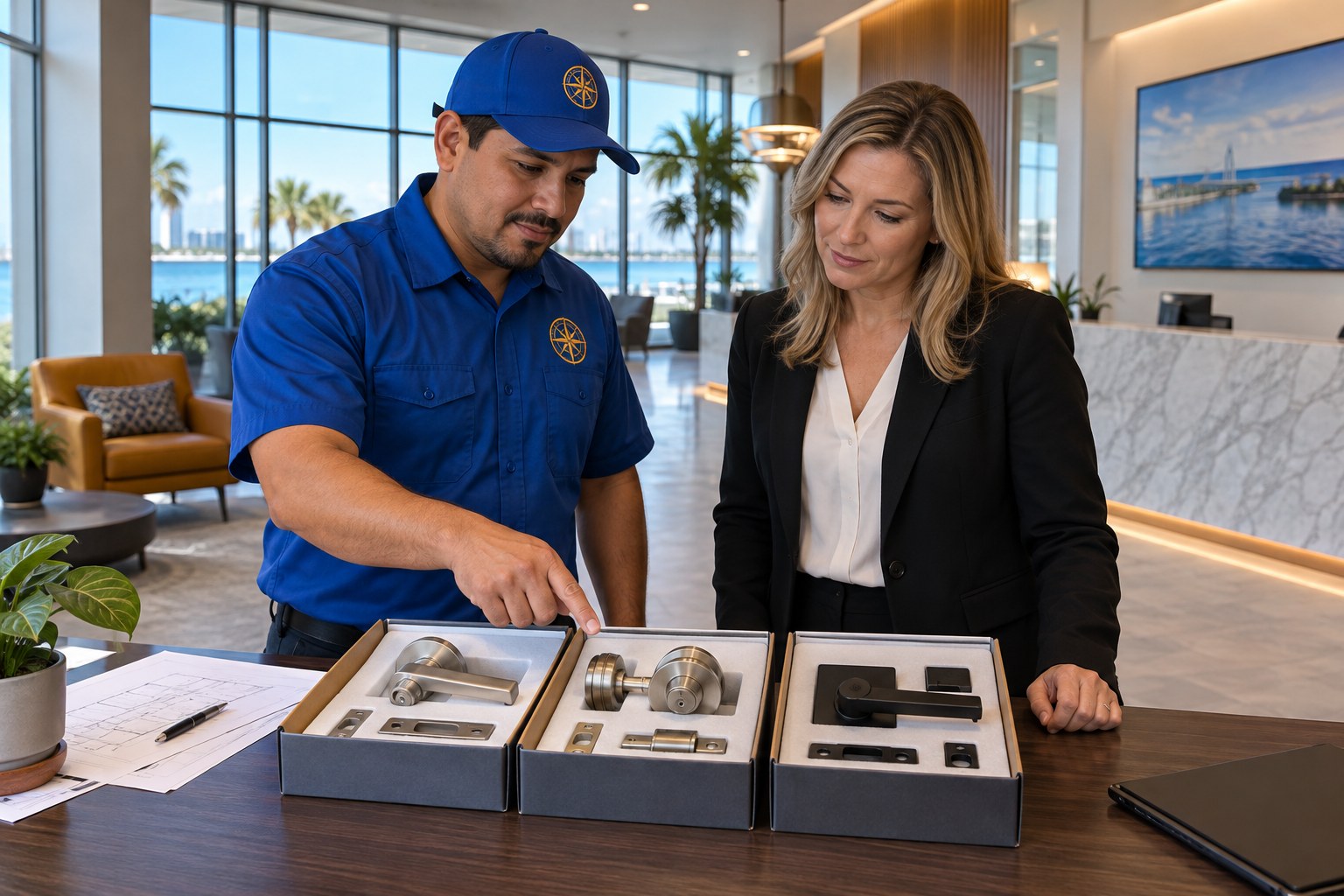
Other hardware may include kick plates, door stops and astragals on pairs of doors. Each has a role, and altering them can alter performance. Treat the whole assembly as a system. When something needs replacement, use parts suited to the assembly, and ask your authority what is allowed. Guessing is the wrong approach.
Changes that can cause problems
The most common problem is a well meant modification. Someone drills a hole for a new lock, cuts a larger opening for a different device, or adds a viewer, a plate or a vent. These alterations can compromise the door, and in some cases they must be done by qualified people following the maker's instructions and the code. A door that has been drilled in the wrong place may lose its rating.
Painting is another issue. Heavy layers of paint over labels, hinges or gaps can change how the door closes or hide the rating label. Some buildings have fire doors with ten coats of paint that no longer swing properly. When painting, protect labels and moving parts, and let the paint dry fully before the door is used.
Adding an electronic lock or a magnetic holder also changes the assembly. These devices are available in forms designed for fire doors, and they must be installed and tied to the building's alarm system in the correct way. Do not improvise. Consult your authority and a qualified professional before adding anything to a rated door.
- Drilling or cutting without checking the rating
- Propping or wedging the door open
- Removing or disabling the closer
- Painting over labels, hinges or seals
Locks on fire doors
Many fire doors carry ordinary looking locks, such as a mortise lock or a cylindrical lockset, but those locks must be suited to the rating. Hardware that has been tested with the door carries markings or comes from a maker who supplies it for fire rated use. A standard lock that fits the hole is not necessarily acceptable.
Latching is the main requirement. Some locks hold the latch bolt only by spring, which is sufficient if the door closes fully. A deadbolt on a fire door raises other questions, including how it works with the exit requirement. Whether a deadbolt is allowed depends on the door's use and on local rules. Check with your authority before adding one.
Rekeying is generally simple and does not change the assembly, because it only affects the inside of the cylinder. Replacing the cylinder with a similar one also does not usually alter the door. But replacing the entire lockset needs care. A technician can work with you to select hardware that suits the door and meets the guidance your authority gives.
Exit devices and the fire door
Fire doors on exit routes often use exit devices, such as a push bar that retracts the latch. These devices must work easily from the inside, without keys or special knowledge. On a rated door, the exit device must also be suited to the rating and installed according to the maker's instructions. Fire rated versions look similar to non rated ones, which is why checking the labels matters.
Some exit devices include a dogging feature that holds the latch retracted so the door can be pushed open freely, usually in a public building during business hours. Dogging on a fire door is generally restricted or prohibited, because it keeps the door from latching in a fire. Check the rules with your authority.
Service on exit devices includes lubrication, adjustment of the latch and trim, and replacing worn parts. A technician can handle many of these tasks. Always keep emergency exit function in mind. A door that requires a key to leave is not acceptable on a required exit in most circumstances, and your authority will confirm what applies.
Gaps, seals and smoke control
Fire doors are installed with small, controlled gaps around the edges. Too large and flames and smoke pass through. Too small and the door may stick or bind when heat expands the metal. Many fire doors also carry intumescent seals or smoke gaskets that expand in heat or block smoke. Damaged or painted over seals reduce performance.
Humidity and settling can change gaps. A door that has dropped by a fraction of an inch may leave a wide gap at the top and rub at the bottom. Adjusting hinges, shimming carefully and replacing worn hinge pins can bring the door back. This kind of work should be done with an understanding of what the assembly requires.
Check seals during your regular walkthrough. Look for torn, missing or painted over strips. Report problems to the person responsible for maintenance. If a seal needs replacement, use the type the door requires. Do not improvise with generic weatherstripping, which can burn or release fumes and change the door's behavior.
Inspections and records
In many buildings, fire doors are inspected on a regular schedule by qualified people, and the results are recorded. Standards describe what to check: labels, gaps, hardware, closing and latching. The details come from codes and from organizations that write them. Building owners are generally responsible for seeing that inspections happen.
Keep records of inspections and repairs. If a door fails, document what was found, what was done and when. These records help if an official asks, and they help the next maintenance person understand the history. A simple log kept near the building files is enough.
A locksmith does not replace a formal inspection but can assist with repairs. If an inspector flags a latch that does not engage or a lock that is not suitable, a technician can adjust or replace the hardware as directed. Bring the inspector's report to the visit so the work targets the actual findings.
Coastal wear and storm effects
Along the Gulf Coast, salt and humidity corrode hinges, latches and closers. Doors that look fine from a distance may have rusted pins and seized parts. A building near the water often needs more frequent attention than one inland. Regular inspection and lubrication of moving parts help, and replacement of corroded hardware should not wait.
Storms can warp doors and frames, break seals and damage closers. After a significant weather event, walk the building and test every fire door. Make sure each one closes and latches on its own. If one does not, report it and arrange repair. A door that no longer closes properly cannot do its job.
If you need help with a damaged door lock or latch after a storm, call us to confirm availability. Describe the door and what is wrong. We can address the keyed and latching hardware that falls within a locksmith's work, and tell you honestly if the problem needs a door specialist or an inspector.
Pairs of fire doors and astragals
Where two fire doors meet in a double opening, the gap between them is a weak point, so pairs usually carry an astragal, a strip on one door that overlaps the other and covers the joint. One leaf may also hold flush bolts or a coordinator, which makes sure the leaves close in the correct order. If the inactive leaf closes after the active one, the latch can hit its edge and the pair stays ajar.
Coordinators are small devices mounted in the frame head, and they are often ignored until the pair stops closing correctly. A bent or missing coordinator is a common reason for double doors that will not latch. Replacing it takes a short visit and restores proper closing, but the replacement should be one the door supplier or authority accepts for that opening.
Check pairs more often than single doors, since there are more parts that can slip. Watch the doors close from fully open, and listen for the click. If one leaf lags behind, or the gap between them looks uneven, have the hardware adjusted. Do not tie the leaves together with wire or rope to make them behave, which only masks the cause of the trouble.
Electric holders and doors that stay open by day
Some buildings want fire doors to stay open during the day for convenience and airflow, then close automatically when an alarm sounds. This is done with magnetic holders or closers with built in release devices that are wired to the fire alarm system. When the alarm triggers, power to the holder is cut and the door closes and latches by itself.
Because these devices connect to life safety systems, installation and testing belong to qualified professionals. A holder that fails to release is a hazard, and one that has been wired incorrectly may not respond at all. If you see a fire door held open with a wedge, a rubber stop or a chair, report it and ask whether an approved holder can be fitted instead.
A locksmith may be called to service the mechanical parts of such doors, such as the latch, the closer arm and the strike. Anything involving the alarm connection should go to the alarm contractor. Clear communication between these trades helps. Tell each one about the others' work, so changes in one area do not leave the other area behaving unexpectedly.
Planning repairs without taking the door out of service
A fire door that is out of service leaves a building with a gap in its protection. Where a repair is expected to take more than a short time, ask your authority or building manager what interim measures are needed. Some buildings use a fire watch or other steps until the door is restored. These decisions are not for a locksmith to make, but a technician can tell you how long a repair is likely to take.
Plan work during quiet hours when possible. Have parts ready before taking a door off, and aim to leave it working at the end of each visit. For example, a technician may replace a latch and test closing before leaving, and return later for non urgent cosmetic items. That approach keeps the door functioning while the job proceeds.
Record every repair: what was done, what parts were used and who did it. Keep the paperwork with other building records. If a similar problem returns, the history helps identify a root cause such as a frame that has moved or a closer that was never the right size. Good notes turn repeated repairs into one lasting fix.
Who to call for what
Fire door questions often cross several professions. The fire marshal or building official sets requirements. A door and hardware supplier or contractor handles the assembly. An inspector checks compliance. A locksmith handles locks, keys, latching hardware and many door closers and exit devices. Knowing who does what saves frustration.
If you are not sure whether a door is rated, ask the building owner, check for a label or ask your authority. If you are planning any change to a rated door, ask first. If you are dealing with a lockout or lost key on a fire door, a locksmith can usually open it without damage, after confirming ownership or authority.
When you call, describe the door, the lock and what happened. Quotes are given by phone. If the job is complicated, a technician visits and the service call charge is explained before dispatch. Call us to confirm availability. Keep your authority's guidance close, and treat it as the final word on what is permitted.
Quick answers
Can a locksmith tell me if my door is fire rated?
A technician can look for labels and explain what they usually mean, but the official answer comes from your building official, fire marshal or the property owner's records. Ask your authority if you are unsure.
Can I add a deadbolt to a fire door?
That depends on the door, its use and local rules. Drilling or adding hardware can affect the rating. Check with your authority before making any change.
Why does my fire door keep failing to latch?
Common causes are a closer that needs adjustment, worn hinges, a shifted strike or paint buildup. A technician can look at it, but safety rules apply, so keep your authority involved.
Is it okay to prop a fire door open?
No. A fire door must close and latch to do its job. Propping, wedging or removing the closer defeats its purpose. Ask about approved holders that release in an alarm.
How do I arrange service?
Call us and describe the door and the problem. Quotes are given by phone. If the job is complicated, a technician visits and the service call charge is explained before dispatch. Call to confirm availability.