
How to use this checklist
Set aside an hour, preferably when the business is quiet. Carry a notepad or your phone and walk the whole property, inside and out, in the order a visitor or intruder would approach it. Write down what you see, not what you assume. The goal is to build an honest picture of the current state, including the things that are fine, so you can decide where to spend time.
Look at each point with fresh eyes. Familiarity makes us blind to the loose handle we have used a thousand times and the burned out bulb above the back door. If possible, ask someone else to walk it with you. A second person often spots what you no longer notice, and the conversation turns up habits you did not know existed.
Sort your notes into three groups: fix now, fix soon and watch. A door that does not latch is a fix now item. A worn key that still works is a fix soon item. A shrub that might grow into a view is a watch item. This keeps a long list from becoming overwhelming and gives you a sensible order for action.
Exterior doors
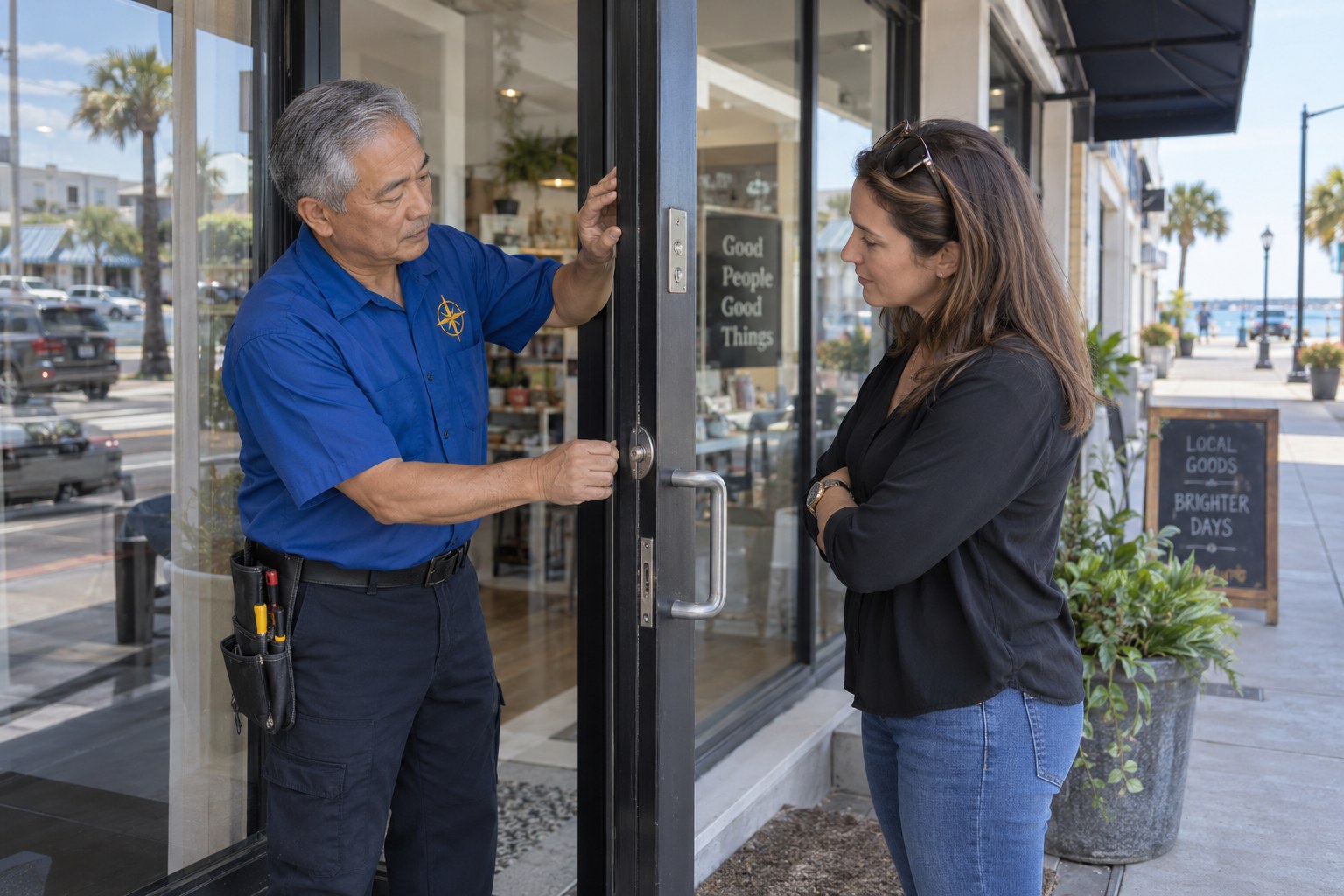
Start with every exterior door, including the ones you rarely use. Does each one close fully and latch on its own? Does the deadbolt extend completely into the frame? Is the frame solid, or does it flex when you push? A strong lock in a weak frame is only as good as the frame. Look at the strike plate and the screws that hold it.
Check the hinges, especially on outward opening doors, where pins can sometimes be removed from outside. Make sure the hinge screws are long and sound. Note the condition of the door itself. Hollow or damaged doors can be forced more easily, and a door with a cracked edge near the lock is an obvious weak point.
Look at the type of lock. Is it commercial grade, or a light duty residential model that is not meant for heavy use? Is the cylinder worn, stiff or loose? Does the key turn smoothly? Salt air along the Gulf Coast can corrode exterior hardware, so look for rust and pitting. Replace anything that is failing before it fails in front of you.
Windows and other openings
Next examine windows, vents, roof hatches and any other openings large enough for a person. Do the window latches work, and are they actually used? Are there cracks or loose panes? Older windows may have latches that can be pushed aside with a thin tool. Replacing a weak latch is often simple.
Consider what can be seen through the glass. Valuable items in view of the street attract attention. A computer, a cash register or tools displayed in a window invite a closer look. Moving items out of sight, or adding blinds or film, can reduce temptation. Keep sight lines clear for staff so they can see the entrance, though.
Think about less obvious paths too: a roof hatch, an unused ventilation grille, a loading door that is rarely opened. Secure each with a suitable lock or bolt, and make sure no emergency exit is blocked by what you add. Safety rules for exits take priority, so check with your authority if you have any doubt.

Locks and hardware condition
Test every lock. Lock and unlock each door several times, from both sides. Does the key stick? Does the bolt move easily? Is there a gap between the door and the frame that suggests warping? Are handles or knobs loose? A lock that needs a special trick, such as lifting the door while turning the key, is telling you it is worn.
Replace or repair items as you find them. A loose handle may just need tightening, but a lock that feels rough inside needs service. If a cylinder is worn, rekeying or replacing it may be wise. Do not postpone these repairs for long. A lock that works today may fail on a busy morning or at closing time.
If you are unsure about the quality of your locks, ask a technician to look. A quick review can tell you whether hardware is commercial grade, what condition it is in and where an upgrade makes sense. Quotes are given by phone, and if the job is complicated, a technician visits and the service call charge is explained before dispatch.
- Does each door close and latch by itself?
- Does each key turn smoothly without lifting or jiggling?
- Are strike plates and hinges firmly screwed in?
- Is anything corroded, loose or visibly worn?
Keys and who holds them
List every key and every person who has one. Include owners, managers, staff, cleaners, landlords, alarm companies and relatives who keep a spare. Many small businesses are surprised at how long the list is and how little is written down. Without a record, you cannot say who can enter your building tonight.
Look for keys that should not be in circulation. Former employees, past contractors and old partners may still hold keys. If you cannot recover them, rekeying is the clean answer. It removes the question without any confrontation. Ownership or authority is checked before rekeying, so be ready to confirm who may approve the work.
Decide how many keys you really need and how they are labeled. Keys stamped with the business name or address are an invitation if lost. Use a code or number that only you can interpret. Keep spares in a secure place, such as a locked cabinet in a private office, and record each time one is used.
Lighting and visibility
Walk around the building at dusk or after dark. Which doors are well lit, and which are in shadow? Are there dark corners, burned out bulbs or lights shielded by overgrown plants? Good lighting does not stop every problem, but it makes casual trouble less appealing and gives your staff safer footing when they leave late.
Motion activated lights are common and affordable. Make sure they cover entrances, side paths and the loading area. Check that they are aimed properly and that the sensors are clean. A light that triggers constantly because of a swaying branch becomes ignored, so trim vegetation that interferes.
Visibility also matters during the day. Can neighbors, passersby or staff see the main entrance and the parking area? Trim hedges that hide doors. Avoid stacking boxes or displays that block windows from the inside. A building that looks watched and cared for is less attractive to those who prefer to work unnoticed.
Alarms, cameras and signs
If you have an alarm, test it according to the instructions. Make sure everyone who needs the code knows it and that former staff no longer have one. Check the batteries and sensor placement. An alarm that is rarely armed because it is inconvenient provides little protection. Make the routine simple enough that people use it.
Cameras can help, but only if they are positioned well and maintained. A camera that points at a wall, a lens covered in dust or a recorder that is full does not help anyone. Check regularly that recordings are working and that you can retrieve them. Privacy rules apply, so inform staff and follow local guidance.
Signs can deter some attempts, but they are no substitute for real measures. Use them honestly. A sign that says an alarm is present should be accurate. These measures sit alongside locks, not in place of them. A locksmith handles the mechanical side, and an alarm or camera provider handles the electronic side.
Cash, valuables and records
Decide where cash, important documents and valuable equipment are kept. Is there a safe or locked cabinet? Is it bolted down? Who has the combination or key? Leaving cash in an unlocked drawer overnight is an avoidable risk. A modest safe or locking box, used consistently, is a major improvement.
Think about records as well. Client files, financial information and employee data deserve secure storage. A locked cabinet or room with controlled access is the minimum. Digital records need their own protection, which lies outside a locksmith's trade but belongs on your list.
Review your routine for handling cash. Do you empty the till at night? Do you make deposits at predictable times? Do two people handle counting? Small changes can reduce exposure significantly. Aim for habits that are easy enough to follow every day, since a perfect plan that nobody follows is worse than a simple one that people do.
Opening and closing routines
Many security lapses happen at opening and closing. The door is unlocked, someone wanders in, or the last person leaves in a hurry and forgets to latch the back. A short written routine for both times helps. It does not need to be elaborate: check doors, windows, alarm, lights, cash and keys.
Assign responsibility. Someone must be accountable for each task, and it should be clear who does what. Rotate duties so no single person always holds all the knowledge. Make sure new staff are trained on the routine in their first week, and refresh it from time to time.
Consider safety for the person closing. Walking out alone in the dark carrying cash or bags carries risk. When possible, have two people close together, park near the door and keep the exit lit. Your staff's wellbeing matters more than anything in the building, and good routines protect both people and property.
Vendors, deliveries and visitors
A small business sees a steady parade of outsiders: delivery drivers, repair technicians, salespeople, inspectors and friends of staff. Each is a reason for a door to be opened, and each is a chance for something to go wrong. Decide how visitors are greeted, who accompanies them and which areas are off limits. A visitor who is escorted is a visitor who is accounted for.
Deliveries deserve a plan. If the back door is opened for each drop, someone should be at it the whole time, and it should be locked again immediately. Leaving it ajar while carrying boxes in is a classic opening for trouble. A bell, a camera or a designated receiving point helps keep the process orderly without much fuss.
Be careful with unexpected claims. Someone saying they are from the utility company or the landlord and need access should be verified by a call to a known number before being let in. A polite pause costs nothing and protects you. Train staff to feel comfortable saying that they will check first, and back them up when they do.
Spare keys, hide-a-key habits and lockboxes
Spare keys are a common weak point. A key under the mat, in a fake rock or on a nail behind the dumpster is the first place anyone would look. If you need a spare outside the building, use a proper lockbox mounted securely and out of view, with a code that you change from time to time. Better yet, give the spare to a trusted person and note it in your key log.
Inside the building, keep spare keys in a locked cabinet in a private office. A drawer in the front desk is not secure. Record who has access to the cabinet. If you use a key safe with a code, change the code when staff change. Little habits like these are cheap and effective.
Review your spares once a year. Do you still need all of them? Has anyone moved on who holds one? If you are unsure about a key, rekeying resolves the question. The locksmith checks ownership or authority first, then changes the cylinder and gives you fresh keys. Afterward, update the log and store the new spares properly.
Storm and seasonal checks
Living on the Gulf Coast means planning for hurricane season. Before the season starts, review your key list, check that doors close and latch even when the frame is damp, and know who can reach the building afterward. Think about where you will put important papers and equipment if a storm is coming.
After a storm, walk the building. Look for warped doors, damaged frames, broken windows and signs of water. Test every lock. Humidity and salt after a storm can stiffen cylinders and corrode latches. If a door no longer secures, arrange a repair as soon as possible. Call us to confirm availability.
Tourist and holiday seasons change your risk too. More customers, more temporary staff and longer hours mean more keys, more cash and more late closings. Before the busy period, review your key list, refresh your routines and check that lighting and locks are in order. A small amount of preparation prevents many problems.
Sorting what you find into urgent, soon and later
A checklist is only useful if it leads to decisions, and a long list of findings can feel overwhelming. The simplest approach is to sort every item into three piles. Urgent means something that leaves a door unsecured today: a deadbolt that does not throw, a back door that does not latch, a cracked frame, a lock that no longer holds a key, or a key you know is in the wrong hands. These should be handled first, often by a quick repair visit.
The second pile is soon, meaning items that work now but carry real risk if ignored. Examples include a lock that is stiff and getting stiffer, an exit device that sticks in humid weather, a key list that is a year out of date, or a door that closes slowly and sometimes fails to latch. These items usually fit into a planned visit within the next few weeks, bundled together so you pay for one trip, not four. A technician can often help you rank them by how likely each is to fail.
The third pile, later, holds improvements rather than repairs: upgraded cylinders, a restricted key system, a keypad at the storage room, better lighting at the rear entrance. Give each a rough target season, such as before hurricane season or before the busy holiday period, and write down who owns the task. Review the piles every few months. Items drift upward as hardware ages, and a simple dated list shows you what changed. The goal is not perfection but a steady, visible reduction in the doors you worry about.
Do not forget to assign names. A checklist without owners tends to sit on a shelf. Next to each urgent or soon item, write who will handle it and by which date, even if that person is you. If a task needs a professional, note the phone call to make and the facts to share, like door type and symptoms. Revisit the page at your next staff meeting. Small, regular follow through beats a big annual push that fades within weeks.
Turning notes into action
Once the walk through is finished, turn the notes into a plan. List the repairs, the upgrades and the habits you want to change. Assign each item to a person and a date. Small items can be done right away. Larger ones may need a technician, a contractor or a budget decision.
For lock related items, gather them into a single list and call. Describe the doors, the lock types if you know them and the problems. Quotes are given by phone. If the job is complicated, a technician visits and the service call charge is explained before dispatch. Call us to confirm availability.
Schedule a repeat of the checklist, perhaps twice a year. Compare notes to see what has changed. Security is not a one time project but a habit of paying attention. A business that keeps up with it is much harder to surprise, and its owner sleeps more soundly.
Quick answers
How often should I run through a security checklist?
Twice a year is a good rhythm, plus after any major event such as a storm, a break in or a change in staff. Short, regular reviews catch problems early.
What is the single most useful step for a small business?
Knowing who holds keys and rekeying when you cannot account for them. It removes uncertainty at modest effort. Ownership or authority is checked before rekeying.
Do I need a commercial grade lock?
Doors that get heavy use or protect valuable items benefit from commercial grade hardware, which is built for wear. A technician can look at your doors and say where it matters most.
Can a locksmith install alarms and cameras?
That is a separate trade. A locksmith handles locks, keys and many access devices. For alarms and cameras, work with a security installer, and coordinate so the systems work together.
How do I get a quote?
Call us with your list of doors and problems. Quotes are given by phone. If the job is complicated, a technician visits and the service call charge is explained before dispatch. Call to confirm availability.