
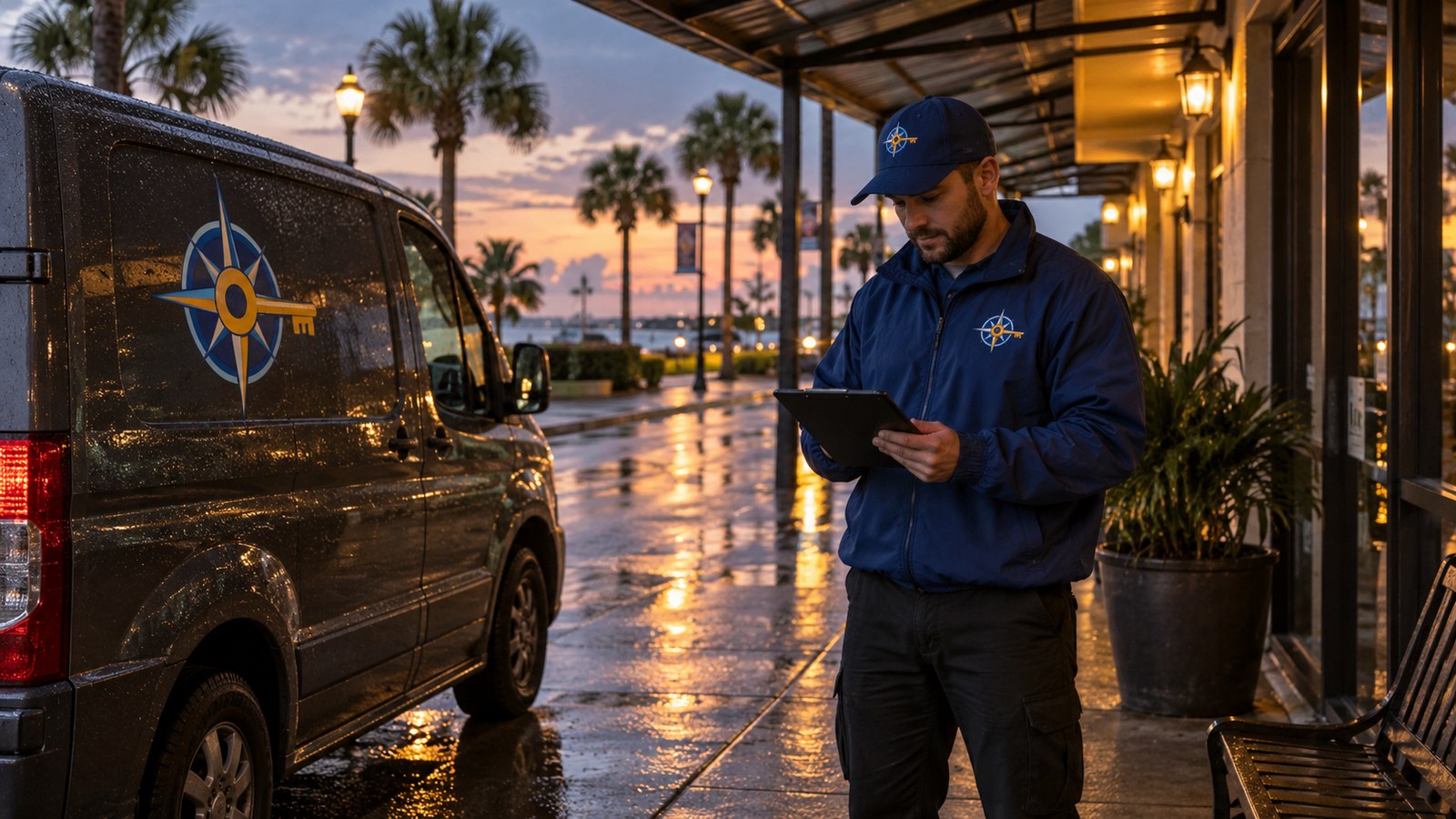
Why travel days lead to more lockouts
Visitors get locked out for understandable reasons. You are juggling bags, a phone with directions, a rental agreement and children or companions. The vehicle may have an unfamiliar key, a push-button start, or lock behavior you have not learned. Doors can lock automatically when the car moves, or when the key is set down inside. In a rush to catch a flight or check in, it is easy to close the door with the key on the seat.
Rental cars add a layer of confusion. Many come with a single key or fob, and returning to the lot after a long trip can mean searching through bags in the dark. Smart keys can be especially tricky: the car may lock itself when you walk away, even if the fob is in your luggage in the trunk. Keys also slip into jacket pockets or bag compartments you do not check.
Unfamiliar surroundings matter, too. You may not know which lot you are in, which exit leads where, or what the local landmarks are. Panic can set in when you are in a new city. Slow down, take a breath, and treat it as a solvable problem. A lockout at the airport or hotel lot is common, and the steps to resolve it are straightforward when you know them.
Start by checking who owns the car
If you are in a rental, the rental company owns the vehicle, not you. That means a locksmith will need authority from the company or proof that you are the authorized renter. Look for the rental agreement, which usually lists the vehicle and your name. Many companies also have roadside assistance for lockouts, sometimes included in the rental. Check your agreement and call that number first if your contract directs you to.
If your rental company has a policy about third-party service, follow it. Some require their own roadside provider and may not reimburse another service. Others allow a locksmith. A locksmith will not open a vehicle without authority, so having the paperwork or a quick call to the rental desk helps. Tell the dispatcher it is a rental when you call so you know what to prepare.
If you are in your own car, the ownership check is simpler: a driver license that matches the registration or insurance. If you are driving a friend's or relative's vehicle, call the owner and have them speak with the dispatcher. If you are in a company car, the fleet manager may need to confirm. Whatever the case, be ready to explain whose vehicle it is and why you are driving it.
Proof requirements when you are far from home
Away from home, your usual paperwork may not match the car's local registration. A driver license from another state is fine, but it needs to align with the registration or rental documents. Photos of documents on your phone can help. Keep the rental agreement in your email or a wallet app. If you ordered a ride-share to the airport, keep your booking confirmations too, as they can support your story.
If your wallet and documents are locked inside the car, you have a harder time but not an impossible one. A phone with a digital driver license, a copy of the rental agreement, or a call to the rental company can substitute. A hotel front desk may confirm that you are a guest, though they cannot vouch for car ownership. Honesty and patience are key; the technician has to check authority, and that protects everyone.
For international visitors, a passport and a visa or entry stamp, along with a rental agreement in your name, can serve as identification. A foreign driver license is acceptable for many rentals, and the rental company's contract is what counts. If a language barrier is a concern, tell the dispatcher so someone can help you. Clear communication reduces delays and misunderstandings during an already stressful moment.

What to tell the dispatcher from an unfamiliar lot
Describe exactly where you are. Airport lots are big and can have multiple levels or color-coded sections. Hotel lots may have gates, valet stands or underground levels. Give the name of the airport or hotel, the lot or level, and a nearby sign or row number. If the hotel has a front desk, ask them for the street address so you can read it out. Specific location details prevent a lot of confusion.
Say whether it is a rental, and from which company if you know. Mention whether you have a key, a fob or a card. Tell the dispatcher if your luggage or documents are locked inside, because that affects what proof you can offer. If you have a flight or check-in time, say so, but understand that no arrival time can be promised. Call to confirm availability and let them know what is happening.
Ask how the quote works. Quotes are given by phone, and if a job is more complicated than expected, a technician visits and the service call charge is explained before dispatch. Be clear about the vehicle type and any issues, like a broken key or a dead fob battery. The more complete your description, the fewer surprises at the lot. Keep your phone on and charged, because the technician may call when they arrive.
Waiting safely in a transit area
Airports and hotels are busy, but their lots can be remote. Choose a visible waiting place near an entrance, a shuttle stop, or the lobby. Avoid lingering in empty garage corners with luggage. Keep your bags with you and your valuables close. If a hotel staff member or security guard is nearby, tell them you are waiting for a technician, which can also help the technician find you.
Consider the climate. Pensacola can be hot and humid for much of the year, and sudden storms are common. If you are waiting outdoors, look for shade or a covered area. If you have children or pets, keep them with you in a comfortable place, not in the locked car. A shuttle desk or the hotel lobby can be a good place to wait and keep an eye on the vehicle through a window.
Be careful about sharing information with strangers. People who offer to help you break into the car, or who claim to be locksmiths without being called, should be politely declined. Use only the number you called or a hotel-recommended contact that you verify. When traveling, the safest approach is to stay with your belongings, stay visible, and stay on the phone with the people you chose.
How entry works on rental and late-model cars
Rental fleets tend to include recent vehicles with advanced door systems. That does not make them impossible to open, but it does mean more care. Technicians use protective wedges and reach tools aimed at the lock mechanism or interior handle. Modern doors contain sensors, wiring and sometimes airbags, so the tools must be placed precisely. The approach is chosen for the particular vehicle in front of the technician.
Some vehicles have security features that complicate access, such as double-locking or deadlock modes that disable the interior handle when the car is locked with the fob. In those cases, the technician may use a different method or recommend contacting the rental company for assistance. Honest advice about whether a locksmith is the best route is part of good service.
After entry, the technician will confirm that the door and lock work and that no damage was done. If you have a rental, take a quick photo of the door edges and paint for your records. Rental companies inspect vehicles at return, and documentation helps if a question arises. A professional lockout should leave no marks, but a photo gives you peace of mind.
If the key or fob is lost, not just locked in
A lost key on a trip is a bigger problem than a lockout. If the car is a rental, call the rental company right away. They may have a replacement process, and a locksmith may only be allowed to open the vehicle, not to make a new key. If the car is yours, a technician can often cut and program a new key on site, provided ownership is confirmed and the right blank is available for the vehicle type.
Think about where the key might be. Check bags, pockets, and the luggage you checked at the airport. Look at the shuttle seat, the counter at the hotel desk or the restaurant where you had lunch. A call to the last place you visited can solve the problem faster than any tool. If the key is found, you can return to the car and resume your trip.
If you must wait for a new key, plan the logistics. A hotel room may be a better place to wait than a parking lot, and a taxi or ride-share can get you there. Keep the vehicle location noted, along with the plate number. Tell the technician if you have any time constraints, without expecting firm promises. Call us to explain the situation and to confirm availability for key services.
Hotel-specific situations
Hotels sometimes have valet systems, shared lots, or paid garages with entry gates. If you are locked out in a hotel garage, tell the front desk. They may have security staff who can help you find the right spot, open a gate or provide an escort. Some hotels have rules about outside service providers, so asking in advance avoids conflicts. The technician may need your room number or guest information to enter a restricted area.
If you used valet, the valet key may be a limited version that does not open the trunk or glove box. That can lead to confusion when a lockout occurs. Ask the valet desk for help first. They may have a spare or know how to handle it. If the key is lost, the hotel's staff can help trace it.
Resort areas and beach hotels near the Gulf have their own conditions. Sand and salt air can get into locks and fobs. Lots may be crowded in peak travel periods. Event weekends and holidays can bring heavy traffic and limited parking. Share those facts when you call so the technician can plan the approach. Local knowledge helps, even when you are a visitor.
Airport-specific situations
Airport lots have rules about access, gates, tolls and security. Short-term and long-term lots may be separated by checkpoints, and a technician may need to pay a fee to enter. Tell the dispatcher which lot you are in and whether there is an entry ticket or gate. If you have a parking ticket, keep it with you. Airport staff or security may need to verify you and the technician before a vehicle is opened.
Security presence matters. Airports are monitored areas, and staff may approach a technician working on a car. That is normal and protective. Having your ID, the rental agreement and the booking confirmation handy makes the conversation brief. If you are asked to move, comply politely and explain the situation. A technician who is open about what they are doing and why will generally have no trouble.
Time pressure is common here. Travelers often have flights to catch or arrivals to meet. While no arrival time can be promised, tell the dispatcher about your constraints so options can be discussed. If a flight is at risk, consider asking the rental company or a travel companion about alternatives, such as a ride to the terminal while the car is dealt with. Planning around the delay can save your trip.
Travel companions, luggage and the clock
When several people travel together, a lockout becomes a group problem. Decide who stays with the car and who takes the luggage to the lobby or terminal. Keep medications, passports and chargers with the person who is leaving. Someone should stay reachable by phone so the technician can find the right spot. Splitting up sensibly keeps the whole group comfortable while the car is handled.
If your luggage is in the trunk and the key is lost or locked inside, you may be unable to reach clothing or documents. A technician can open the trunk in many cases, though it is a different job from the cabin door and the approach varies by vehicle. Mention it when you call. If a trunk release is available inside the cabin, opening the cabin may be enough.
Think about contingency plans. A ride-share to the hotel, a night in the room, and a fresh start in the morning are sometimes the calmest solution. Missing a flight is stressful, but your safety and comfort matter more than a rushed decision. Talk with the dispatcher about options, and call to confirm availability for the time you need.
Preventing trouble on your next trip
When you pick up a rental, take a minute to learn how the key works. Find out whether it is a standard key, a fob with a button, or a proximity key. Ask how to lock and unlock it and where the emergency blade is. Check that the fob has a working battery. Take a photo of the key and the contract and store them on your phone. These steps take minutes and can save hours.
Build habits around the key. Always pat your pocket before closing the door. Do not store the key in luggage in the trunk. If you travel with others, agree on who carries it. At hotels, keep the key with you when you exit the car for a moment, not on the seat. If you carry a spare, keep it separate from the main key, not in the same bag.
Save emergency numbers before you need them: the rental company roadside line, your insurer, and a local locksmith. Know your lot or level and write it down as you park. If you want advice on spare keys for your own vehicle before traveling, call us. We can talk through options and confirm availability, so that your trip is remembered for its sights and not for a stranded afternoon.
Quick answers
Can a locksmith open a rental car?
Often yes, but the technician must confirm authority. That can mean a rental agreement in your name or approval from the rental company. Some contracts direct you to their own roadside service first, so check your paperwork and tell the dispatcher it is a rental.
What if my documents are locked in the car?
Tell the dispatcher before the visit. Digital copies of your license, registration or rental agreement on your phone can help, as can a call to the rental company. The technician has to verify ownership or authority before opening, so be ready with whatever proof you can offer.
Do I need to be at the car when the technician arrives?
Yes. Authority must be confirmed in person or by a verified call, and you will need to answer questions about the vehicle. Wait in a visible, safe spot near the car and keep your phone on. Call to confirm availability for your specific lot.
Will the locksmith damage a late-model rental?
Professional entry uses protective wedges and reach tools placed to avoid paint and weatherstripping marks. Technicians choose the least invasive method for the vehicle. After the work, check the door edges and take a quick photo for your records.
How do I know the price before help is sent?
Call us with your location and vehicle details. Quotes are given by phone. If a job turns out more complicated, a technician visits and the service call charge is explained before dispatch, so you know what to expect before work begins.