
What salt air does to a lock
Salt in the air settles on every exposed surface, then attracts moisture. The combination speeds up corrosion on steel parts and attacks some plated finishes. A deadbolt that looks fine on the inside of a door can have a cylinder face and bolt end that are pitted and rough from the outside weather.
The damage often starts where you cannot see it. Springs, pins, and small internal parts can corrode inside the cylinder, causing the key to stick or turn only with force. Owners frequently notice the lock feels stiff months before it fails, and that stiffness is the early warning.
Salt also affects screws and fasteners. A strike plate held by steel screws can loosen as rust expands in the hole. Hinges can seize or squeak. A door whose hardware is corroding often develops small alignment problems that make the lock harder to use.
Distance from the water matters, but not as much as people think. Wind carries salt inland, and properties several blocks from the bay can still see significant effects. Doors facing the prevailing wind or the water tend to age fastest, which is a useful clue when planning where to spend on better hardware.
Humidity, swelling, and movement
High humidity affects the door as much as the lock. Wood doors absorb moisture and swell, which can make a latch bind against the strike. Metal doors and frames can sweat, and aluminum storefront frames can shift slightly as temperatures and moisture change through the day.
When the door moves, the lock must still align. A bolt that fits perfectly in dry weather may rub or fail to engage on a muggy afternoon. Owners sometimes blame the lock when the real issue is the door or frame. A technician checks both together before recommending replacement.
Condensation inside lock cases and electronic hardware is another concern. Moisture on circuit boards, contacts, and battery compartments can cause faults. Keypads that work in the morning may behave oddly after a humid night or a storm. Sealed, weather rated units handle this better.
Regular use helps. Locks that are used daily tend to stay freer than those that sit idle. A rarely used side door can seize from lack of movement, so it is worth operating every lock occasionally, especially before hurricane season when you may need it in a hurry.
Hardware finishes that hold up near the Gulf
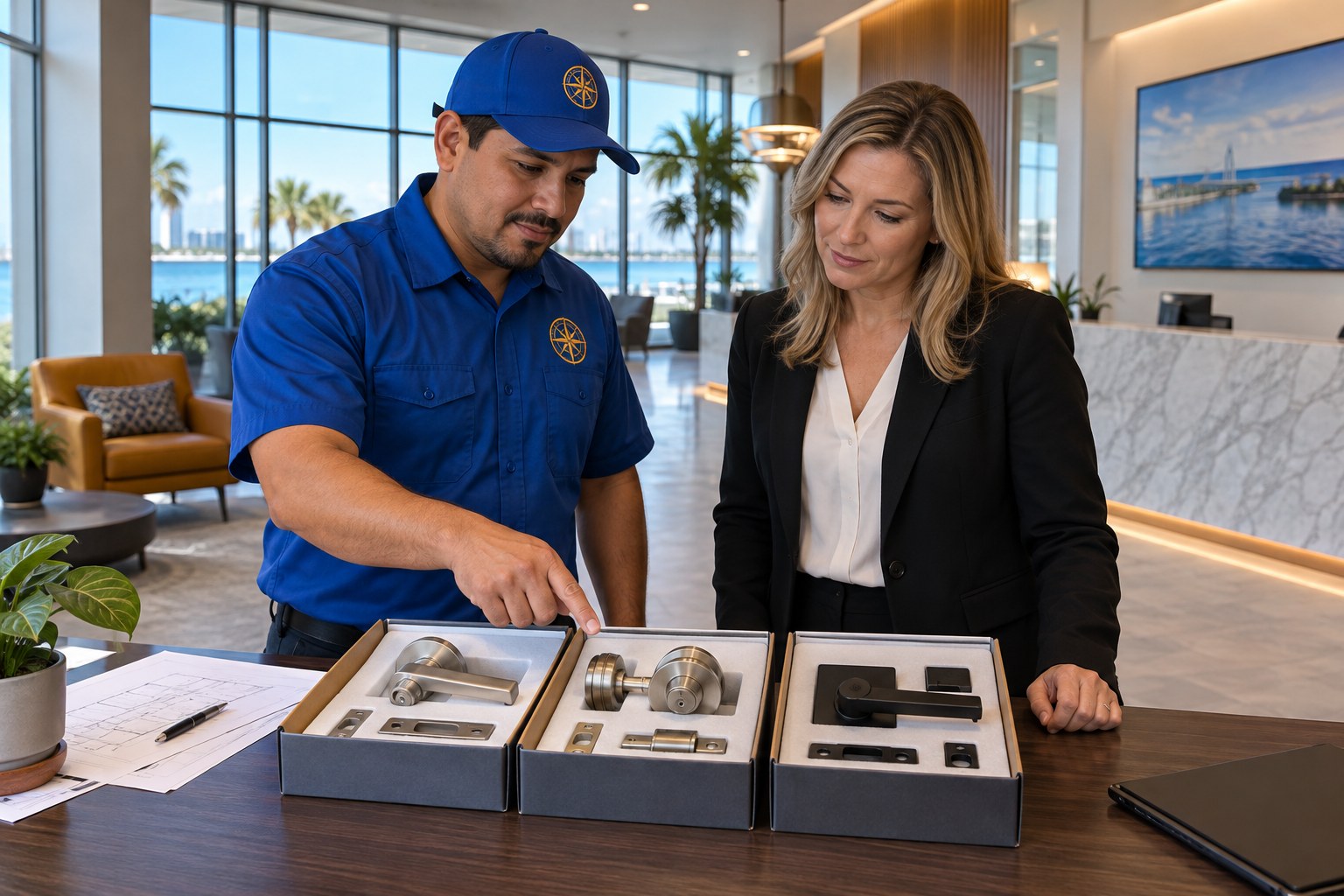
Solid brass and stainless steel generally resist corrosion better than plated steel. A lock with a thick brass body will usually outlast a lightweight steel lock with a thin coating, although the coating and construction both matter. Ask what the cylinder, bolt, and fasteners are made of, not only the exterior finish.
Finishes vary in how they handle weather. Some are designed for marine or high exposure use, while others are meant for dry interiors. When shopping for exterior hardware in a coastal area, look for finishes described as corrosion resistant and ask how they hold up to salt.
Stainless steel is a popular choice for exterior padlocks, hasps, and gate hardware. It resists rust well, though not all stainless is equal, and some grades still show surface staining near the water. Regular rinsing helps keep it looking and working well.
Appearance and function do not always go together. A cheap lock with a shiny finish can fail quickly, while a plain, heavy lock may last for years. Hardware aimed at professional use tends to be built to a higher standard than the lightest consumer products.
- Solid brass and stainless components resist corrosion better
- Ask about the cylinder, bolt, and screws, not just the finish
- Choose weather rated electronic hardware for exterior doors
- Match the hardware to the door's exposure
Padlocks, hasps, and gates
Padlocks on gates, equipment, and storage areas take the worst of the weather. Shrouded shackles protect the lock from cutting tools, and they also keep some water and debris away from the mechanism. For long term outdoor use, choose a padlock built for weather exposure with a sealed or drained body.
Hasps and chains deserve equal attention. A strong padlock on a rusting hasp will fail when the hasp breaks. Stainless or heavily plated hasps hold up better, and fastening them through solid material with appropriate screws matters. A hasp that is loose on its mount is only for show.
Gate latches and drop bolts also corrode. Many gates along the coast have bolts that seize in their sleeves. A quick spray or a small amount of the appropriate lubricant helps, but the long term fix is hardware with materials that tolerate the environment.
Plan replacements. Outdoor padlocks and hasps are consumables in coastal settings. Replacing them every few years, before they fail, is cheaper and less stressful than waiting for a lockout at a gate in the rain.
Doors, frames, and thresholds
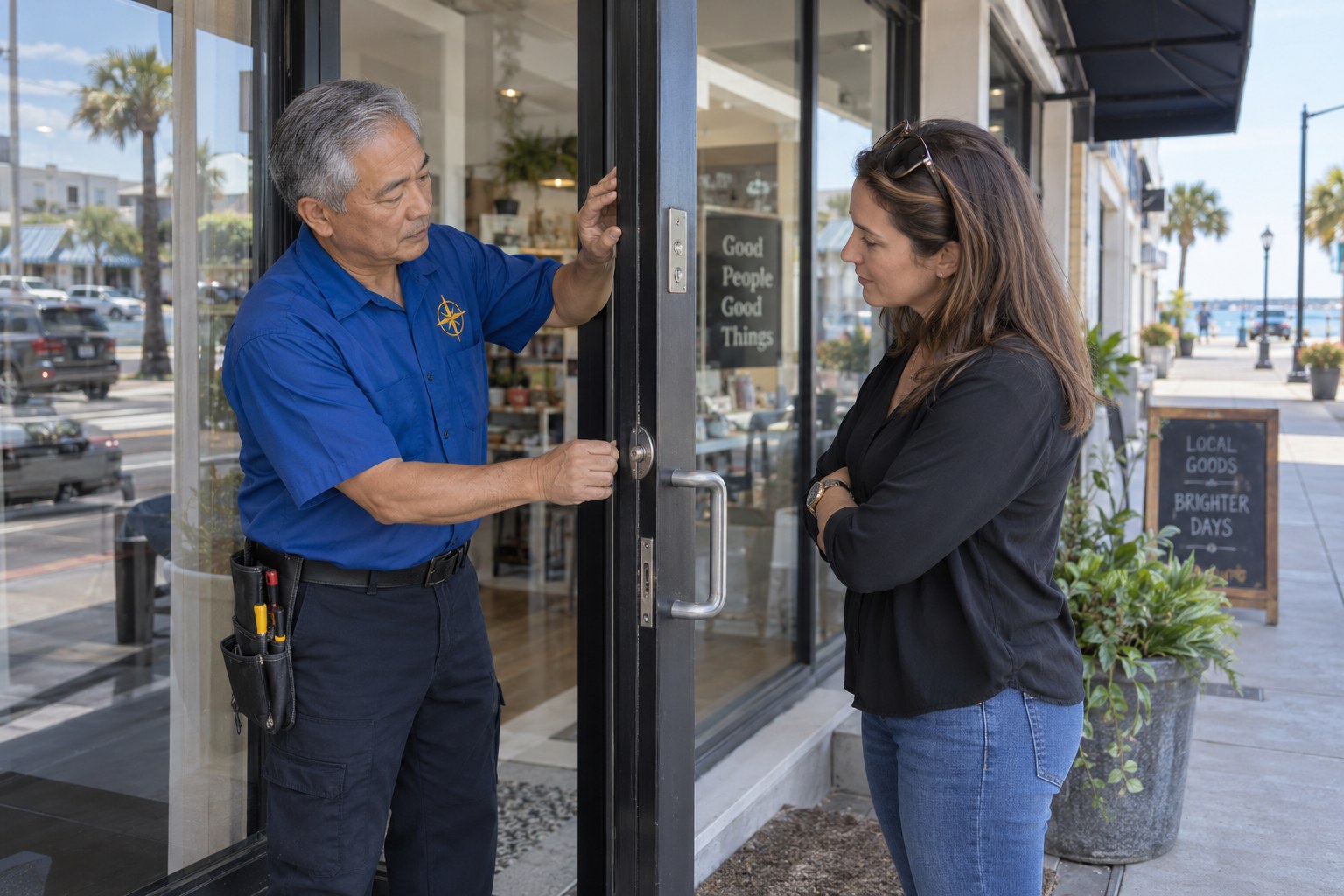
A lock cannot be better than the door it sits in. Steel doors may rust at the bottom edge and around the lock hole where water collects. Wood doors can rot at the base. Aluminum doors tend to hold up well but their hardware often corrodes. A technician looks at the door as part of the lock check.
Weatherstripping and thresholds keep water out of the lock area. A door that lets wind driven rain run into the latch edge will wear its lock faster. Replacing worn weatherstripping and sealing gaps is a cheap step that protects the hardware.
Hinges should be corrosion resistant, with screws long enough to reach framing. Hinges that seize can cause the door to sag, and a sagging door will strain the lock. Lubricating hinges and tightening screws once or twice a year prevents many problems.
Strike plates and frames take stress, especially during high winds. Reinforcing the strike area with longer screws or a metal reinforcement can help the door hold. This matters before storm season, when wind pressure can push a door against its latch.
Electronic locks near the coast
Keypads, card readers, and smart locks can work well near the water if they are designed for the conditions. Look for units described as weather rated and, where available, with sealed housings and protected contacts. A residential indoor keypad on an exterior door is a poor match.
Power and batteries need planning. Corrosion on battery contacts is a common cause of failure. Check them regularly, replace batteries before they are exhausted, and keep a mechanical key backup in a secure place. Do not rely on a battery lock without a way in if the electronics fail.
Wiring for hardwired systems should be protected. Connections that are exposed to moisture can corrode, and low voltage lines can be damaged by water. Sealed connectors and proper conduit make a difference. A technician can inspect existing installations.
Storms bring power surges and outages. Surge protection and battery backup reduce the chance that a storm leaves doors in an unknown state. Decide whether each door should unlock or stay locked when power fails, and confirm that exit paths remain safe.
Lubrication and routine care
Use the right lubricant. For many lock cylinders, a dry lubricant such as graphite or a product made for locks is better than oil, which attracts dirt and can gum up in humid air. Heavy grease can also attract grit. Ask a technician which product suits your locks.
Apply sparingly. Too much lubricant does more harm than too little. A small amount on the key and in the keyway, worked in by turning the lock several times, is usually enough. Wipe away any excess so it does not drip onto the door.
Clean exposed hardware. A periodic rinse with fresh water removes salt deposits. Dry the hardware afterward. For finishes, follow the manufacturer's suggestions, since some cleaners damage coatings. A soft cloth and mild soap are usually safe.
Set a schedule. Many businesses find that checking and lubricating locks every six months works well, with an extra check after major storms. Add it to your maintenance calendar alongside other seasonal jobs so it is not forgotten.
Keys wear too
Keys are exposed to the same conditions. Brass keys tarnish, and keys on big rings wear against each other. A worn key can fail to lift the pins correctly and then stick or break. If a key feels rough or needs a wiggle, have a new copy cut from the original, not from a worn copy.
Copies of copies get less accurate each time. If your business has relied on a chain of duplicates, the keys may differ slightly from the original specification. Cutting new keys from the original code or a good original key often makes locks work more smoothly.
Keep keys dry and tidy. Hanging keys on a rack away from damp areas helps. Avoid leaving them in a vehicle or a damp storage box. A small dry pouch or a lockbox in a controlled space protects both the keys and security.
Broken keys in locks do happen, and corrosion makes them more likely. If a key breaks, do not try to force it out with improvised tools. Call and describe the situation. A technician can extract the piece and cut a new key, once authority over the lock is confirmed.
Getting door and gate hardware ready for hurricane season
Before hurricane season, inspect all exterior locks. Operate each one, check the latch and the bolt, and look at the strike plate screws. Note any that stick or feel rough and schedule repair. A lock that is stiff in calm weather can fail when you need it most.
Make sure you can lock and unlock doors with gloves on and in poor light, in case you need to secure the building quickly. Practice with the keys you actually carry. If a key is hard to find in a pile, label it or put it on its own ring.
After a storm, inspect again. Wind and water can bend doors, loosen hinges, and force moisture into locks. Even if all seems well, test every lock. Water in a cylinder can freeze up later as it dries and rusts, so a prompt service visit can prevent a later lockout.
Keep contact information handy. After a major event, many businesses need service at once, and availability varies. Having a locksmith you have already talked to makes it easier to book help. Call to confirm availability when you need it.
Choosing hardware and getting advice
When planning new or replacement hardware, think about each door's exposure, use, and importance. A rear service door near the water that is used constantly needs a different lock than an interior office. Spending a little more where conditions are harsh tends to pay back in fewer repairs.
Ask a technician for recommendations. They see how different products hold up in local conditions, and can tell you which finishes and brands have performed well in coastal use without making any claims they cannot support. Be wary of any product promised to last forever.
Describe your doors when you call. Quotes are given by phone, based on the number of doors, the type of hardware, and the work needed. If the job is more complicated, a technician visits first and the service call charge is explained before dispatch.
The technician checks ownership or authority before installing, rekeying, or programming. Have your lease or a letter from the owner ready if you are a tenant. Contact us to talk through options, and call to confirm availability.
Real world examples from coastal businesses
Consider a small restaurant with a back door that opens onto an alley near the water. The door is used for deliveries and trash several times a day, and it faces the wind. The deadbolt is plated steel, and within two seasons the key begins to stick. The owner keeps spraying oil in the keyway, which helps for a week and then makes it gummy. A better answer is a corrosion resistant cylinder, dry lubricant, and a clean strike plate with longer screws.
Think of a marine supply shop with a fenced yard. The gate padlock is exposed to sun, rain, and salt every day. A basic padlock rusts shut within a year, and staff are forced to cut it off with a grinder, which damages the chain. A weather rated padlock with a shrouded shackle, used with a stainless hasp, costs more at the start and usually saves repeated replacements.
Picture an office suite on an upper floor of a building near the bay. The suite door is sheltered, yet the balcony door is not. The balcony latch is stiff, and nobody notices because the door is rarely used. During a storm warning, staff try to secure it and find it will not latch. Operating every lock occasionally, and replacing exposed hardware proactively, would have caught the issue.
These stories are common because the damage builds slowly. Nothing seems wrong until the day it does. A short maintenance routine, a few well chosen materials, and an honest look at which doors are most exposed turn those slow failures into planned repairs.
Budget thinking without false economy
It is natural to want to spend as little as possible on hardware. The trouble is that cheap locks on exposed doors often need replacing sooner, and each replacement involves labor, downtime, and sometimes damage to the door. Over several years, the cheaper lock may cost more than a better one bought once.
A sensible approach is to spend where it matters. Put your best, most corrosion resistant hardware on exposed exterior doors, gates, and equipment enclosures. Use standard commercial grade hardware on sheltered interior doors. This mix keeps costs reasonable while protecting the points that wear fastest.
Consider maintenance as part of the cost. A lock that gets a little care every six months will often last much longer than one that is ignored. Setting aside a short time and a small supply of the right lubricant is an inexpensive way to extend the life of every lock you own.
Finally, avoid being talked into products with exaggerated claims. Anything described as needing no upkeep or impossible to break deserves doubt, especially at the coast. Ask plain questions about materials, exposure ratings, and what upkeep is needed. An honest technician will tell you what a lock can and cannot do.
Quick answers
How does salt air damage locks?
Salt settles on metal and attracts moisture, speeding up corrosion. It can pit finishes, stiffen cylinders, and loosen screws. Doors facing the water or the wind age fastest. Choosing corrosion resistant materials and rinsing and lubricating regularly slows the damage.
What lubricant should I use on a lock?
For many cylinders, a dry lubricant made for locks is better than oil, which attracts dirt in humid air. Use a small amount and work it in by turning the key several times. Ask a technician which product suits your specific hardware.
Are electronic locks a good idea near the water?
They can be, if the hardware is weather rated and installed well. Keep a mechanical backup key, check batteries regularly, and consider surge protection for storms. Indoor rated keypads on exterior doors tend to fail early in coastal air.
How often should coastal businesses service their locks?
Many find that a check and light lubrication every six months works well, with an extra look after major storms. Operate rarely used doors occasionally so they do not seize, and replace outdoor padlocks and hasps before they fail.
Can I get a total by phone for replacing hardware?
Yes. Describe the number of doors, the type of hardware, and the exposure, and the quote is given by phone. If the job is complicated, a technician visits first and the service call charge is explained before dispatch. Ownership or authority is checked before work.