
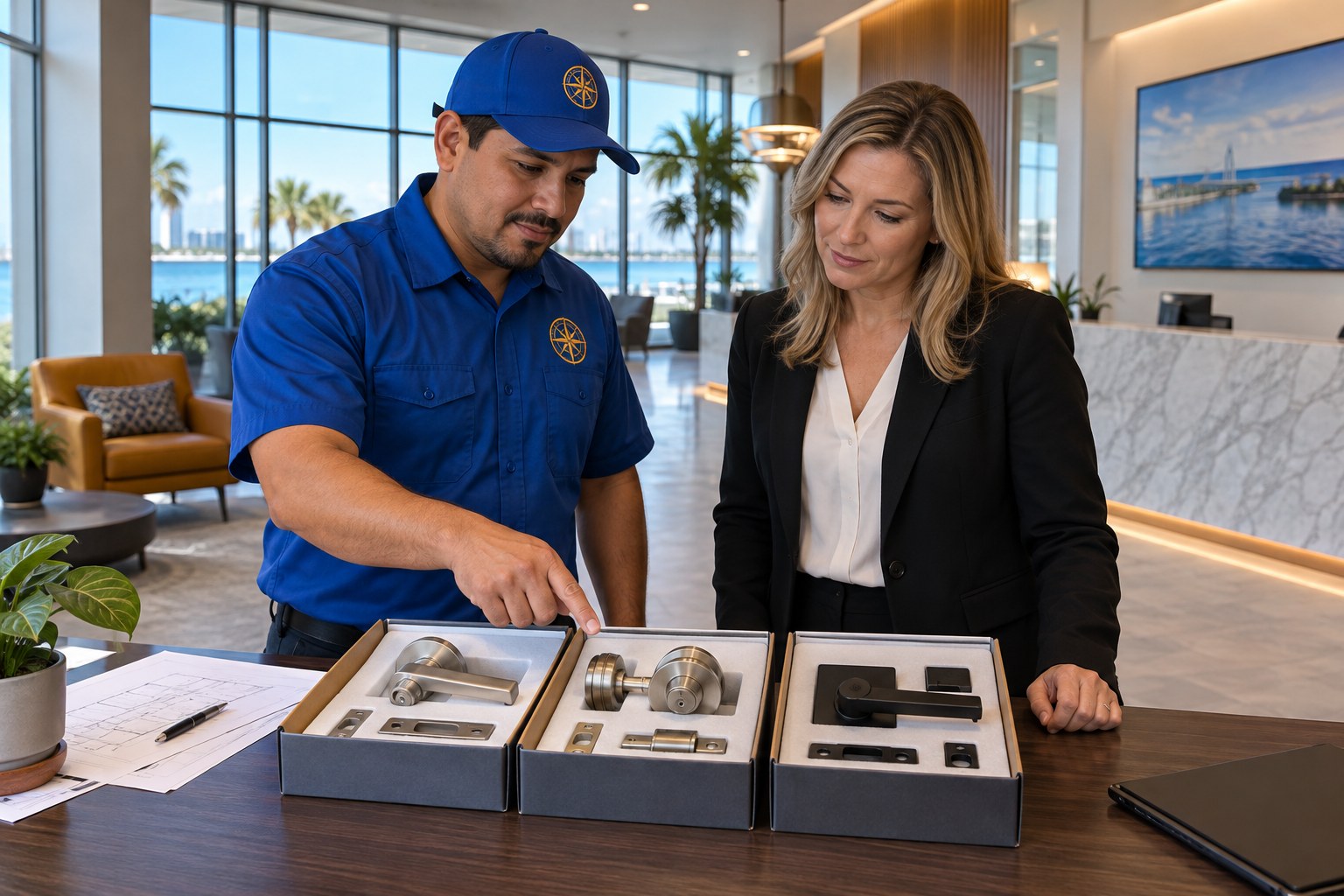
First things to check before you panic
Start with the simple possibilities. Is the door fully closed against its stop, or is something small, like a mat edge or a stray box, holding it open a fraction of an inch? Does the latch bolt extend when you turn the key, and does it line up with the hole in the frame? Look at the strike plate and the gap around the door. Often the cause is visible in under a minute.
Next, check whether the lock turns smoothly. A key that feels gritty or stiff points to a worn or dirty cylinder. A key that turns easily but does nothing means the mechanism inside may be disconnected, which happens when a retaining clip breaks or a cam wears. Stop forcing the lock if it resists. Force can snap the key and leave a broken piece inside, turning a small repair into a larger one.
Finally, note what changed. Did the door get slammed, did a delivery cart hit it, or did a storm shift the building? A door that locked fine yesterday and will not today usually has a recent cause. Telling the technician what happened narrows the search quickly. Take a photo of the latch, the strike and the gap along the edge, which helps us advise you before arriving.
Why storefront doors fall out of alignment
Commercial doors get abuse that residential ones never see. They swing hundreds of times a day, are kicked open by arms full of boxes and slammed by wind. Over time hinges loosen, the door sags, and the bolt no longer lines up with the strike. A sag of just a quarter inch can stop a deadbolt from fully extending.
Glass storefront doors with aluminum frames are especially sensitive. A loose pivot, a worn bottom closer or a bent top arm can tilt the door slightly, and the lock sits at the corner where that tilt is most noticeable. Heat expands metal, and a door that locks in the cool morning can bind in the afternoon sun. Gulf Coast temperature swings make this a common issue.
Building movement plays a part too. Older buildings settle, floors shift and frames go out of square. After a storm or a heavy truck passes, a door that locked fine yesterday may seem to have a mind of its own. The fix is often an adjustment rather than a replacement, and a technician can tell the difference by looking at how the door sits in its frame.
Lock and latch problems that mimic misalignment
Not every door that will not lock is out of alignment. The cylinder may be worn so that the key no longer lifts the pins properly. The cam at the back of the cylinder may be bent, so turning the key moves nothing. The latch assembly inside the door may be broken, with a spring or a link that has snapped. Each is a different repair.
A sticky bolt is another common case. Dirt, rust and years of use bind the bolt in its housing. Sometimes a little cleaning and lubrication brings it back, but old hardware often wants replacing. If the bolt moves in and out by hand but not with the key, the cylinder is the likely cause. If neither moves, the latch is the suspect.
Exit devices, often called panic bars, have their own failure modes. A rod that has slipped, a latch that does not retract or a trim that spins freely can all keep a door from locking. Because these are life-safety devices, repair must keep them working in an emergency. We never disable one to make a door lock, and we explain the correct fix.
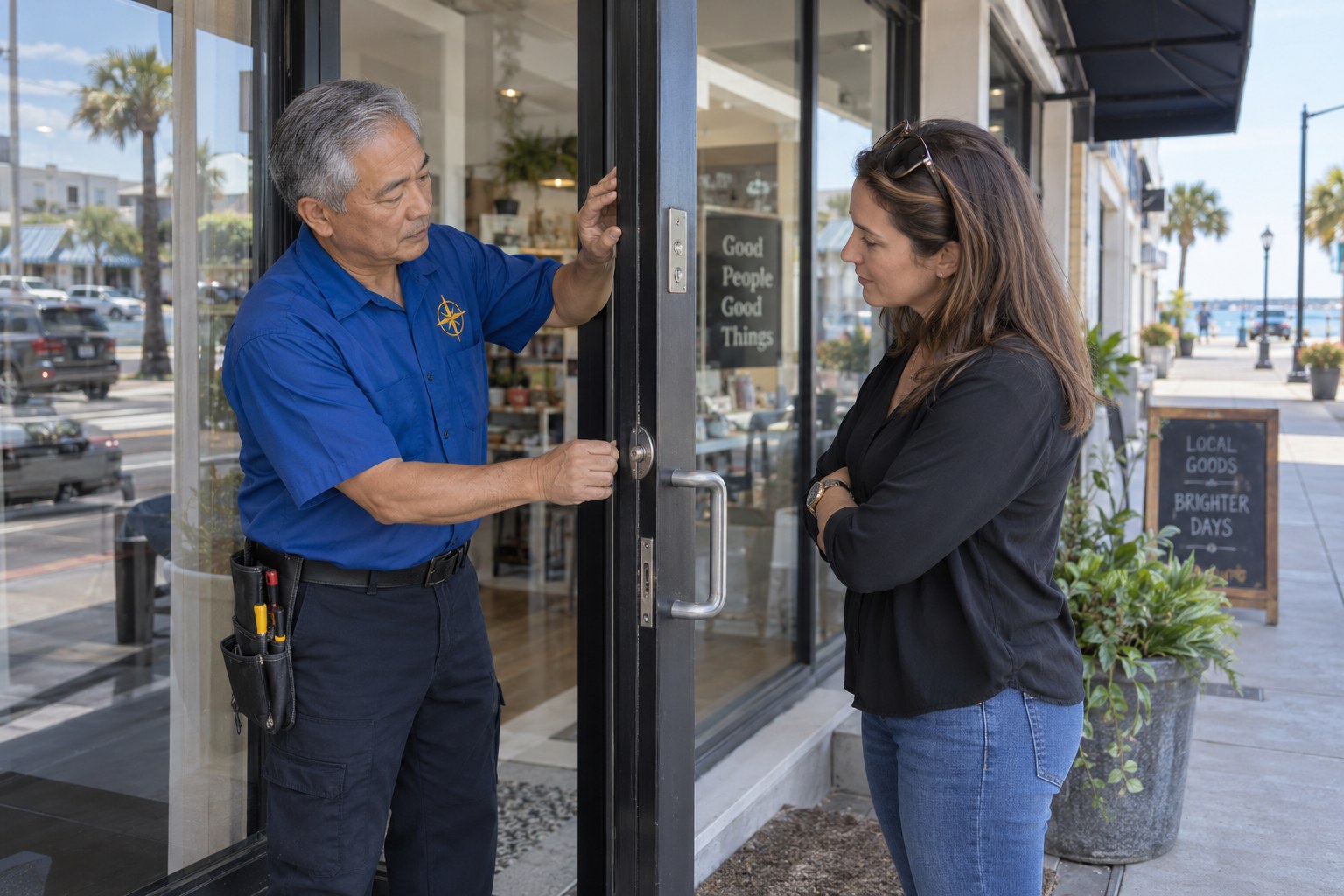
Temporary ways to secure the door tonight
If the door cannot be fixed immediately, a temporary measure is better than nothing. A technician can often install a surface-mounted bolt, a hasp with a padlock or a temporary bar on the inside. These are not permanent solutions, but they can make the door hard to open until a proper repair is made. We choose a method that suits the door and the building rules.
Be careful with homemade fixes. Wedging a board, using a chain or tying the door with rope may seem sensible, but they can block an exit, fail under pressure or leave marks on the door. Fire codes require that people inside can leave quickly, so any temporary measure should work from the inside without a key. We make sure of that.
If you must leave the door in a weak state, consider other steps. Move cash and valuables to a safe place, let a trusted person or the property manager know, and ask whether the alarm company can add a visit. Lighting, cameras and a neighbor who knows the situation all help. A temporary fix is a bridge to the repair, not a replacement for it.
Permanent repairs, from small adjustments to new hardware
Many door problems are solved by adjusting the hinges, the closer or the strike. Tightening screws, shimming a hinge or moving the strike plate a few millimeters can restore alignment in minutes. On glass doors, a technician may adjust the pivot or the top arm to lift the door back into position. These are quick, affordable-sounding jobs in terms of time, and they often make the biggest difference.
When the hardware is worn, replacement is the better answer. A new cylinder restores smooth key action. A new latch or a new lockset gives the door a fresh mechanism. If the door itself is warped or the frame is damaged, a repair or replacement of those parts may be needed, and that can involve a door contractor. We say where our work ends and tell you what to expect.
Sometimes it is worth upgrading while we are there. A commercial-grade deadbolt, a stronger strike plate or a longer screw into the framing can make the door much harder to force. Weak points are often the strike and the frame, not the lock. We describe the choices and the tradeoffs, and you decide how far to go.
Ownership and authority at a storefront
Even for repair work, we confirm authority. A technician will ask who owns or leases the space and may ask to see an ID. If you are an employee, a call to the owner or manager is needed. If the landlord controls the exterior door, you may need their permission before any hardware is changed.
This matters most when we are rekeying or replacing the lock. New keys give access to the building, so we need to know the person receiving them is entitled. We keep the process simple and fair, and we explain it on the phone so you can have what is needed ready. Having a lease or a business registration handy speeds things along.
If the door belongs to a shared building, ask the property manager whether the lock is part of a master key system. If it is, they may prefer to handle the work or approve a specific contractor. We respect those rules and will advise you on what is needed.
What the technician does on a service visit
The technician starts by inspecting the door, the frame and the hardware, and asking you about the history. They test the lock, operate the door several times and look for rubbing or binding. Then they explain what they found and what options exist.
Work proceeds in a logical order. Adjustments come first, since they are least invasive. If hardware must be replaced, the technician installs it, tests it from both sides and checks that the door closes and locks properly. If the alarm contact or magnetic sensor is involved, they take care to leave it working.
Quotes are given by phone based on your description. If the job is complicated, a technician visits and the service call charge is explained before dispatch. Before leaving, the technician locks and unlocks the door with you, hands over keys and explains how to keep the hardware in good shape.
Glass doors, pivots and door closers explained
Many small shops use an aluminum and glass door hung on pivots rather than on hinges. The door turns on a pin at the top and a pivot at the bottom, and a hydraulic closer controls how it swings shut. If the closer is set too fast, the door slams and knocks the latch out of position. If it is set too slowly, the door never quite reaches the frame, so the bolt cannot catch. A small turn of an adjusting screw on the closer can change the whole behavior of the door.
The bottom pivot carries much of the weight, and over time it wears or the floor underneath it shifts. When that happens the door drops slightly, and the lock at the edge of the glass no longer meets the strike in the frame. A technician can adjust the pivot, add a shim or replace the pivot assembly. Do not try to lift the glass door by prying, because tempered glass can shatter when pressure is applied to the wrong spot.
If your closer is leaking oil, the door will behave unpredictably. A damp, oily patch on the closer body is a clear sign that it needs replacing. Closers are part of door hardware, and many locksmiths handle them, though some jobs belong to a door specialist. We tell you honestly which category your problem falls into, so you can get it fixed by the right person without paying for a visit that does not solve it.
Strike plates, frames and the weak links in a storefront
The strike plate is the small metal piece on the frame that receives the bolt. On a storefront it is often held by two short screws into a thin aluminum or hollow metal frame. When the door is slammed or kicked, those screws loosen, the plate shifts, and the bolt no longer lands in the opening. Tightening the screws sometimes works, but in a worn frame the threads are stripped, and a different fastener or a backing plate is the lasting fix.
Frames can be bent by impact. A cart hitting the door edge, a break-in attempt or a vehicle bump in a parking lot can twist the frame by a small amount. You may not see it, but the door will not close squarely, and the latch binds. A technician can check whether the frame is plumb, and can sometimes straighten it. If the frame is badly damaged, a door contractor may have to replace it.
While we are at the strike, we look at the overall strength of the door edge. A long, high-quality deadbolt in a weak frame offers little protection. Reinforcing the strike area with a longer plate and longer screws, or adding a wrap-around plate on a wooden door, can improve resistance to forced entry. It is a modest change that adds real security, and we describe it in plain terms so you can decide whether it suits your shop.
Why the problem tends to appear at closing time
Closing time is when a door gets its toughest test. All day the door was propped, held open or left unlocked, so a small misalignment went unnoticed. At closing you need the bolt to throw fully, and any weakness shows up at once. It feels like the problem arrived at the worst moment, but it has often been building for weeks.
Fatigue plays a part as well. At the end of a long shift, people hurry, pull the door harder than usual and turn the key with more force. That extra force can bend a cam or snap a key. If the lock feels different than usual, slow down. A few seconds of care at closing can save an hour of trouble later.
If you manage several people, ask them to report door problems as soon as they appear. A shared note at the register or a quick message to the owner helps. Catching a sticking lock at noon allows time for a daytime repair, rather than a stressful call after the shop has closed.
Weather, salt and heavy use in the Pensacola area
Salt air and humidity attack metal parts, and storefronts close to the Gulf see the worst of it. Hinges seize, springs rust and latch bolts stick. A light, regular maintenance routine of cleaning and lubricating hardware extends its life. Use products designed for locks, not heavy grease, which collects dust.
Summer heat and sudden storms stress doors. Aluminum frames expand, wood swells, and sagging becomes more obvious. If a door begins to bind in humid weather, it may need adjustment before the problem becomes a lockout. A check at the start of hurricane season is a smart habit for any business with a street front.
Tourist traffic puts extra wear on doors in busy seasons. Doors that open and close hundreds of times per day wear out faster, and the hardware may need earlier replacement. Plan for this in your maintenance schedule so you are not surprised on a busy weekend.
Habits that prevent a closing-time crisis
Make door checks part of the closing routine. Before you leave, pull on the handle to confirm the bolt is engaged, and listen for a solid click. If something feels different from yesterday, note it and call early rather than waiting for the door to fail completely.
Report small changes right away. A key that needs more effort, a door that rubs or a handle that sags is a warning. Fixing a small problem during business hours is easier than facing a locked-out or unlockable door at night.
Keep a short list of who holds keys and a backup plan if the door will not lock. Know who to call and have the number saved. A calm plan beats a panicked search at closing, and a well-kept door will serve your business for years.
Quick answers
Why will my storefront door not lock all of a sudden?
Common causes are a sagging door that no longer lines up with the strike, a worn cylinder or cam, a broken latch, or a loose hinge. A recent slam or shift in the building often triggers it. A technician can usually find the cause quickly.
Can you secure the door for tonight?
Often yes. A technician can add a temporary surface bolt, hasp or bar that works from the inside and does not block an exit. We pick a method that suits the door and building rules, then plan the permanent repair.
Will I need a new lock?
Not always. Many problems are fixed by adjusting hinges, closers or the strike plate. If the cylinder or latch is worn or broken, replacement is the better answer. We explain the options and tradeoffs before any work begins.
Do you need proof I run the business?
Yes. We confirm authority, usually with photo ID and a lease, license, utility bill or a call from the owner or landlord. This protects the business and is especially important when we replace locks or cut new keys.
How do I arrange a visit?
Call us with the address, door type and what happened. We confirm availability by phone and give a quote. If the job is complicated, a technician visits and the service call charge is explained before dispatch.