
Why verification matters when you are locked out
A locked door or a missing key puts you in a hurry, and hurry reduces caution. You might be outdoors at night, late for work, or worried about a child waiting inside a car. People in that state are less likely to read a listing carefully or to question a number given on the phone.
That is also why a few simple checks matter. Giving a stranger access to your car, home, or business involves trust. They will handle your property, see the inside of your space, and ask for payment. A short pause to confirm who they are is not rude, it is sensible.
Checking does not mean assuming the worst. Most callers who check discover an ordinary, honest business and carry on. The point is that the checks cost a minute or two, and they can prevent the small number of bad experiences that do happen, such as unexpected totals or unclear identities.
The steps below fall into three groups: what to check before you call, what to ask during the call, and what to confirm when the technician arrives. You do not have to do all of them every time, but the more you do, the better protected you are.
Before you call: look at the listing
Start with the business name. Does it appear consistently on the listing, the website, and any other pages you can find? A name that changes from page to page, or that is only a generic phrase such as locksmith service, is worth a closer look.
Check for a real local presence. Does the listing show an address, a service area that makes sense, and details that suggest a local business? A physical address is not required for a mobile locksmith, but a listing that claims many cities with no explanation can be a signal to ask more questions.
Look at the website for specifics. Does it describe the services in detail, explain how pricing is handled, and use the same business name as the listing? Sites with vague text copied across many cities deserve less trust than those with specific, consistent information.
Take a screenshot of what you see. Names, numbers, and claims can change, and a screenshot helps if you need to refer back. It also helps you compare the business at the door with what you saw online.
Before you call: search the name and number
Search the business name with a word like complaints or problems. You may see nothing, which is fine, or you may see patterns worth knowing. Read more than one source, and remember that any business can attract an unhappy customer. Look for repeated themes, not single stories.
Search the phone number too. If the number appears under several different business names in different cities, that suggests a call center that answers for many companies. This is not illegal, but it affects who will actually arrive, and you may want to ask about it.
Look at how the business describes itself. Does it say who it is, where it is based, and what it does? Are the claims specific and reasonable, or full of superlatives and promises it cannot keep? Honest descriptions tend to be modest.
If you have a regular locksmith, a neighbor, or a local property manager, ask them for a recommendation. A name from someone who has used a business is often more reliable than a listing alone. If there is time, a short call to a friend can help.
- Is the business name consistent across pages
- Does the number appear under many different names
- Are claims specific and modest
- Can anyone you know recommend them
During the call: ask who you are speaking with
When someone answers, ask for the business name. A legitimate business states it clearly. If the person answers with only a generic greeting, or hesitates when asked, ask again. You are entitled to know who you are talking to.
Ask where the technician is based. A technician who lives or works near you can find your address and understands local conditions. If the answer is vague or the person cannot say, treat that as information.
Ask whether the person you are speaking with is the one who will come, or whether a technician will be dispatched. Neither is wrong, but you should know. If a technician is dispatched, ask for their first name and what vehicle they will arrive in, if they can tell you.
Ask whether the business will tell you when the technician is on the way. A quick message that someone is nearby is a normal courtesy. Be cautious if the answer is evasive or if it becomes impossible to reach the same person again.
During the call: talk about price in plain words
Ask for a total based on what you described. For straightforward jobs, quotes are given by phone. If the person cannot give any total, or says only that it depends, ask what it depends on and whether a technician must visit first.
Ask what could change the total. A good answer lists reasons, such as the lock type, damage, or a vehicle needing a special key. A poor answer refuses to give any detail or simply says there are no extra charges, with no explanation.
Ask about the service call charge. If the job is complicated, a technician visits first, and the service call charge is explained before dispatch. You should hear what it covers and whether it is separate from the work itself.
Be careful with very low numbers quoted at the start, particularly if no one asked about your situation. A teaser price followed by a much higher total at the door is a classic pattern. A realistic quote reflects the job.
During the call: expect questions back
A real locksmith asks you questions. Where are you? What is the problem? What kind of door, lock, or vehicle is it? Have you tried anything? Is there an alarm? These questions are how they decide what to bring and how to quote.
A real locksmith asks about ownership. They should mention that they will check ownership or authority before opening or programming. This is a strong sign of professional practice, because it shows concern for the owner and the property.
A real locksmith explains what will happen when they arrive. They tell you what to have ready, what they will check, and how the work will proceed. They are patient with your questions.
If the person on the phone seems uninterested in your details and only wants to send someone, be cautious. The best providers want to understand the job before they commit. Their questions are a sign of care.
When the technician arrives: compare what you see
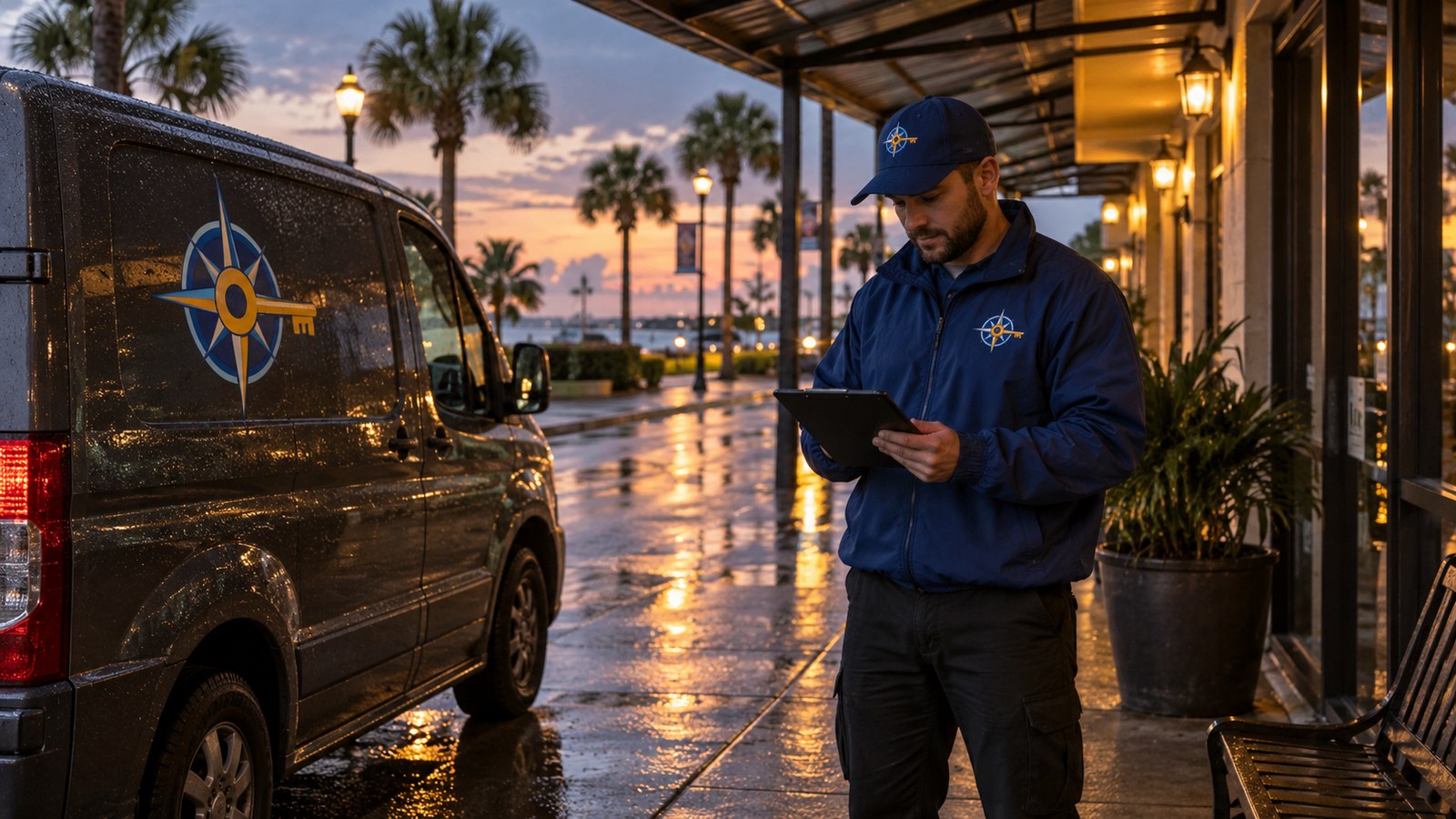
Check that the business name matches what you were told on the phone. Look at the vehicle, clothing, paperwork, or tablet. A mismatch is not proof of wrongdoing, but it deserves a question before work begins.
Ask for photo identification. A reasonable technician will show it. Compare the name with what you were told on the call. If they say it is a different person from the one you spoke with, ask why and whether the business knows.
Ask them to confirm the quote. A technician who knows the job will either confirm the number or explain why it changes. If they cannot say, or are vague, hold off on work until you understand.
Note the vehicle and, if you can, take a photo of it. This is an ordinary precaution and many technicians expect it. Keep the photo with your records of the visit.
When the technician arrives: expect the ownership check
A genuine locksmith will check ownership or authority before opening, rekeying, or programming. They might ask for identification and registration for a vehicle, a utility bill or lease for a home, or a lease and owner letter for a business.
This check is a good sign. Someone intending to cause harm, or just to make a quick sale, has less reason to ask. A technician who opens a door for anyone without a question is not protecting you or the property.
If you cannot provide proof at that moment, a professional will explain what could work. They may suggest waiting for documents, calling the owner, or getting confirmation from a landlord. They will not just proceed.
If the technician becomes impatient with the question or says that checks are unnecessary, take note. The safest response is to pause the work and consider calling another provider.
Warning signs worth taking seriously
A refusal to give a business name, a different name at the door, or a vehicle with no markings and no explanation. None of these alone proves a problem, but together they raise concern. You can ask direct questions and watch how they are answered.
A price that rises sharply without a clear reason. Changes happen, but they should be explained before work, with specifics. A flat statement that the job is harder than expected, followed by a large increase, deserves pushback.
Pressure to decide quickly, threats of higher charges if you wait, or a refusal to let you call someone else. These tactics aim to remove your ability to think. A professional gives you room.
Demands for unusual payment, such as payment before any work, payment only in cash with no receipt, or payment to a person unrelated to the business. Ask what payment methods are accepted when you call, and insist on a receipt.
What to do if something feels wrong
You are allowed to stop. Say politely that you are not comfortable proceeding and ask the technician to leave. If you have agreed to a service call charge, you may owe what was explained beforehand, but you do not owe more for work you did not accept.
If you feel unsafe, move to a public place or call someone you trust. If you believe a crime is being committed, call the police. Your safety matters more than the lock.
Document what happened. Write down names, times, numbers, and what was said. Take photos of the vehicle and any paperwork. Keep any receipts. This record is useful if you need to dispute a charge or report a concern.
After the event, consider reporting what happened to the appropriate local consumer protection authority. A report helps others and may help you resolve the matter. Keep the report brief and factual.
Verification for special situations
If you are a visitor, you have fewer local contacts to ask, so rely more on the checks above. Ask your host, hotel desk, or rental manager if they have a preferred provider. They often do, and their knowledge is local.
If you are calling for someone else, such as a parent or a friend, ask them to confirm key details and be present if possible. If they cannot be there, make sure they know the name and the plan. Scammers sometimes target people who seem alone.
If you manage a business or property, choose your locksmith ahead of time. Call, talk through your doors, and write the number in your emergency plan. When a lockout happens, you already have someone vetted, which removes most of the pressure.
If you are in a hurry and cannot run every check, do the three that matter most: ask for the business name, ask for a total with an explanation, and ask that ownership or authority be checked. Those three filter out many problems.
Building a lasting relationship
The easiest way to avoid a bad experience is to meet your locksmith before you need one. Call about a rekey, a spare key, or a lock check, and see how the business handles it. You learn how they speak, how they quote, and how they work.
Keep the number and a note of what you learned. When a lockout happens, you are not choosing a stranger in the dark. You are calling a business you already know, which makes everything calmer.
Share what you learn with neighbors, family, and coworkers. A trusted name in a community is worth more than any advertisement. People who have had good experiences are usually happy to say so.
Contact us if you want to talk through your situation. Call to confirm availability, and remember that quotes are given by phone, with the service call charge explained before dispatch for complicated jobs. We check ownership or authority before opening, rekeying, or programming.
A two minute verification routine you can memorize
Keep a short routine in your head so you can run it under stress. First, name: ask for the business name and compare it with the listing. Second, place: ask where the technician is based and who is coming. Third, total: ask for the quote and what could change it. Fourth, proof: ask that ownership or authority be checked.
Say the routine out loud once, now, while you are calm. People who have rehearsed even a short list tend to use it, while those who have not often forget everything in the moment. Share the routine with family members who might make the call for you.
Write it on a card and keep it in a glove box, a wallet, or a drawer near the door. A small card with the four words name, place, total, and proof is enough to prompt you when your mind goes blank.
Remember that the routine works for any trade. The same four questions help when you are hiring a plumber, an electrician, or a mechanic. A habit of asking clear questions is useful far beyond locks.
Local context for Pensacola callers
The Pensacola area has a mix of long time residents, military families, students, and many visitors in beach season. Each group has different resources. Residents may know a local business by reputation, while visitors and newly arrived families do not, and tend to rely on searches.
Tourism brings crowded weekends, busy roads, and lots of rental properties. At those times, many people need help at once, and availability varies. Calling early in the evening, if you can, and asking honest questions about timing, avoids disappointment.
Storm season changes things as well. During and after a storm, demand rises and unfamiliar providers appear. Take extra care with unknown names, and check that anyone arriving matches what you were told. A calm, careful approach protects you in a stressful week.
Neighbors are a resource. Ask on a community page or at a nearby business whom they use. Local word of mouth, together with the checks above, gives you a stronger basis for trust than a single listing.
Quick answers
What is the quickest check I can do before calling?
Compare the business name across the listing and website, then search the name and phone number together. If the number appears under many different names in different cities, ask who will actually arrive. Taking a screenshot gives you a record to compare later.
What should I ask the dispatcher?
Ask for the business name, where the technician is based, who will do the work, how the total is formed, and whether ownership or authority will be checked. Clear, patient answers are a good sign. Vague or evasive ones are a reason to consider another provider.
Is it normal for a locksmith to ask for proof of ownership?
Yes, and it is a good sign. A responsible technician checks ownership or authority before opening, rekeying, or programming. A locksmith who skips the check is not protecting you or the property.
What if the price at the door is higher than the quote?
Ask for an explanation before work begins. Legitimate changes, such as a different lock type or damage, can be described specifically. If the explanation is vague or you feel pressured, you can decline and ask the technician to leave.
How can I prepare before I ever get locked out?
Talk to a locksmith ahead of time about a spare key or a lock check, save the number, and keep a short emergency plan. Knowing who you will call removes most of the pressure when something goes wrong.