
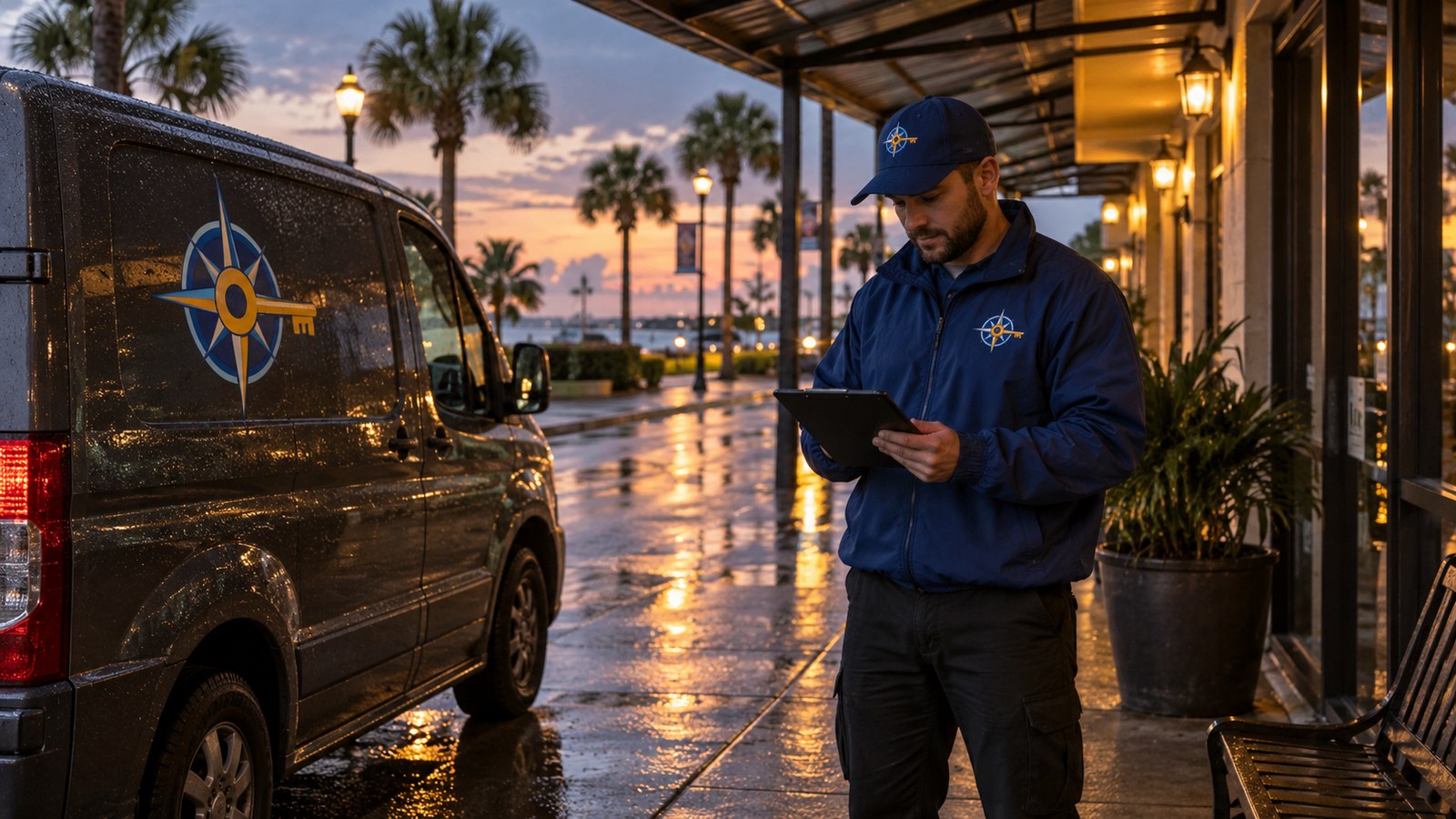
Stop, breathe and search in order
The first few minutes decide how smooth the rest goes. Tiredness makes people search the same pocket five times and skip the obvious places. Slow down and check systematically. Pockets of the clothes you are wearing, then each bag, then the car seats, the floor, the cup holders and the door pockets. Use your phone light, and look under seats where keys slide during turns.
If you drove, remember that the key may still be in the ignition, especially in a car with a push button start where the fob stays in the cabin. Check whether the engine is off, whether the car is locked and whether the fob is somewhere in the vehicle. A key that fell between the seat and the console is a classic late night discovery.
If you are at the car and cannot find the key, do not wander away from the vehicle searching dark streets alone. Search in the space you can see and light, and keep your phone with you. If the car is still running, do not turn it off until you know where the key is. A running car with a missing key is better than a stopped one.
Keep the search honest, too. If you have searched the car twice and found nothing, stop repeating the same spots and widen your thinking. Empty your bag fully onto a flat surface, check coat linings and the pockets of anyone who rode with you, and look at the ground near where you parked. Fresh eyes, even a passenger's, often find what yours cannot.
Retrace the drive without taking risks
Think back through the evening. Where did you last use the keys for certain? A restaurant table, a bench at the beach, a friend's couch, a gas station counter, a locker at the gym. Many lost keys are sitting in the last place where your hands were busy with something else, such as paying, carrying food or helping a child.
Call those places before you drive back, especially if they are staffed late. A restaurant, a hotel desk or a venue security office may have a lost and found. Leave your name and number and describe the key ring. Do not rush back out on tired roads for a long drive without confirming that anyone is there to help.
If you were at a friend's home or a party, send a message to the host. Keys often slip into couch cushions or are collected into a bowl. Ask them to check and to hold the keys until morning. A short text can save a long drive, and a sleepy host will appreciate the clarity.
Keep a note of where you have already checked and what was said by each person you called. Tired memory loses details, and a short list on your phone prevents calling the same venue twice. It also helps if you later need to describe the loss to a locksmith or an insurer.
If the car is still with you
If you are standing beside the car and the key is lost, check whether you have a spare in a safe place and a person who can bring it. A family member, roommate or neighbor may be willing to help, even late. Be specific about where you are and how to reach you.
Many modern cars have a hidden mechanical key inside the fob, but that only helps if you still have the fob. If you do not, a locksmith can often open the car and create a replacement key, depending on the vehicle. Ownership or authority is checked first, so have registration or title and identification ready, although they may be inside the car.
Do not try to start the car in unusual ways or force the ignition. Damaging the ignition turns a lost key into a larger repair. Do not hot wire or try tricks you have seen online. Modern vehicles are built to resist those methods, and the attempt can set off alarms and lock systems.
If the keys are lost and your home is locked
Late at night, standing outside your own home, the instinct is to find a way in. A window, a back door, a ladder. Be careful. Climbing in the dark causes injuries, and breaking a window creates a security problem you then have to fix. Check first whether anyone inside has a key, whether a neighbor or relative holds a spare and whether a keypad or a hidden mechanical option exists.
If no one can help, a locksmith can open the door. We confirm ownership or authority before opening: identification with a matching address, a lease, a utility bill or other proof. If your documents are inside, other evidence such as a message from a landlord or a neighbor who knows you can sometimes help. Call and explain.
If the lost keys include any with an address clue, consider that someone else may find them. A key ring found in a parking lot is not necessarily dangerous, but if the car registration or mail is also gone, rekeying is wise. We can open the door and rekey it in the same visit in many cases, so you do not have to worry about the lost key.
If you have a garage with a keypad, a smart door or a family member with a code, ask them first. Sometimes the simplest solution is a code you forgot you had. Check whether your phone has an app connected to the lock, since some smart locks can be opened by phone with the right login.
Keeping yourself safe on the roadside after dark
Find a lit spot where people are around, if you can. A gas station, an open store or a well-lit entrance is better than a dark driveway. Lock yourself in your car if you can, but only if you have a way to keep the doors secured and the vehicle is safe. Keep your phone charged and tell someone where you are.
Do not accept rides or help from strangers who seem too eager, and do not hand your phone or wallet to someone you do not know. If someone offers to open your car or door, be cautious. A person who offers help for payment on the spot, without identification, is not someone to trust.
If you feel unsafe, say so to the locksmith or to a trusted contact, and consider calling emergency services. Staying calm and being aware of your surroundings is more important than avoiding a delay. A slow resolution is better than a risk.
Replacing a lost car key
If the key is not found, the next step is replacing it. Depending on the vehicle, a mobile technician may cut and program a new key at your location. Vehicles differ, so when you call, describe the make, model, approximate year and the type of key you had. We will explain what is possible and what the job involves.
Because a key that starts a car is as powerful as the car itself, ownership is checked before cutting or programming. Have your registration or title and identification ready. If the paperwork is in the car, tell us, and we will discuss other evidence that may work.
If the key was lost rather than stolen, ask whether the old key can be erased from the car's memory, so that if someone finds it, it does not start the car. Not all vehicles allow it, but many do. This extra step offers peace of mind, particularly if the key ring also carried tags or addresses.
Consider timing. If the car is safe, parked legally and not blocking anything, it may be sensible to deal with the home first and the car in daylight. Replacing a car key takes more steps than opening a door, and doing it rested, with documents in hand, usually goes more smoothly.
Replacing house keys and other keys
Home keys are often easier. A locksmith can rekey the lock so that the lost keys no longer work and new ones fit, usually in one visit. If you have several locks, we can often match them to one key. Think about who else needs a copy, and have them with you or ready to receive one.
Do not forget other keys on the ring. A mailbox, a storage unit, a work door, a bike lock or a relative's house may be affected. Each has its own owner or manager. Tell them promptly. Some will want to change locks, and some will simply watch for suspicious activity.
Take the chance to think about how you carry keys. A single ring with everything is convenient and a single point of failure. A separate key for the car, a separate one for home and a spare with a trusted person reduces the damage when one goes missing.
Remember to inform anyone who shares your home that the keys are lost. Until the locks are changed, every household member should be aware that an extra key may be out there, and should keep doors latched and secured. A short group message covers it quickly.
When tiredness and drinks make things worse
Late nights often come with fatigue, and sometimes with alcohol. If you have had anything to drink, do not drive anywhere to look for keys. Arrange a safe ride or stay where you are. Judgment is also affected, and impulsive moves, such as climbing into a home or forcing a car, are more likely to cause injuries.
A tired person is more likely to misplace keys, mis-hear a quote on the phone or agree to something they do not understand. If you are very tired, ask someone to help you with the call, or ask the locksmith to explain again, slowly. It is also fine to say you will call back in the morning if the situation is safe.
If you feel unwell, take that seriously. A lockout is not worth risking your health. If you have a medical concern, call for help. We can often handle the lock afterward, and your wellbeing comes first.
Preventing a repeat of the late night scramble
Give your keys a home. A fixed spot in a bag, a pocket you always use and a hook at home reduces the risk of misplacing them. Add a habit of checking the key before you lock the car and again before you get out. Small rituals matter most when you are tired.
Keep a spare with a trusted person. Test it. A fob battery that has died in a drawer will not help at midnight. Tell the person how to reach you and how to find your home if they need to bring it. Plan this on a calm day, not at the moment of need.
Consider tracking devices that attach to a key ring and help you find it by sound or location. They are not perfect, but they can save a search. Also consider a keypad option for a side door at home, so that one lost ring does not lock out the whole household.
Finally, give yourself credit for handling it. Lost keys happen to careful people. What matters is the response: staying safe, calling for help, confirming who you are and fixing the locks. Each of those steps is within your reach, even at one in the morning.
Special cases around Pensacola at night
The area has its own late night patterns. Visitors staying near the beaches often return to a rental after a long evening, and a rental door may use a lockbox or keypad that the guest has forgotten how to use. If that is your situation, contact the host first, because the owner controls access and can usually send a fresh code or explain the box in a moment.
Drivers who come home from a shift at a hospital, a restaurant, a hotel or the naval air station often arrive when most people are asleep. If you live in a complex with a gate or a manager, a lost key may mean both a lost gate card and a lost door key. Tell the property manager in the morning, and ask for the lost card to be deactivated.
Students returning to a dorm or an apartment near the university after a late class or event face a different issue: roommates asleep and phones on silent. Try more than one call and a text, and ask a neighbor if you know one. Campus and building staff can sometimes help with authorized entry, and a locksmith is the next step if they cannot.
Weather matters as well. Summer thunderstorms can roll in quickly, and a lockout in the rain is miserable and slippery. Find cover first. During hurricane season, services are stretched, so patience and clear information help everyone. If a storm is approaching, say so on the call, because it affects how a technician plans the trip.
Questions to settle before you call
Before you dial, answer a few things for yourself. Are you in a safe place? Is anyone in danger? Do you have identification or any other proof of who you are and that the vehicle or home is yours? Is there a person who could bring a spare or vouch for you? These answers shape the first minute of the call.
Decide what outcome you want tonight. Do you only need to get inside, or do you also want locks changed to protect against the lost keys? Do you need a new car key right away, or can the car wait until morning while you get home another way? Knowing your priorities lets the locksmith offer realistic options.
Think about timing and cost honestly. Quotes are given by phone for straightforward jobs, and if the job is complicated, a technician visits and the service call charge is explained before dispatch. If you are very tired, it is reasonable to handle the urgent part tonight and the rest in daylight, when decisions are clearer.
Finally, remember that availability varies, so call to confirm it. We do not promise arrival times. We will tell you plainly what is possible, and you can decide whether to wait, to ask someone else for help or to find a safe place to rest. Honest information is the most useful thing at that hour.
Quick answers
What should I check first when I cannot find my keys at night?
Search methodically: pockets, bags, seats, floor and cup holders using your phone light. Check whether the fob is still in the car. Then think of the last place you used them for certain, and call that place before you drive back.
Can a locksmith get me into my home late if I have no ID with me?
Ownership or authority is checked before opening, so we need some way to confirm you live there. Identification is best, but other evidence such as a lease, a bill or a message from a landlord can sometimes work. Call us and explain what you have.
Is it safe to climb through a window?
It is risky, especially in the dark. Falls and cuts are common and a broken window creates a security problem. Try other options first, such as a spare key with a neighbor or relative, and call a locksmith if none are available.
Should I rekey my locks if I only lost my keys?
If the keys might be found by someone who can link them to your address, rekeying is a sensible precaution. If you are fairly sure they are at a friend's house, you may choose to wait a day. We can talk through the risk by phone.
Can a lost car key be made to stop working?
On many vehicles, programming a new key can erase old ones from the car's memory, so a lost key no longer starts the engine. Not all vehicles allow it, so ask when you call. Ownership is confirmed before any programming.